

When major international music acts release exclusive content, the gap between initial distribution and unauthorized duplication can be remarkably short. For Stray Kids, one of the most commercially successful and globally recognized groups in modern K-pop, a massive digital reach is a double-edged sword. With nine Billboard 200 number-one albums and extensive stadium tours spanning multiple continents, the group commands a passionate worldwide following. Unfortunately, that same massive popularity also attracts opportunistic bad actors looking to capitalize on unreleased or limited-availability tracks.
Earlier this year, this vulnerability became painfully clear when a solo track by Stray Kids member Han transitioned rapidly from a restricted YouTube exclusive into commercial bootleg releases available on prominent platforms like Apple Music and TikTok. Rather than stopping at standard takedown notices, the group’s label, JYP Entertainment, has escalated the matter. Through its legal representation, the entertainment giant is now pursuing a federal court subpoena to unmask the individual behind the unauthorized distribution, setting its sights squarely on the digital music distributor used to facilitate the leak.
The Modern Mechanics of Digital Music Distribution
The incident highlights a growing loophole within the contemporary digital music ecosystem. Over the past decade, independent music distributors have democratized the process of getting tracks onto mainstream streaming platforms. For a modest yearly subscription fee, independent creators and aspiring artists can gain access to automated distribution services such as DistroKid, TuneCore, or Symphonic.
These platforms make it remarkably easy to push audio files directly into legitimate stores, including Apple Music, Spotify, and Amazon Music. Once uploaded through these intermediaries, a track is swiftly listed alongside major industry releases. The automated systems often assign industry-standard metadata, including ISRC codes, UPC barcodes, and even auto-generated YouTube art tracks, giving unofficial uploads a veneer of official legitimacy.
While this streamlined system has empowered independent musicians worldwide, it has simultaneously lowered the barriers for bad actors. Individuals seeking to profit from copyrighted material or distribute pirated tracks can occasionally exploit these automated pipelines before copyright holders have a chance to intervene. This structural vulnerability is precisely what enabled the unauthorized commercial release of Han’s solo work earlier this year.
Bootleg Track Emerges on Major Streaming Platforms
The controversy centers around a track titled "back to life," performed by Stray Kids member Han. On May 9, JYP Entertainment published the song as a video on the official Stray Kids YouTube channel. The release was part of the group’s ongoing SKZ-PLAYER series, a dedicated platform for member-specific solo and unit tracks. In accordance with the usual release strategy for this series, the song was deliberately kept off commercial streaming platforms at the time of its YouTube debut.
Despite its restricted availability, the track immediately gained substantial traction among the group’s fanbase. Alongside legitimate engagement, however, unofficial ripped audio files began circulating rapidly across various social media networks and dedicated pirate forums. The situation escalated when the track crossed over from informal sharing spaces to official digital service providers.
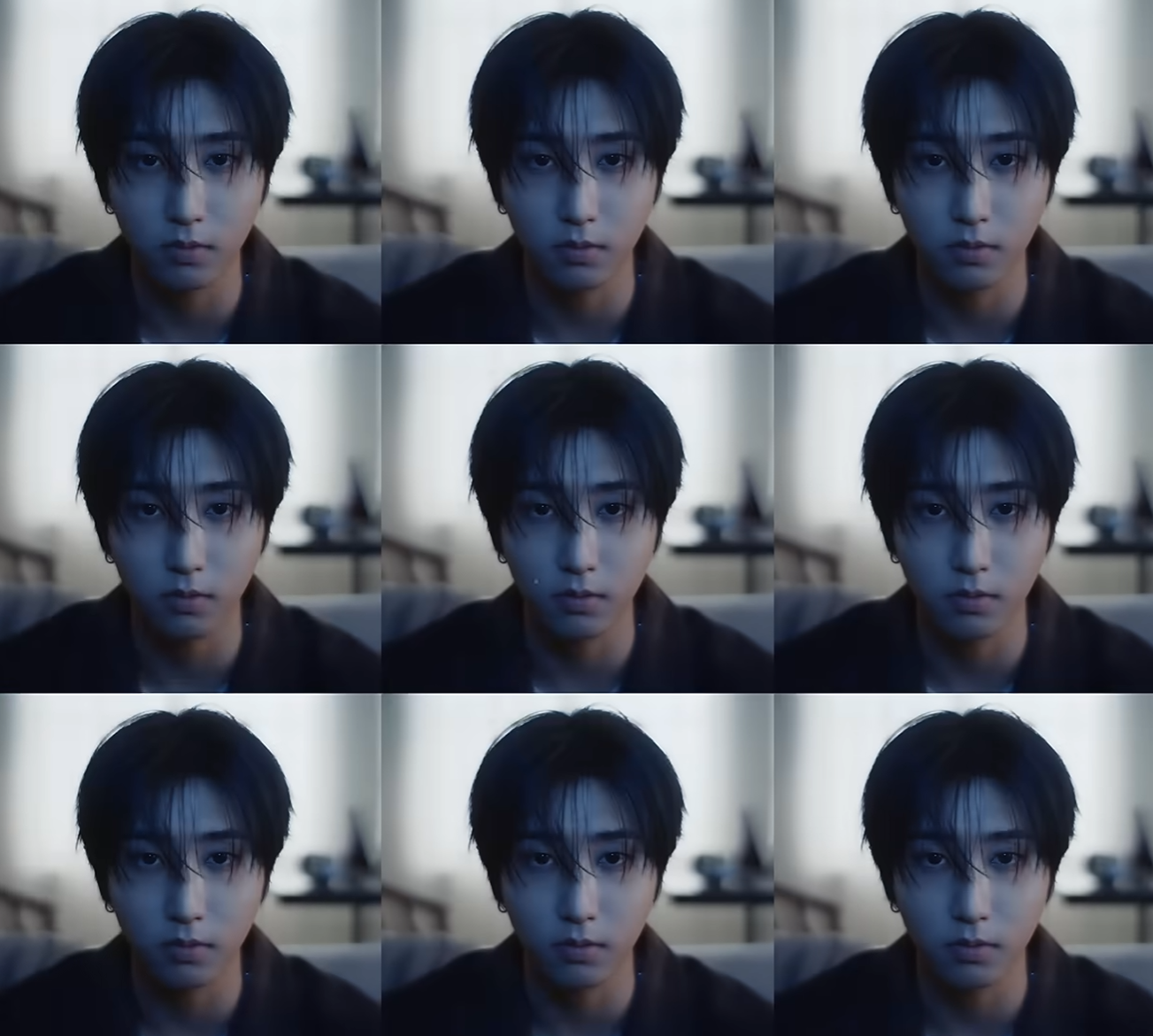
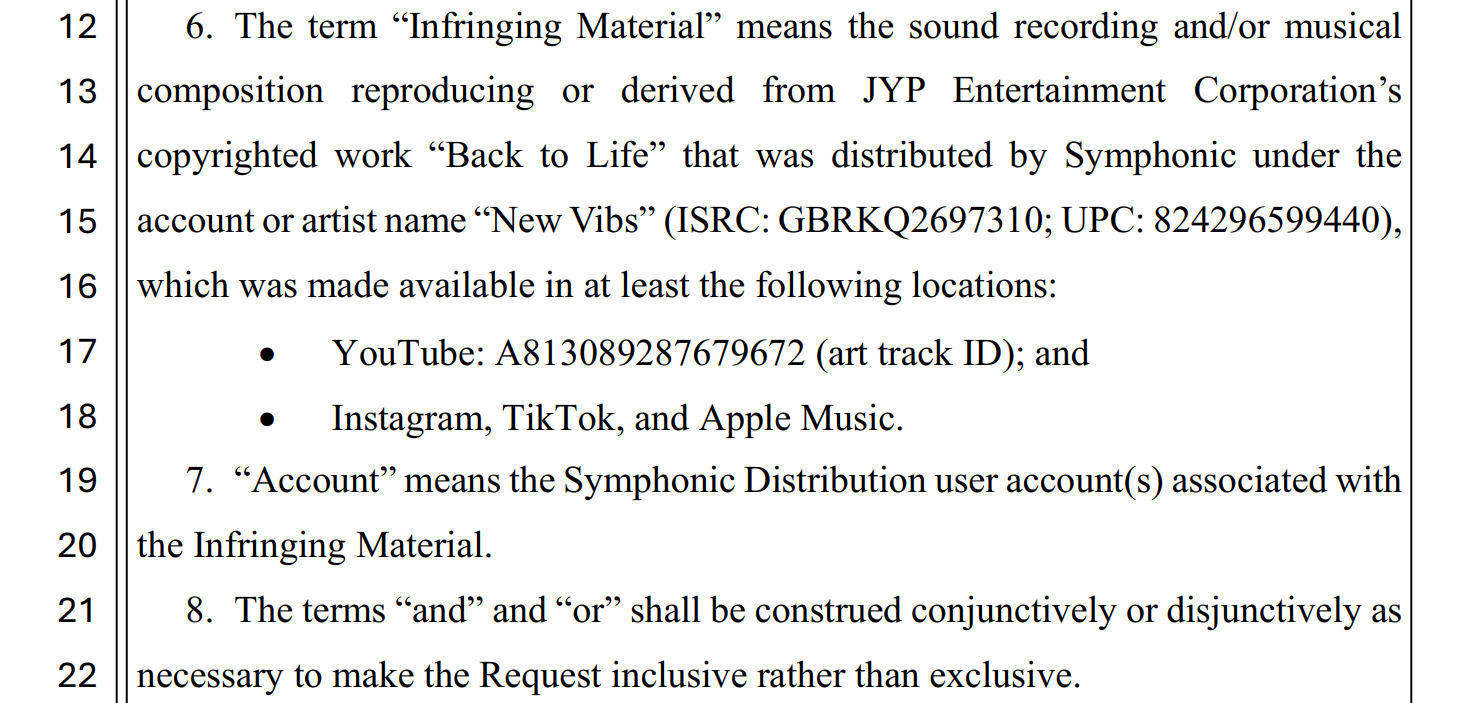
JYP Entertainment eventually discovered that the song had been published through official channels on YouTube, Instagram, TikTok, and Apple Music. The unauthorized release was attributed to an artist profile operating under the name "New Vibs" and had been cleared for distribution via the independent music distributor Symphonic.
From DMCA Takedown Notices to Federal Subpoenas
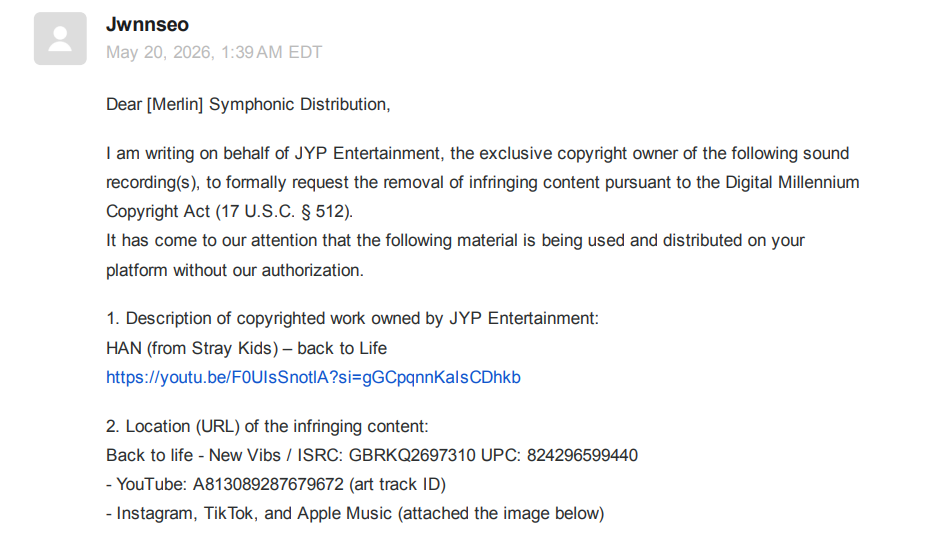
Recognizing the unauthorized commercialization of its intellectual property, JYP Entertainment’s legal team moved quickly to halt the infringement. In May, the label issued formal Digital Millennium Copyright Act (DMCA) takedown notices to Symphonic Distribution, the Tampa-based independent distributor responsible for channeling the files to the various digital service providers. Similar notices were dispatched to the respective platforms hosting the infringing audio.
The May 20 DMCA notice explicitly identified the release titled "Back to life" under the pseudonym "New Vibs" and detailed its unauthorized presence across YouTube, Instagram, TikTok, and Apple Music. The notice carried a clear warning, stating that if the infringing content was not removed promptly, the label would pursue formal legal action to protect its copyrighted assets. Symphonic’s legal representatives acknowledged receipt of the notice and confirmed that they would investigate the matter. Meanwhile, as fan demand for the song continued to mount, JYP Entertainment officially released "back to life" on streaming platforms itself, weeks after the bootleg had initially surfaced.
While an official release under normal circumstances might have signaled the end of the dispute, JYP Entertainment decided against letting the "New Vibs" account holder walk away without accountability.
Targeting Names, IP Addresses, and Bank Details
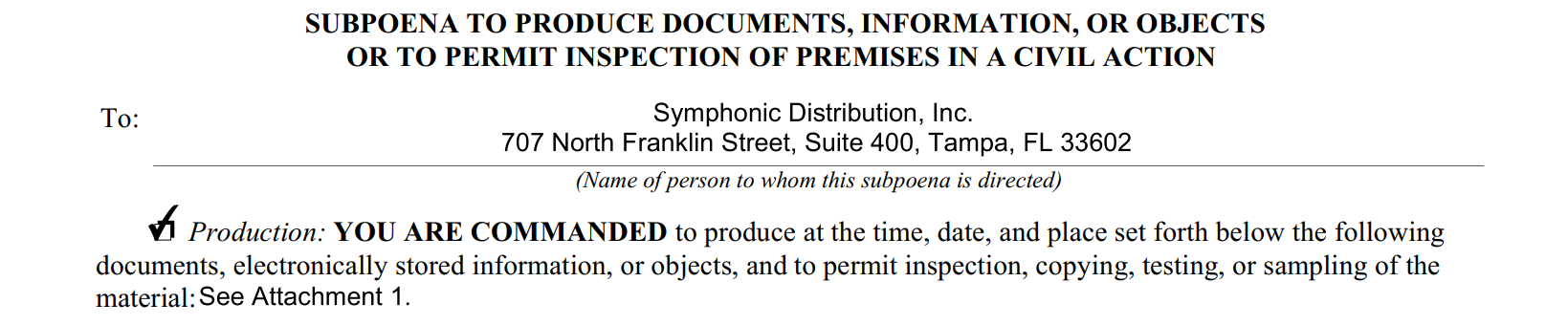
Seeking to uncover the true identity behind the pseudonym, lawyers from the firm Arnold & Porter, representing JYP Entertainment, filed a DMCA subpoena application in a federal court in California. Under United States copyright law, DMCA subpoenas allow copyright owners to compel online intermediaries to disclose identifying information about alleged infringers without the immediate necessity of filing a full civil lawsuit, requiring only the signature of a court clerk to take effect.
The subpoena application filed on behalf of JYP Entertainment is comprehensive, requesting any and all available records that might reveal the identity of the individual or individuals operating the "New Vibs" account through Symphonic. Specifically, the label has asked the court to compel the distributor to hand over names, physical addresses, IP addresses, telephone numbers, email addresses, payment information, account updates, and complete account histories.
Of particular note is the label’s focus on financial records. The requested information includes detailed payment histories for the account holder, such as bank routing numbers, account numbers, and any associated banking addresses. By tracing this financial trail, the label hopes to pierce the anonymity provided by digital distribution networks and identify the physical person responsible for uploading the copyrighted material.
As the legal proceedings continue to unfold, questions remain regarding how the distributor will respond and whether the account holder will contest the subpoena in court. Court filings indicate that the clerk has yet to formally issue the subpoena.
Addressing the situation, a representative for Symphonic Distribution provided clarification regarding the company’s timeline and subsequent actions, emphasizing that the distributor cooperated fully upon receiving the initial notice in May. According to the company, the infringing content was removed from all digital service providers immediately, and the account used to distribute the link was terminated. Furthermore, the distributor confirmed that it has received no further correspondence or inquiries from JYP Entertainment since the initial takedown notice was processed.
Copies of JYP Entertainment’s DMCA subpoena application, along with the proposed subpoena and related legal documents, have been made publicly available through legal documentation archives as the case proceeds through the federal court system.
Leave a Reply