
That is not to suggest, however, that Mascis is devoid of humor or charm. As a recent interview was winding down and expressions of gratitude were being exchanged for his time, the legendary frontman began to loosen up. Drifting back into memories of his youth, he recalled a past life as a mini-golf enthusiast. He recounted a pivotal moment during a youth mini-golf tournament, noting that he had faced a three-foot putt for the win. That was the precise moment, he reflected, when he realized he was a choker. At just eleven years old, he choked under the pressure, prompting him to decide that he should perhaps steer clear of competitive sports. Consequently, rather than pursuing a professional career in mini-golf, Mascis channeled his energy elsewhere and went on to help form Dinosaur Jr., one of the most foundational and enduring bands in alternative rock history.
While the vast majority of his contemporaries from the mid-1980s underground scene have long since called it quits, or are merely going through the motions on legacy tours for a steady paycheck, the original lineup of Dinosaur Jr.—comprising Mascis, bassist Lou Barlow, and drummer Patrick Murphy—remains remarkably active. The trio continues to regularly release new long-playing records filled with reliable, muscular rock tracks. Yet, when asked about the secret behind the band’s longevity across four decades, Mascis offers no grand philosophy or strategic roadmap. After forty years deep in the music industry, his explanation is characteristically understated: he simply guesses that they have nothing better to do.
What can easily come across to an interviewer as frustrating indifference may very well be the fundamental key to Mascis’s remarkable staying power, for better or worse. Both creatively and professionally, his enduring modus operandi centers on rolling with the punches, avoiding over-intellectualization, and trusting instinct over endless revision.
This philosophy is clearly reflected in the creation of their record There Near. According to Mascis, the band simply refused to push the creative process to an exhausting degree. There were no grueling eight-hour marathon studio sessions, nor did they spend weeks meticulously fine-tuning individual basslines or trading digital audio workstations and files back and forth remotely across the internet. Instead, Mascis would arrive at the studio with fully prepared demos, and the band would immediately dive into recording. They would track songs even while Barlow and Murph were actively learning their respective parts on the fly, operating on the off chance that the material would magically come together quickly and capture a raw energy.
This relaxed, pragmatic approach heavily informs Mascis’s choices regarding musical equipment as well. While describing himself as a tube purist at heart, he acknowledges that vintage gear can occasionally be quite inconvenient, leading him to utilize whatever tools actually work in a given situation. This practical compromise means that while he still mixes and masters his recordings to traditional magnetic tape, he simultaneously handles the tracking process using modern digital software like Pro Tools.
A similarly easygoing philosophy governs his approach to designing signature instruments in collaboration with Fender. He aims to incorporate the important features he personally desires without overcomplicating the design, emphasizing that keeping signature models relatively affordable allows everyday players the freedom to modify and use the instruments however they see fit. For Mascis, the guitar neck remains the single most important element. Describing himself as a sucker for jumbo frets, he notes that as long as the neck and frets are crafted to a high standard, most of the other hardware components can easily be swapped out by the player according to their own preferences.
However, that same lackadaisical attitude has occasionally drawn criticism and controversy. Approximately two years ago, Mascis released a music video for his solo track "Old Friends" that was created entirely using generative artificial intelligence. Speaking with media outlets, he finally addressed the controversy publicly, explaining that a kid had put the video together independently. Figuring that it looked cool, he gave it the green light, noting that it served as a brief dip of his toes into a medium he rarely interacts with, as he generally does not focus much on music videos. After trailing off repeatedly while navigating the question, he ultimately admitted that the technology represents a slippery slope.
Expanding on his thoughts regarding the broader cultural shift, Mascis noted that while he does not believe there is a legitimate place for artificial intelligence within the actual process of music creation, society must acknowledge that the technology has arrived whether people like it or not. In his view, musicians and artists are simply learning how to navigate and deal with it, while hopefully avoiding catastrophic outcomes.
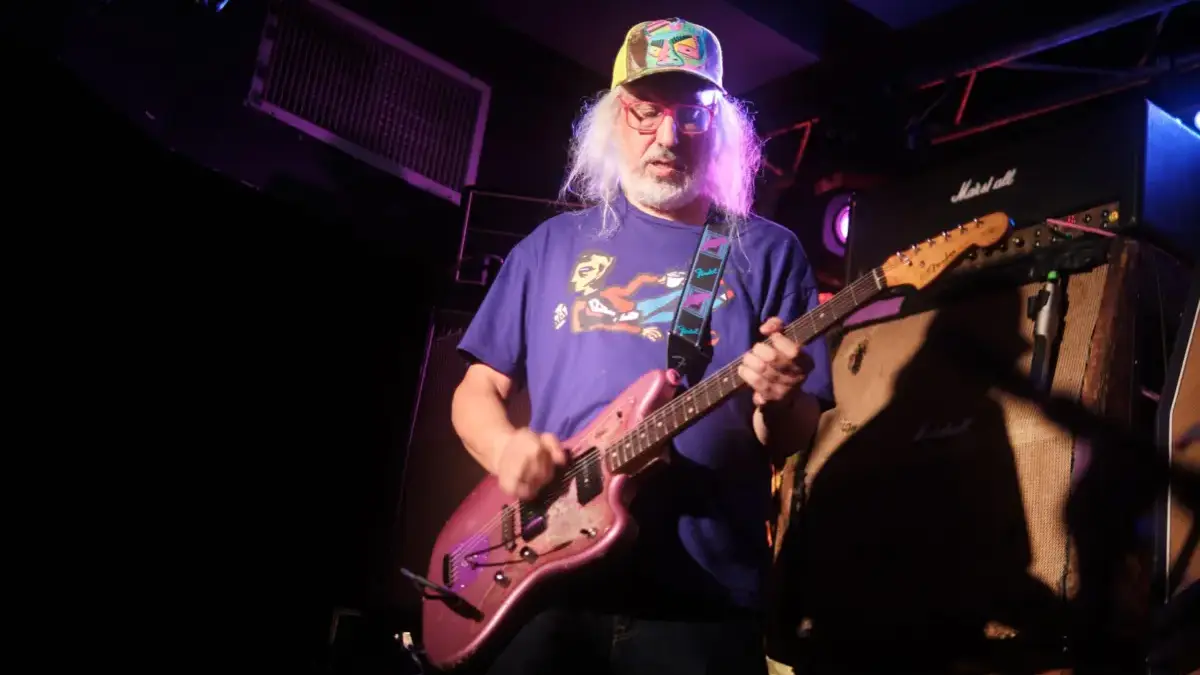
About the only subject capable of drawing strong, passionate feelings from Mascis is the band’s infamously loud live performances. Dinosaur Jr.’s recent high-energy performance at the intimate venue Baby’s All Right serves as a prime example of the visceral sonic wall the band continues to generate, frequently prompting concertgoers to rethink their approach to hearing protection. Expressing a touch of his purist heart, Mascis observed that modern audiences seem increasingly desperate for something grounded in tangible reality. Emphasizing the organic nature of their performances, he pointed out that the band utilizes no in-ear monitors or click tracks, relying instead on traditional amplifiers and acoustic space. In an era dominated by digital automation, he believes some listeners are actively responding to the raw reality of a live rock show that is entirely free from computer generation.
Mascis openly bemoaned the contemporary disappearance of traditional amplifiers on concert stages—noting that he continues to perform directly in front of three full stacks, even within tight club environments with a capacity of barely under three hundred people—alongside the heavy industry reliance on high-tech front-of-house sound setups. Describing the modern concert soundscape as very weird, he lamented that contemporary sound engineers now frequently create the sound rather than simply capturing it. Naturally, his acute recognition of the visceral power inherent in live music and the direct, unmediated connection with an audience makes his broader indifference toward artificial intelligence seem all the more paradoxical.
Dinosaur Jr. is currently touring across the United States in support of their latest album, There Near, which is available now.



Leave a Reply