
The movement toward digital sovereignty across European public institutions is rapidly gaining momentum. Following close on the heels of the Netherlands’ formal DAWO initiative—a mandate aimed at replacing foreign proprietary software within Dutch public bodies with a NixOS-powered platform—observers of European open-source policy naturally wondered whether neighboring nations would follow suit. It turns out France has already laid substantial groundwork in the same direction.
DINUM, the country’s Interministerial Directorate for Digital Affairs, has quietly operated its own NixOS-based workstation environment on internal government machines for several months. This initiative highlights a broader, growing trend among European Union member states to reduce reliance on foreign technology stacks, secure critical infrastructure, and reclaim absolute control over public administration IT systems.

Sécurix and its NixOS Bet
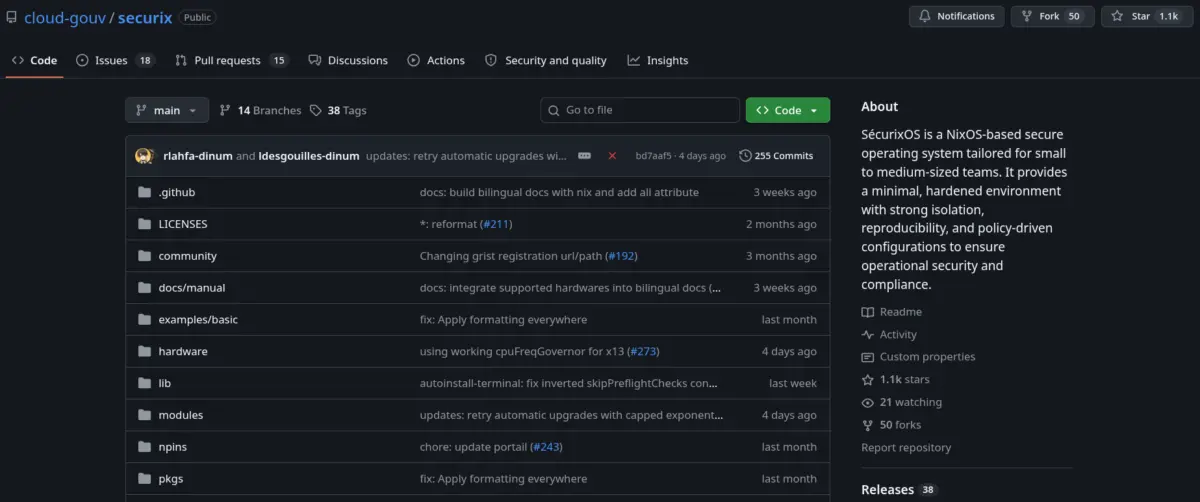
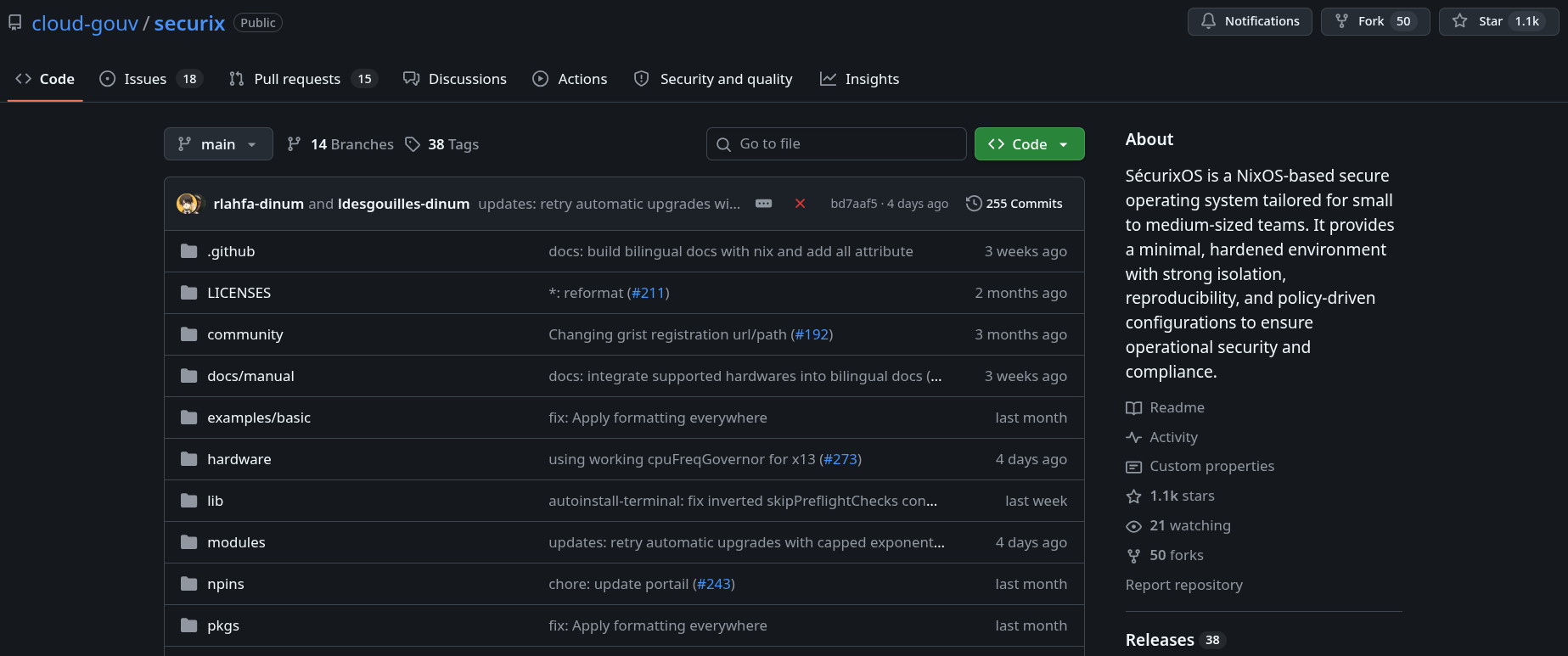
At the heart of the French government’s open-source workstation initiative is a project known as Sécurix. Developed directly by DINUM, Sécurix is a security-hardened NixOS configuration specifically tailored for system administrators and technical staff. Rather than creating an entirely new, isolated Linux distribution from scratch, the project builds directly on top of the established NixOS ecosystem without forking it. This approach allows the agency to leverage the robust core of NixOS while strictly applying the rigorous security guidelines published by ANSSI, France’s national cybersecurity authority.
The project is distributed under the permissive MIT license and is hosted publicly within the cloud-gouv GitHub organization. Although the project remains in an alpha development stage, it is actively evolving; the newest release, version v0.20.1, was introduced to the public repository just hours ago.

According to reporting by Emilien Ercolani of The Stack, who attended a comprehensive DINUM briefing in April, the agency is actively targeting implementation across approximately 250 staff workstations. This targeted deployment follows a successful pilot run that tested the platform across 70 machines within the department, proving its viability for daily internal government operations.
In its current state of development, Sécurix prioritizes advanced authentication and integrity measures. The setup uses FIDO2 hardware security keys as the primary user login method, provides robust support for TPM2 and YubiKey hardware, and heavily relies on NixOS’s signature reproducible build model to ensure system consistency and tamper resistance.
It is worth noting that Sécurix is not intended to function as a standalone, general-purpose consumer Linux distribution. Instead, it serves as a secure foundational framework from which institutional workstations can be uniformly operated, governed, and managed centrally by system administrators.
Complementing Sécurix, DINUM has also published Bureautix, a companion reference template designed specifically for standard, non-technical office workstations. Bureautix ships pre-configured with productivity tools including the KDE Plasma desktop environment, LibreOffice, ONLYOFFICE, and WPS Office. Official project documentation describes Bureautix as a "dummy example" intended for public organizations and agencies to fork and adapt privately for their own internal needs, rather than a separate, universally running operating system.

Why NixOS is Becoming the Go-To Choice for European Governments
The selection of NixOS by European public bodies is far from accidental; the project itself possesses deep European roots. Eelco Dolstra originally created the Nix package manager and the NixOS operating system at Utrecht University in the Netherlands, and the NixOS Foundation operates as a Dutch nonprofit entity. For European governments increasingly focused on supply chain security and jurisdictional independence, the institutional and geographical appeal of NixOS is obvious.
Mainstream enterprise Linux distributions typically trace their corporate roots to foreign jurisdictions. For instance, Fedora is tied closely to Red Hat, which is owned by the United States-based technology giant IBM. Similarly, openSUSE is affiliated with Luxembourg-headquartered SUSE, and Ubuntu is produced by Canonical, a company based in the United Kingdom.
For European digital policy makers, relying heavily on operating systems and platforms tied to foreign nations introduces potential vulnerabilities, particularly if those foreign parent companies can be legally compelled to comply with the shifting political whims, regulatory demands, or extraterritorial mandates of their home governments.
The overarching strategic approach visible across the continent suggests that countries like France, the Netherlands, and Denmark are taking distinct administrative routes toward the exact same strategic destination. Ultimately, for governments seeking absolute and verifiable control over their sensitive digital infrastructure, adopting vendor-neutral, transparent, and reproducible software architectures is increasingly viewed as the most viable path forward.

Leave a Reply