
The Fedora Design Team has proven that open source software can effectively power large-scale virtual conferences. Following the successful execution of the inaugural Creative Freedom Summit in January 2023, organizers have shared a comprehensive blueprint of the tools, strategies, and community workflows that made the event possible without relying on proprietary conference platforms.
The journey toward the Creative Freedom Summit began in the fall of 2022, sparked by an overwhelming response to talk submissions for Flock, the annual conference for Fedora users and contributors. Marie Nordin, after reviewing proposals for the August 2022 gathering, noticed a massive surge in submissions centered on open source design and creativity. The volume far exceeded what the event could accommodate, revealing a vibrant and underserved community of creatives who rely on open source tools to produce their work. Recognizing this appetite, Nordin brought the concept of a dedicated open source creativity conference to the Fedora Design Team, and planning commenced for an event held from January 17 to 19, 2023.
Given that it was the first iteration of the conference, organizers decided to curate the schedule by directly inviting speakers based on previous Flock submissions and personal networks within the open source creative community. The response was overwhelmingly positive, with nearly every invited speaker accepting. While this approach ensured a high-caliber lineup, it meant the team did not utilize a formal open source Call for Papers management tool for this initial event, a logistical hurdle organizers plan to address for future summits.
Navigating the Challenges of Open Source Infrastructure
Since the onset of the COVID-19 pandemic, the Fedora project’s primary events have largely relied on Hopin, a proprietary online conference platform. While Hopin offers a professional virtual environment complete with expo halls, dedicated tracks, hallway chats, and robust moderation tools, it represents a philosophical compromise for a community dedicated entirely to open source principles. Relying on proprietary software to host an event celebrating open source values has long sparked internal debates within the community.
However, as community events scale in complexity, building and maintaining an integrated, reliable open source conference stack presents significant engineering challenges. Organizers must weigh various factors, including budget constraints, technical capabilities, available infrastructure, and tolerance for minor technical glitches. For the Creative Freedom Summit, the organizing team operated with zero financial budget, relying entirely on volunteer work hours, supported infrastructure like the Fedora Matrix server, and a hosted WordPress website.
With technical experience running weekly Fedora Design Team video calls via PeerTube, key team members possessed the familiarity needed to experiment with an all-open-source stack. The team deliberately opted for a low-key, single-track, and informal format, establishing a healthy tolerance for minor rough edges in exchange for the freedom of an independent open source infrastructure.

Building an Open Source Event Stack
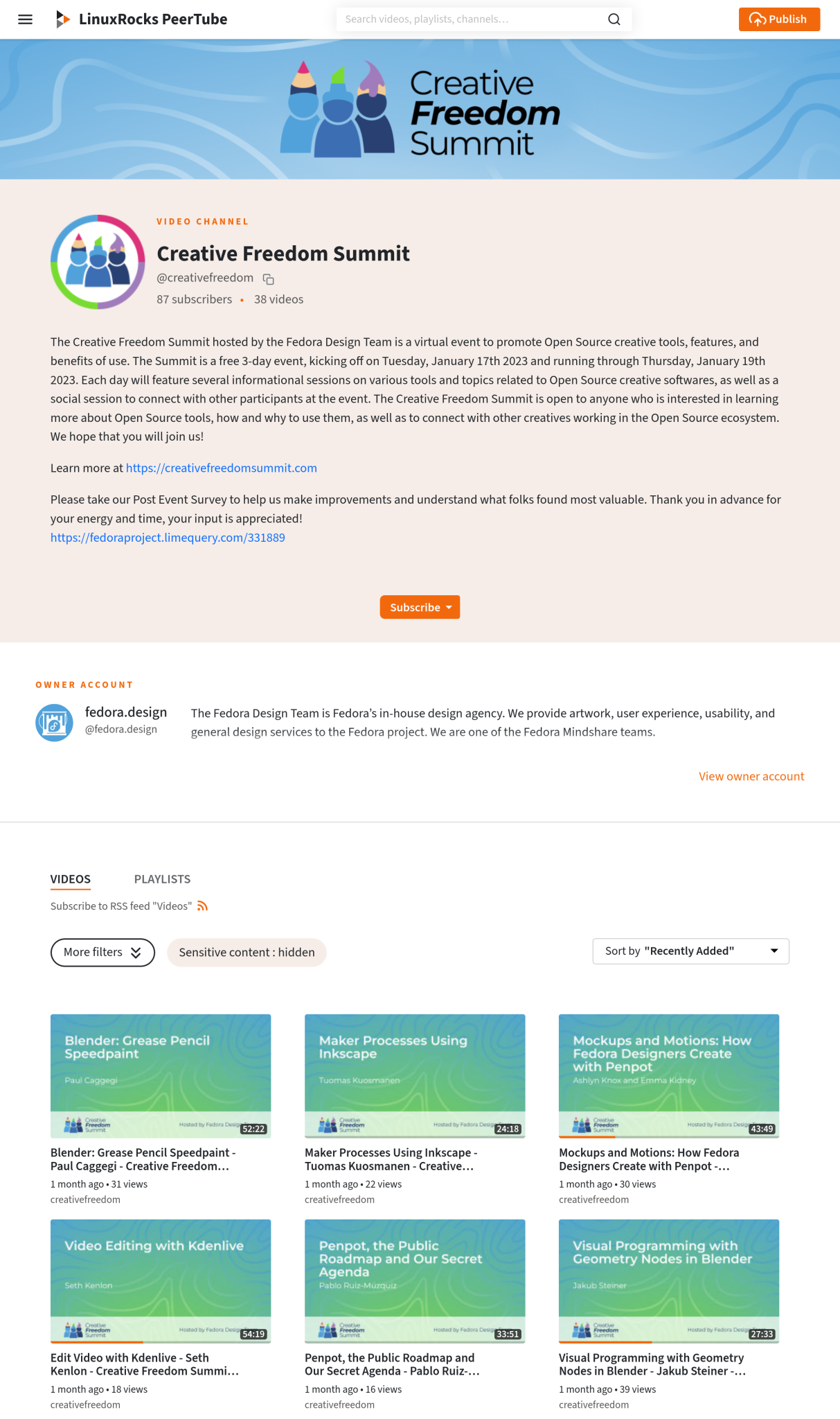
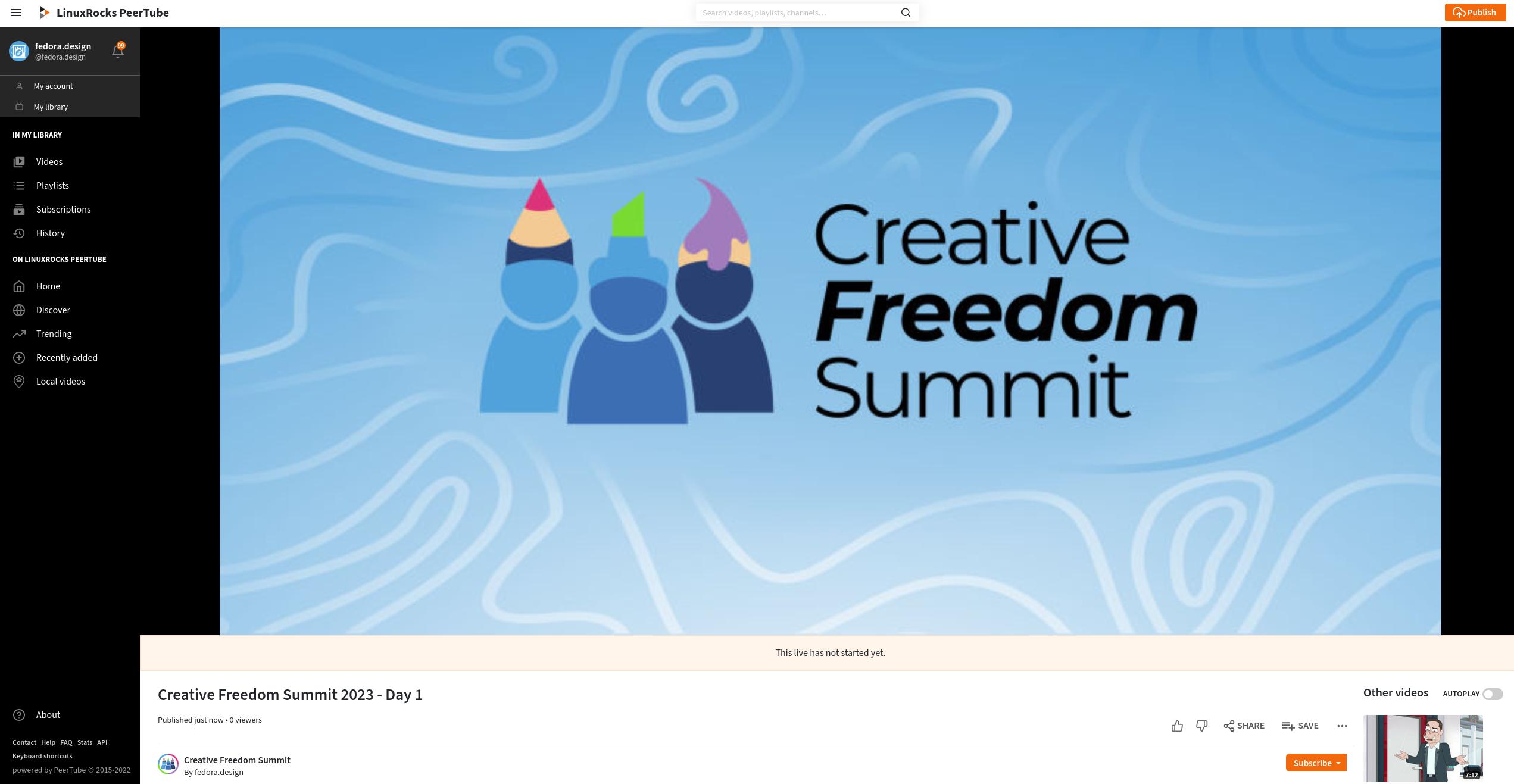
The technical architecture of the Creative Freedom Summit was divided into live streaming components and post-event archiving workflows. For the live broadcast, the team utilized LinuxRocks PeerTube, a free and decentralized video platform integrated into the broader Fediverse. Hosted generously by LinuxRocks.online, the PeerTube platform offered a standout feature that significantly streamlined event operations: automated, near-instant replay generation.
Unlike traditional platforms that require manual video processing, uploading, and coordination following a livestream, PeerTube automatically published the recorded sessions to the event channel moments after each broadcast concluded. Attendees in the chatroom frequently cited this capability as a major advantage, as it allowed anyone who missed a session to catch up within minutes of its conclusion without any intervention from the volunteer organizing team.
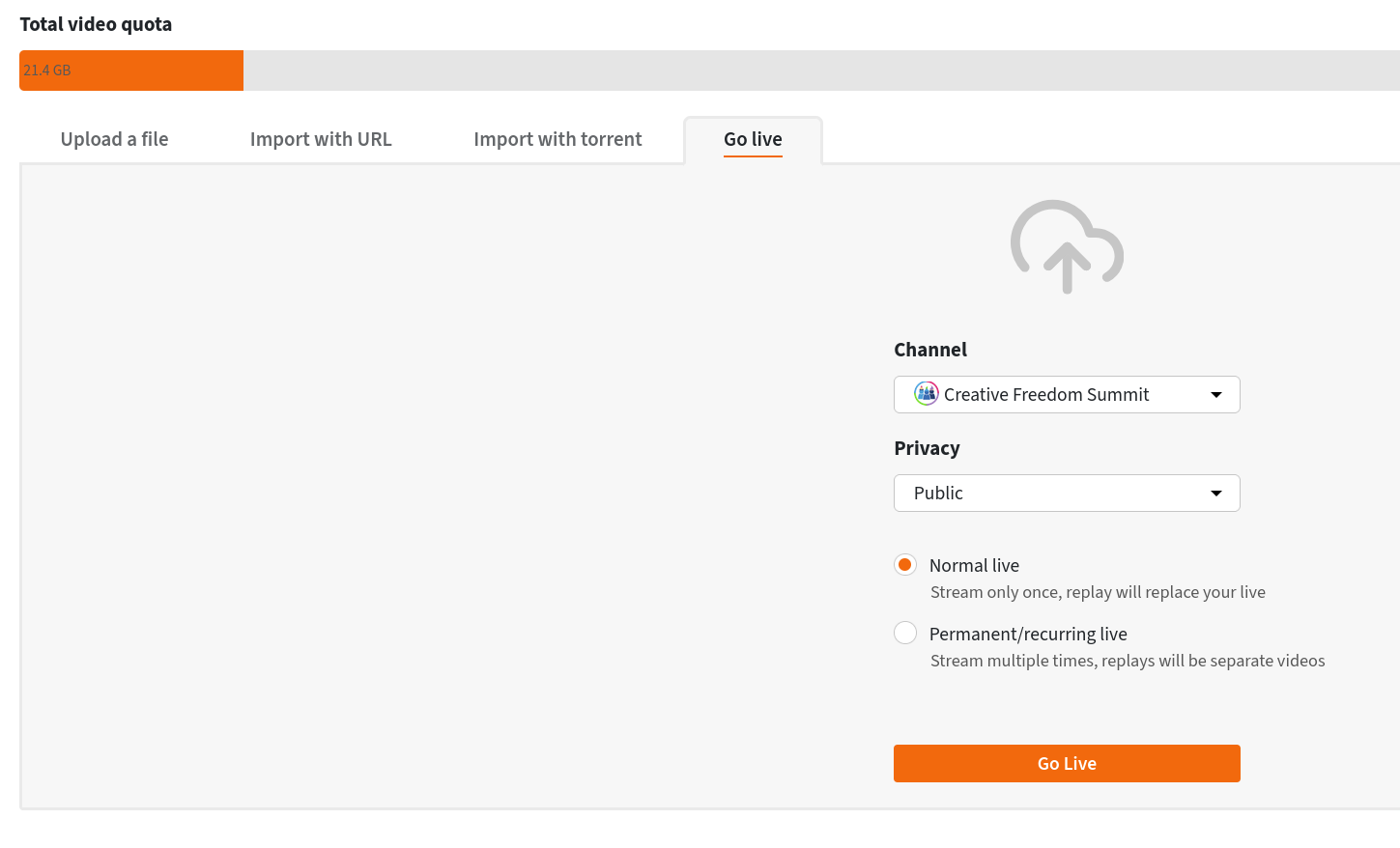
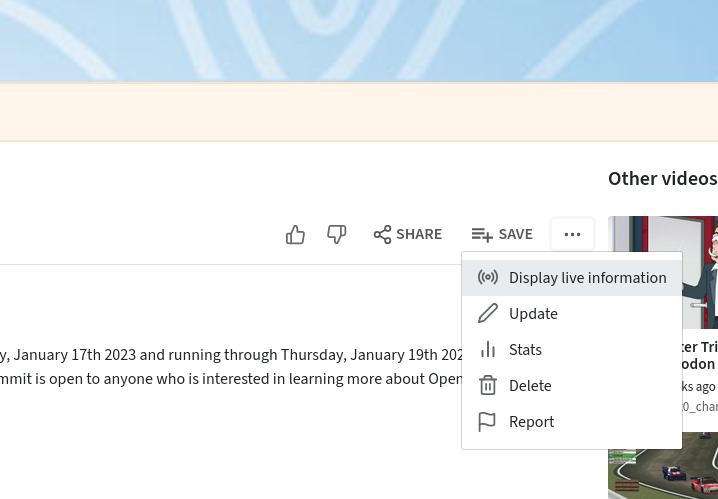
The livestreaming workflow was engineered for operational simplicity. By generating a reusable livestream URL and authorization key within PeerTube, organizers avoided the exhausting overhead of creating unique streaming credentials for every individual talk. This shared credential was documented in a centralized location accessible to the team members rotating through hosting duties, allowing any authorized organizer to seamlessly initiate a stream.
For the live stage, where speakers and hosts gathered to present and manage discussions, the team deployed Jitsi Meet, a free and open-source video conferencing platform. Organizers created a secure meeting room on meet.jit.si, distributing the URL strictly to speakers and event staff. To maintain a smooth transition between presentations, the room was configured with a virtual lobby, allowing speakers to join early without interrupting ongoing talks while hosts manually admitted them between sessions.
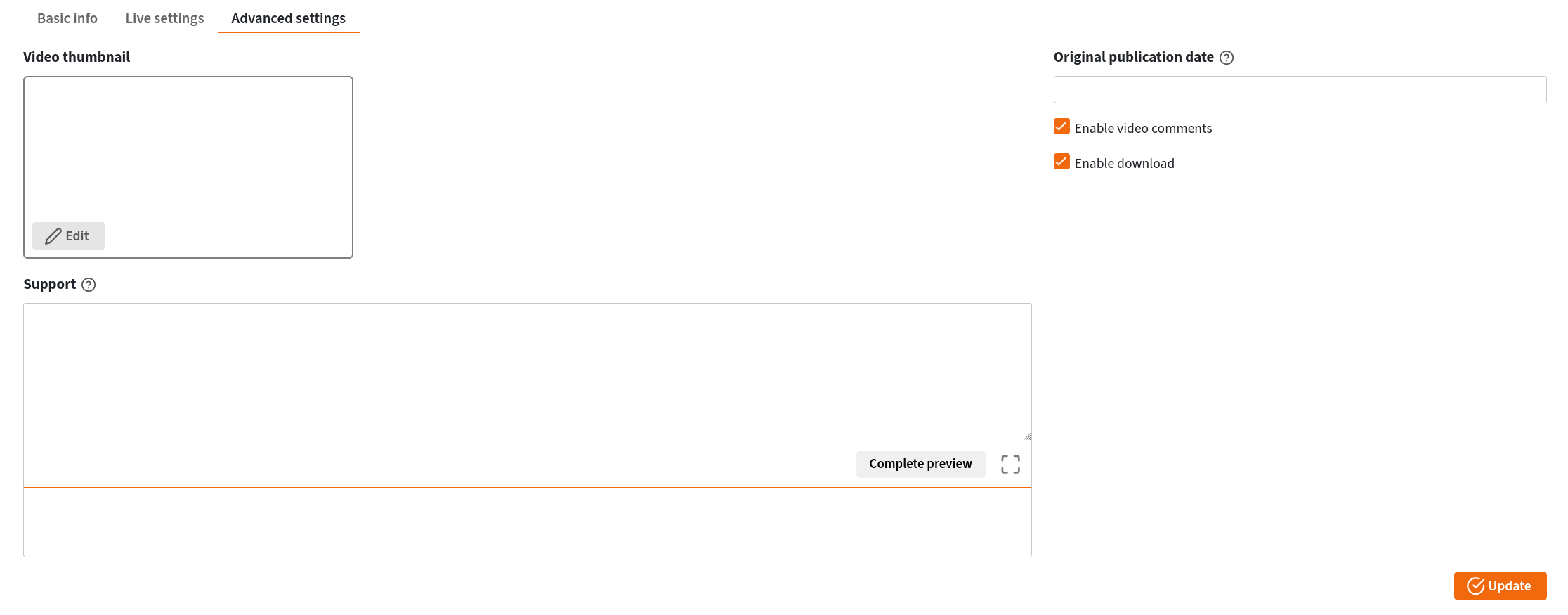
The integration between Jitsi and PeerTube relied on Jitsi’s built-in livestreaming functionality, which connects directly to external video services via RTMP protocols. By combining the PeerTube livestream URL and authorization key, hosts initiated broadcasts directly from the video conferencing interface. While the setup proved largely reliable, organizers noted valuable operational lessons during the live event. For instance, keeping the Jitsi stream continuously active across multiple talks resulted in single, multi-hour video files, making immediate replays harder to navigate. Organizers subsequently concluded that terminating the stream between individual presentations yields clean, single-talk video files immediately upon completion.
Coordinating Behind the Scenes and Engaging Attendees
Behind the scenes, the organizing team leveraged Element, a decentralized chat client running on the Fedora Matrix server, to coordinate logistics in real-time. A dedicated, invite-only backstage channel was established a week prior to the conference to onboard speakers, run technical checks, and address any last-minute scheduling adjustments. This channel proved invaluable during emergencies, allowing the team to dynamically reschedule talks when speakers faced unexpected conflicts.
For attendee engagement, announcements, and live question-and-answer sessions, the team utilized embedded Etherpad and HackMD documents pinned directly within the main conference chat room. Although initial reliance on Etherpad presented minor widget-loading issues for some participants, transitioning to an embedded HackMD document resolved accessibility hurdles, supported by fallback links provided in the channel topic.
The core attendee experience was centralized within a single Matrix room, where website widgets embedded the PeerTube livestream and live collaborative notes side-by-side with the active chat stream. This integrated approach allowed participants to watch presentations, review schedules, submit questions, and converse with fellow attendees within a unified interface.
Post-Event Management and Community Contributions
Following the conclusion of the summit, organizers gathered feedback using LimeSurvey, an open-source survey tool distributed via the Element chat channel and PeerTube. The post-event data collection informed ongoing debriefs among organizers as they began planning for subsequent iterations of the summit.
A major focus of the post-event phase involved video post-production and accessibility enhancements. A dedicated group of volunteers rallied through the conference chat channel to tackle video editing, title cards, intro and outro music, and overall cleanup. Using a GitLab epic to organize tasks, volunteers downloaded raw recordings from the main PeerTube channel, edited the files using Kdenlive—an open-source video editor—and uploaded the finished versions to a shared repository for final review and publication.
Volunteers also explored automated solutions for accessibility, noting Kdenlive’s built-in speech-to-text capabilities as a powerful tool for generating video subtitles. While the live event relied primarily on community-driven live captioning in the chat, the post-event workflow demonstrated the viability of open-source tooling for producing fully captioned archival content.
By demonstrating that a complex virtual conference can be successfully executed entirely through open-source software, the Fedora Design Team has provided a practical roadmap for open source communities seeking digital sovereignty. Organizers continue to collaborate on refining the stack for future events, inviting community feedback and participation through their active Matrix channel.
Leave a Reply