
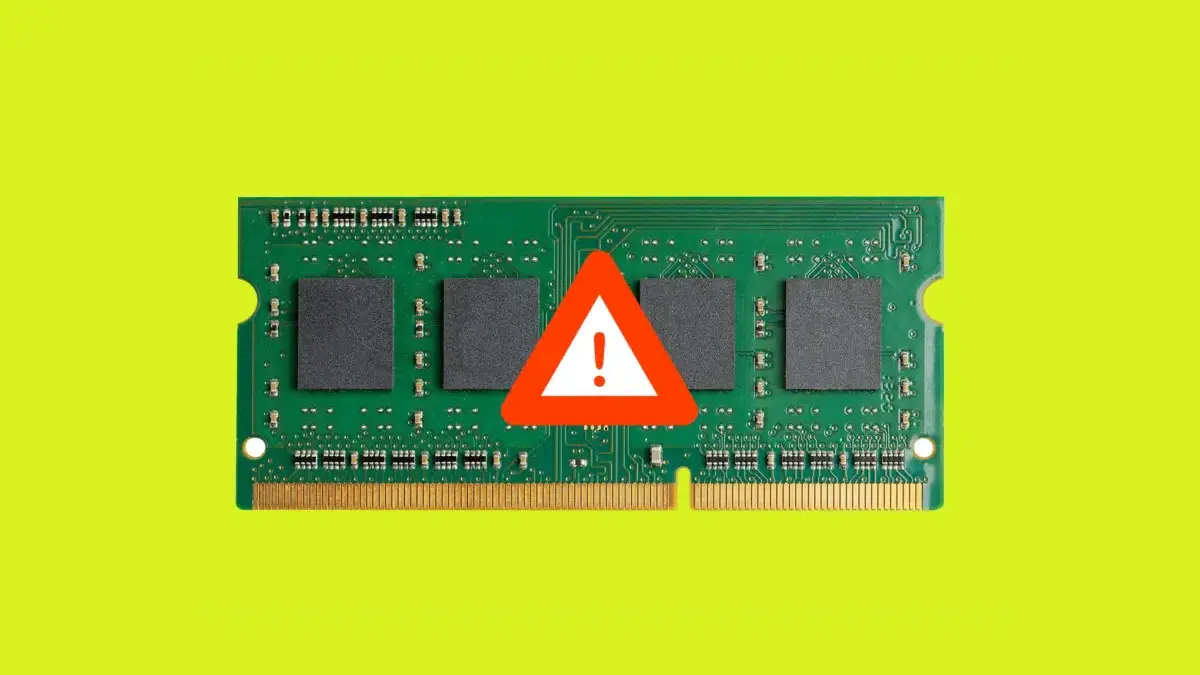
Major central processing unit manufacturers have taken notice of the seemingly unending RAM price hikes that are making it increasingly difficult for everyday consumers and enthusiasts to upgrade their personal computers. Facing a market where memory costs have soared to unprecedented heights, their solution is a surprising yet practical return to last-gen DDR4 RAM. Both Intel and AMD are positioning themselves to support the older, more affordable type of memory in new processor releases, providing a much-needed financial lifeline to budget-conscious builders who are being priced out of modern hardware upgrades.
This strategic shift became strikingly clear on a recent Friday when hardware manufacturer Gigabyte officially announced that two of its upcoming motherboard lines will provide native support for upcoming processors built on Intel’s aging LGA 1700 socket. That particular socket originally debuted back in 2021 alongside the launch of Intel’s 12th-generation Alder Lake CPUs, a major architectural release that featured a hybrid design and provided support for both older DDR4 RAM and the then-brand-new DDR5 RAM standard. Although Intel eventually phased out dual-format support in favor of a strictly DDR5-only approach in 2024, recent industry developments have forced a rethink. According to official statements from Gigabyte, the dual-format memory support is now being officially revived, with new LGA 1700-compatible chips expected to launch in early 2027. Representatives for Intel did not immediately respond to requests for comment regarding this unexpected roadmap adjustment.
This technological backtrack fundamentally stems from the LGA 1700 platform’s inherent cross-compatibility with both kinds of RAM, giving it a crucial structural advantage over its successors that has suddenly become far more important in the current economic climate. Intel’s underlying strategy appears to be offering users a practical choice: a brand-new CPU upgrade that does not mandate an accompanying switch to new, extraordinarily expensive DDR5 memory modules. Interestingly, rival chipmaker AMD is pursuing a remarkably similar strategy to accommodate budget-constrained system builders. Back in August, Gigabyte also announced a completely new series of motherboards designed specifically for AMD’s legacy, DDR4-compatible AM4 platform, aligning neatly with the tenth-anniversary relaunch of the popular Ryzen 7 5800X3D CPU.
To understand why this is happening now, it helps to look at the timeline of the technology itself. DDR4 memory first began hitting the consumer market back in 2014, and over the subsequent decade, it has been steadily succeeded by the much faster and more power-efficient DDR5 standard. Under normal circumstances, purchasing brand-new computer hardware today specifically to utilize memory technology that is over a decade old would likely be considered a poor financial investment. However, the ongoing RAM shortage is entirely changing the mathematical equation for PC upgrades. Unlike the newer standard, DDR4 RAM has seemingly felt the sting of recent global price hikes much less severely, remaining comparatively stable and accessible to average buyers.
The stark reality of this price disparity becomes immediately obvious when shopping around for components after a hardware failure. Experiencing this first-hand while searching for replacement memory after a DDR4 kit abruptly died reveals a jarring economic landscape. At present, a high-performance DDR5 32GB Corsair Vengeance RAM kit can cost up to $620, whereas a corresponding, functionally similar DDR4 kit from the same manufacturer retails for around $260. Even though $260 is noticeably more than 32GB of DDR4 RAM typically cost back in mid-2025, the DDR5 equivalent represents more than double the financial investment. Of course, DDR5 memory undeniably possesses significant technical advantages over its predecessor, including substantially higher data transfer speeds and vastly improved power efficiency under heavy loads. Yet, for millions of consumers, those performance perks simply might not be worth the exorbitant current price of admission required to enter the DDR5 ecosystem.
Industry analysts suggest that it could be years before memory component prices drop back down to historical averages, a harsh economic reality that is starting to truly sink into the consciousness of the hardware community. This persistent market pressure explains why the official return of older sockets and chipsets is being welcomed rather than dismissed as a regression. While waiting for the market to stabilize remains a frustrating prospect for enthusiasts chasing cutting-edge performance, the revival of DDR4 support ensures that upgrading a computer system does not require breaking the bank. At the very least, for those who already own a stable system or are looking to piece together a cost-effective build, it is a remarkably good time to hang onto your existing DDR4 RAM.


Leave a Reply