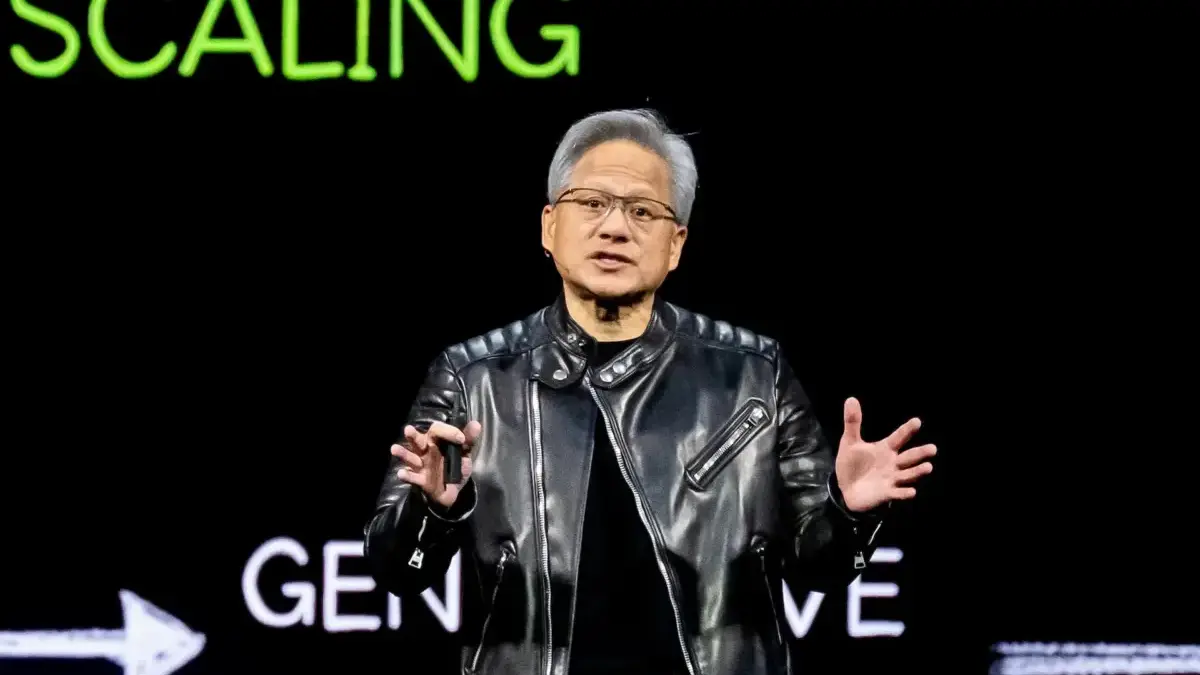
Congressional Democrats have officially launched a formal inquiry into how the Trump administration handled lucrative semiconductor sales by Nvidia to China, intensifying the fallout from a sweeping corporate and geopolitical scandal. The announcement follows a turbulent day that saw the ouster of Nvidia co-founder and CEO Jensen Huang, who has also agreed to testify before a separate group of Republican-led congressional committees.
Huang’s removal from the helm of the world’s leading artificial intelligence chipmaker came after he confessed to an extramarital affair amid mounting reports regarding a relationship with a woman accused of being a Chinese intelligence operative. In the wake of that initial disclosure, additional reports surfaced indicating that the former chief executive was also involved in other affairs with Nvidia employees, creating an unprecedented leadership crisis at the tech giant.
The alleged Chinese spy at the center of the controversy, identified as Alice Huang, served as an executive at Megaspeed, a Singapore-based customer of Nvidia. U.S. officials have increasingly suspected Megaspeed of acting as a conduit to illegally route advanced, high-performance Nvidia semiconductors into mainland China, circumventing strict federal
export controls designed to restrict Beijing’s military and technological advancements.
The newly announced Democratic inquiry is being spearheaded by Representative Richard Neal of Massachusetts, the ranking Democrat on the House Ways and Means Committee, and Senator Ron Wyden of Oregon, the ranking Democrat on the Senate Finance Committee. Because Democrats currently operate as the minority party in both chambers, they lack subpoena power and cannot unilaterally compel answers or document production from executive agencies. Nevertheless, they possess the authority to demand information and direct public scrutiny toward administration policies.
In a sharply worded letter directed to Commerce Secretary Howard Lutnick, the lawmakers urged the Department of Commerce to preserve all records pertaining to an arrangement they characterize as both questionable and legally dubious. The correspondence outlines a complex regulatory and financial mechanism that the lawmakers argue circumvented standard constitutional bounds regarding foreign commerce.
According to the legislators’ description of the arrangement, President Donald Trump agreed to permit sales of Nvidia’s advanced H200 chips to buyers in China under a specific condition: the semiconductors, which are manufactured in Taiwan, were required to be shipped to the United States first. Upon their arrival on U.S. soil, the administration levied a tariff on the shipments. The letter argues that this policy effectively allowed the executive branch to take a direct financial cut of Nvidia’s sales to China through what they describe as an unconstitutional export tax system. Following this financial transaction, the Commerce Department under Lutnick’s leadership issued the requisite export licenses.
The revenue-sharing arrangement between the federal government and Silicon Valley chipmakers was publicly disclosed months earlier. In August 2025, reports revealed that both Nvidia and competitor AMD had agreed to surrender 15% of their revenue generated from chip sales to China directly to the U.S. government as part of an unconventional pact to secure official export licenses.
However, the congressional letter from Wyden and Neal raises critical questions regarding why Secretary Lutnick continued to authorize shipments to Megaspeed even after he was reportedly briefed by U.S. intelligence agencies regarding their suspicions surrounding Alice Huang and Jensen Huang’s personal relationship with her. Furthermore, the inquiry questions why the Commerce Department reportedly green-lit export authorizations for other Asian entities that lacked any physical presence at their registered corporate addresses. Consequently, the scope of the congressional investigation extends well beyond corporate governance at Nvidia, placing the actions and oversight of the Trump administration under direct examination.
The lawmakers’ inquiry also examines the potential role of corporate financial contributions in the administration’s decision-making process. The letter notes that the controversial export deal was formally approved after the administration became aware of Jensen Huang’s compromised position due to his relationship with the alleged spy, and crucially, after Nvidia donated $26 million toward presidential projects, including the construction of a new White House ballroom. The inquiry appears designed to investigate whether the administration leveraged its knowledge of the executive’s personal affairs to secure substantial donations from the corporation.
The intersection of executive pressure and corporate compliance was highlighted publicly when President Trump discussed related matters during an interview on a national news program. During the broadcast, the president remarked that he and his administration had threatened an unnamed artificial intelligence executive with potential imprisonment, noting that following the threat, the executive’s stance and cooperation "totally changed."
This mounting congressional scrutiny represents the second major legislative investigation into Nvidia’s China operations and its interactions with the White House since details of the espionage scandal emerged. A separate, Republican-led investigative coalition—comprising leaders from the House Select Committee on the Chinese Communist Party, the House Committee on Foreign Affairs, and the House Intelligence Committee—has pursued its own aggressive oversight track.
That bipartisan-leaning Republican group previously demanded that Jensen Huang appear before them for a closed-door deposition, accompanying their request with the threat of a formal congressional subpoena if he failed to cooperate voluntarily. Following his resignation from Nvidia, Huang agreed to testify before that panel of committees, setting the stage for high-stakes congressional hearings regarding the intersection of corporate leadership, national security, and international trade policy.