

While product designers frequently cultivate strong, communicative relationships with product managers and end-users alike, a persistent organizational divide often remains between design teams and software developers. This friction can create invisible barriers that stall innovation, complicate problem-solving, and ultimately degrade the quality of the final digital product. However, industry practitioners are increasingly finding that adopting principles from the open-source community—specifically the Open Decision Framework—can dismantle these silos and transform how cross-functional teams build software.
The core tenets of the Open Decision Framework assert that modern decision-making processes must be transparent, inclusive, and deeply customer-centric. In practice, this means clearly and openly sharing project problems, technical requirements, and inherent constraints with every party affected by the outcome. It actively encourages collaboration across multiple stakeholders to gather diverse opinions and comprehensive feedback early and often. Most importantly, it provides a structured mechanism for managing competing organizational needs, technical constraints, and shifting project priorities.
For product designers, these principles hold profound relevance. Designing a modern software product, feature, or service is rarely a solitary endeavor; it is a continuous series of interdependent choices. Within this ecosystem, developers are arguably the most critical stakeholders in ensuring that a design vision translates successfully into reality. When designers actively seek out and welcome the diverse technical perspectives of developers, the entire product development lifecycle improves.
The Backend and the User Experience
To understand why developers are indispensable stakeholders in the design process, one must look beyond the visual interface. A user’s overall experience of a product or service is never confined solely to the pixels rendered on a screen or the smoothness of a user flow. Instead, UX encompasses a much broader technical spectrum, including system performance, the speed and reliability of application programming interfaces, how user data is securely handled, and how database architectures are structured for long-term scalability.
When developers are brought into the design conversation as full partners rather than downstream implementers, they contribute vital expertise regarding backend architecture and system constraints that directly shape the user experience. Conversely, a UX designer is equally a stakeholder in the technical domains managed by the engineering team. A performance bottleneck, an unoptimized API call, or the restrictive architecture of a database can severely hinder user satisfaction, regardless of how elegant the initial interface mockups appear. Fostering an open, collaborative relationship between development and design cultivates the trust and transparency necessary to navigate these overlapping concerns successfully.
Making Space for Collaboration
Despite the clear benefits of a unified workflow, transparent and open relationships between developers and designers are still far from standard industry practice. For many teams, working in a fully collaborative, cross-functional manner represents a significant departure from traditional silos where design hands off static specifications over an imaginary wall to engineering. Adopting this new paradigm requires deliberate effort, patience, and a cultural shift from both sides of the aisle.
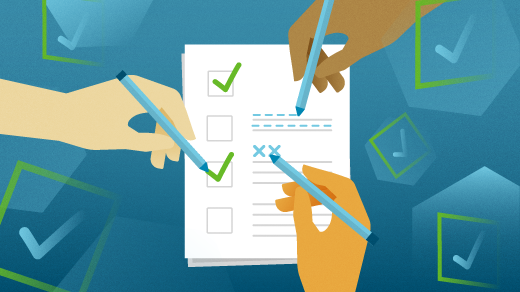
Building this bridge involves creating dedicated spaces where technical feasibility and user experience can be evaluated concurrently rather than sequentially. When organizations foster environments where engineers feel comfortable questioning assumptions and designers feel empowered to understand technical trade-offs, the quality of collaboration rises exponentially. This cultural alignment does not happen by accident; it requires intentional leadership and a shared commitment to openness from the earliest stages of a project’s lifecycle.
An Example of Open Collaboration
The tangible value of early, open collaboration can be observed in everyday product development scenarios. During an early design review session between a product designer and a developer, the designer presented a specific, highly customized interaction model designed to display additional data about an object on the screen. The designer carefully communicated the underlying user need and demonstrated how the interaction would function in practice.
Rather than simply accepting the specification or pushing back with a flat refusal, the developer asked a foundational question: "Does it need to be done in exactly this way?"
The developer proceeded to explain that by introducing a few minor, subtle adjustments to the visual layout and interaction flow, the engineering effort required to build the feature would drop significantly. Crucially, both professionals evaluated the proposed technical shortcut against user needs and agreed that the modifications would have zero negative impact on the overall user experience. Users would still be able to achieve their goals smoothly and intuitively.
This timely exchange yielded multiple positive outcomes. The engineering team saved valuable hours of development time, which in turn left more breathing room to address stubborn bugs, build supplementary features, and preserve a healthy, sustainable work-life balance for the team. Meanwhile, the integrity of the user experience remained entirely intact, and the working relationship between the designer and the developer grew stronger and more trusting. Crucially, this successful outcome would have been impossible without the early, candid feedback of a developer who felt comfortable engaging in an open dialogue.
Your Next Steps
Ultimately, crafting a high-quality digital experience is never the result of a single isolated decision, but rather the cumulative output of a collaborative team working in concert. Product managers, designers, and developers must function simultaneously as experts in their respective domains and invested stakeholders in each other’s fields of responsibility. By breaking down traditional organizational barriers, embracing transparent communication, and applying the tenets of open decision-making, teams can navigate competing priorities more effectively and deliver exceptional products that serve both users and the businesses behind them.



Leave a Reply