
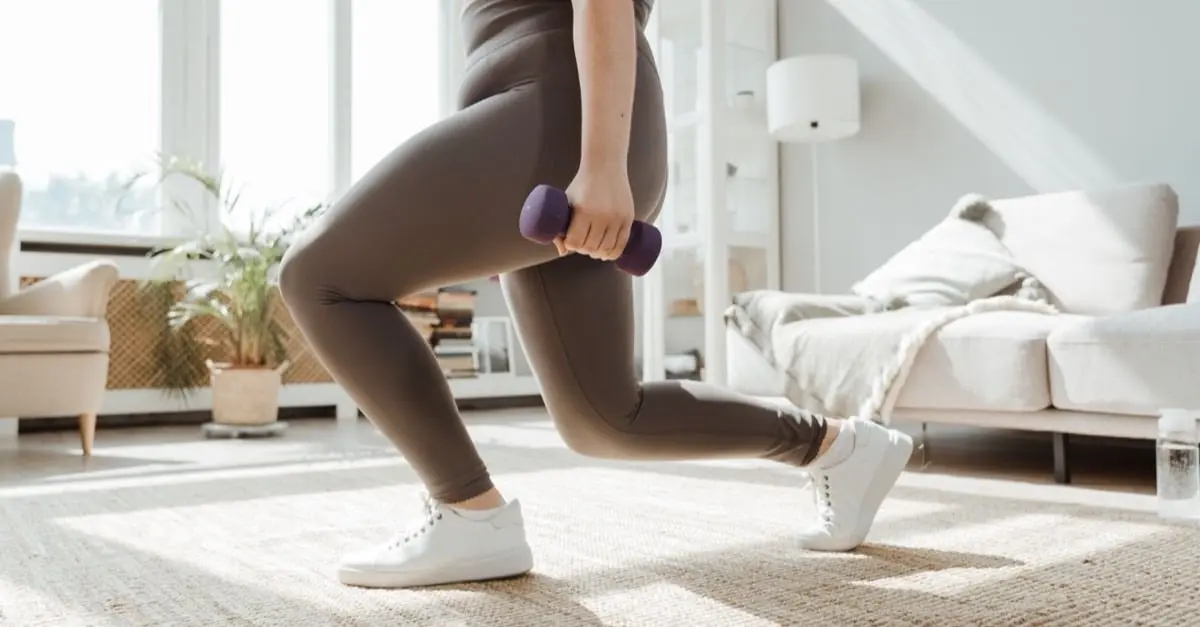
For millions of women, starting a home fitness routine feels like an exercise in repetition: an impulsive purchase of light dumbbells or resistance bands tucked away under a bed or tossed into a kitchen drawer, followed by a flurry of enthusiasm, an inevitable disruption, and an abandoned plan by the second month. Fitness experts point out that the failure rarely stems from a lack of physical capability or willpower. Instead, it lies in the traditional approach to home workouts—treating exercise as a disorganized pile of random movements rather than a written, systematic plan complete with provisions for weeks that inevitably fall apart.
Consider the hypothetical fitness seeker—let’s call her Carla—who has abandoned three prior attempts at getting strong. What she and countless others require is not another endless list of varied exercises designed for women, but a clear roadmap outlining what to do on a Monday, how to systematically increase the challenge by week three, and, crucially, how to recover gracefully on the Monday following a week where nothing went according to plan.
The 6-Week Structured Baseline
To bridge this gap, sports and conditioning frameworks suggest moving away from chaotic routines and toward a predictable, minimalist schedule. For the first four weeks, the regimen calls for just two sessions a week, scaling up to three sessions in weeks five and six. Every single session relies on the exact same five foundational movements: a squat, a hinge, a push, a row, and a carry.
Sets are designed to run between eight to twelve repetitions, with rows counted per individual side and carries timed per side instead of counted by repetition. Total time commitment for a standard session remains manageable at 20 to 30 minutes. To address the inevitable disruptions of daily life, each week also includes a concise "floor version"—a seven-minute single-set session tailored specifically for the weeks that completely fall apart. Fitness specialists emphasize that returning after a hiatus requires a different mental and physical approach than starting strength work for the absolute first time.
In terms of progression, weeks one and two require two sets of each movement, resting one to two minutes between sets, coming in at approximately 20 minutes total. Weeks three and four advance to three sets of each movement, extending the carry duration to 45 seconds per side and bumping the session length to roughly 30 minutes. Weeks five and six maintain this three-set structure while introducing a gradual increase in load. Throughout the entire six-week period, however, the floor version remains completely unchanged at a single set of each movement. This deliberate design ensures that a bad or chaotic week never greets the practitioner with a daunting, escalated physical demand upon their return.
Two sessions a week is far from a beginner’s compromise; it aligns directly with established public health baselines for adults. Federal physical activity guidelines recommend muscle-strengthening activities covering all major muscle groups on at least two days a week, paired with 150 to 300 minutes of moderate aerobic activity. Health authorities consistently note that some activity is fundamentally better than none. The aerobic component is easily managed through routine walking—such as a 30-minute walk on five days of the week to hit the baseline of 150 minutes—which can be comfortably integrated alongside the lifting schedule.
The Five Fundamental Movements and Household Substitutes
The entire program anchors itself on five movement patterns: squat, hinge, push, row, and carry. Collectively, these patterns load the legs, hips, lower back, chest, shoulders, upper back, grip, and trunk, effectively fulfilling the requirement to target all major muscle groups. Crucially, each movement features an accessible household version, ensuring that an empty equipment drawer never serves as a valid reason to postpone week one.
The squat pattern can be performed by standing in front of a dining chair with feet shoulder-width apart, holding a single dumbbell against the chest with both hands. Lowering down until the seat brushes the thighs provides a reliable depth gauge and a safety net for the final grinding repetitions. For those without weights, the movement can be executed empty-handed using a slow three-count on the descent.
The hinge pattern targets the posterior chain. With dumbbells held in front of the thighs, knees softly bent, and the back flat, the practitioner pushes their hips backward, allowing the weights to travel down the legs to mid-shin before standing by engaging the glutes. Maintaining a long spine prevents the rounding that often trips up beginners during their initial sessions.
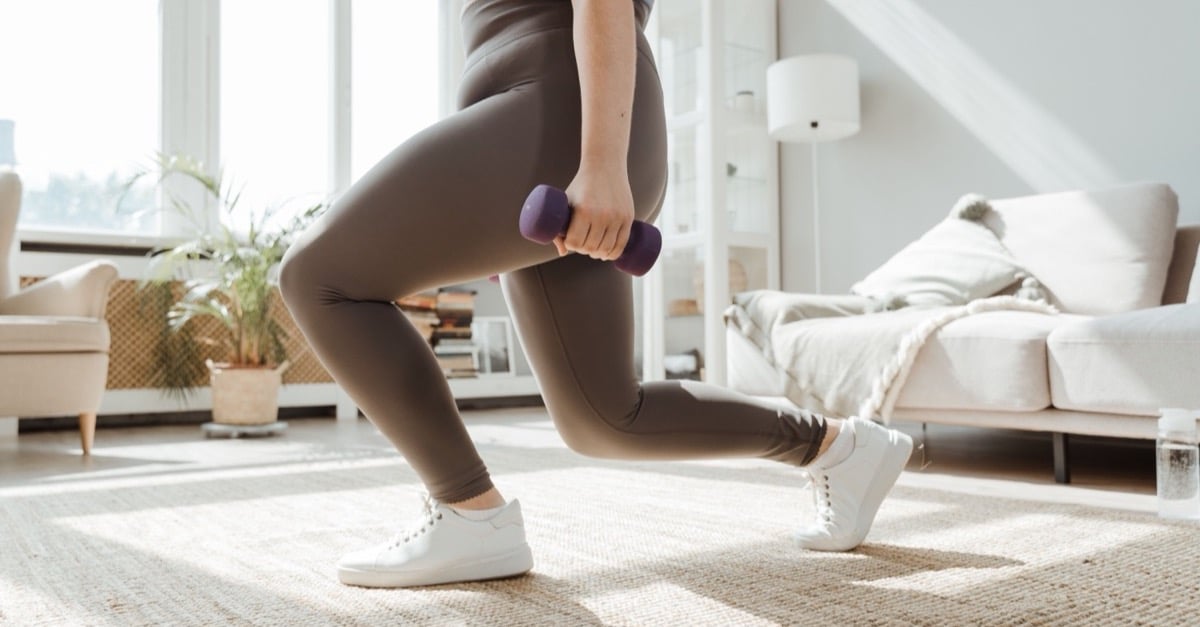
The push pattern utilizes kitchen counters or sturdy furniture. Placing hands on a counter maintains a straight line from heel to head, allowing the chest to lower and press away. As strength improves, practitioners can transition to a sturdy chair seat and eventually to the floor, adjusting the angle to regulate the difficulty.
The row pattern targets the upper back, a region frequently overlooked in home routines. By placing one hand and one knee on a chair seat, a dumbbell is pulled toward the ribs while keeping the elbow close to the body, completing 8 to 12 repetitions per side. In the absence of dumbbells, a resistance band looped around a secure door anchor or banister provides a reliable alternative.
Finally, the carry pattern involves holding a single weight—whether a dumbbell, a laundry-detergent jug, or a packed tote bag—at one side and walking for 30 seconds while keeping the shoulders level. Swapping hands ensures each side is trained independently. Building this up to 45 seconds by week three significantly improves everyday functional strength, such as carrying luggage.
Managing Intensity and Progression
The programming draws directly from established sports medicine standards, which place training loads for novice lifters in the eight-to-two-rep maximum range at two to three sessions a week. When it comes to equipment weight, research into resistance training indicates that when sets are taken close to muscular fatigue, lighter loads—such as 40 to 60 percent of a maximum effort—can produce comparable muscle growth to heavier loads, though heavier loading remains superior for developing maximal strength. For the home practitioner, standard eight-pound dumbbells are entirely viable starting points, provided the final two repetitions of each set require genuine effort to finish.
Rest periods between sets can be guided intuitively by breath control rather than rigid timers. Once a full sentence can be spoken without gasping, the next set can safely begin. Progression should follow a measured rule: when an individual can comfortably complete one or two extra repetitions beyond their target on a set while maintaining strict form, the load can be increased incrementally by 2 to 10 percent. Because home equipment rarely features fractional weight plates, practitioners are advised to prioritize adding repetitions first before stepping up to the next available weight increment.
The Psychology of the Restart: The 48-Hour Rule
The primary reason home fitness routines fail is not physical exhaustion, but the psychological hurdle of returning after a missed workout. To combat this, the program introduces the "floor version" paired with a strict 48-hour rule. Following a missed session, an individual commits to returning within 48 hours—not to the missed, strenuous workout, but exclusively to the seven-minute floor session.
By keeping the comeback routine brief and forgiving, the psychological barrier of getting back on track dissolves. A missed Thursday workout no longer snowgrades into a discarded month of fitness; it simply becomes a brief pause resolved by a swift, seven-minute reset.
Boundaries, Realities, and Medical Guidance
To maintain absolute transparency, fitness experts emphasize realistic expectations regarding what home resistance training can and cannot achieve. Size changes and muscle hypertrophy accrue slowly over months and years of consistent effort rather than within a brief six-week block. Furthermore, targeted resistance exercises do not dictate specific areas of localized fat reduction, though they effectively build underlying strength and muscle tone. While resistance training can support bone mineral density, lower-intensity home routines operate differently than high-intensity clinical interventions, and initial muscle soreness is a common, expected side effect of introducing unfamiliar movements.
Before beginning any new physical regimen, certain precautions remain prudent. Individuals who are pregnant, recently postpartum, managing diagnosed heart conditions, recovering from recent surgeries, or dealing with chronic joint and bone concerns should consult a qualified healthcare professional. For the general population, however, stepping into Monday with a simple, written floor routine removes the friction of indecision, offering a sustainable path toward long-term physical resilience that survives the inevitable disruptions of daily life.



Leave a Reply