
Over the past four years, the mobile technology landscape has witnessed a rapid proliferation of foldable smartphones. From the innovative tri-folding capabilities of the Huawei Mate XT and the remarkably creaseless profile of the Oppo Find N6 to the sophisticated camera arrays housed within the Vivo X Fold 5, Android manufacturers have continually pushed the boundaries of industrial design and hardware engineering. These devices have proven that foldable screens are no longer a fleeting novelty, carving out a legitimate and dedicated segment within the global smartphone market.
Yet, despite having spent years evaluating virtually every major foldable release in the industry, it took a mere hour of hands-on testing with the newly announced Apple iPhone Duo to recognize a fundamental truth about product development. Apple has once again demonstrated that it does not need to rush to lead industry trends. Instead, the Cupertino-based tech giant prefers to enter a category only when it feels the technology, the manufacturing processes, and the user experience have reached full maturity.
My primary takeaway from spending time with the iPhone Duo at an exclusive Apple briefing in Mumbai, India, is that the device completely lacks the feeling of a delicate or experimental tech demo. Rather, it possesses the same level of refined manufacturing, structural integrity, and daily usability as a traditional flagship device like the iPhone 18 Pro Max. Three distinct pillars particularly defined that initial hands-on experience: the thoughtfully engineered physical design, the revolutionary inner display panel, and the deeply intuitive software integration.
Going into the briefing, one lingering concern was the weight of the device. The iPhone Duo tips the scales at 254 grams, making it roughly 15 grams heavier than competing devices like the Google Pixel 11 Pro Fold. Having previously spent extensive time with Google’s foldable ecosystem, the prospect of handling another bulky and cumbersome device was less than thrilling. However, Apple’s engineering team managed to completely mitigate this concern through exceptional weight distribution. At no point during the testing session did the Duo feel overly heavy or burdensome to hold, defying expectations set purely by its numerical weight.
The external aesthetics further elevate the device. Available in multiple finishes, the Night Sky model stands out for its sophisticated look, complemented by gently rounded edges that make the folded phone remarkably comfortable to grip. Apple has opted for a wider and shorter aspect ratio, a form factor that is already drawing admiration and imitation from competing Android brands. While the positioning of the rear camera module does introduce a slight degree of physical wobble when the phone rests flat on a table, it remains far less pronounced than the wobble seen on devices like the Samsung Galaxy Z Fold 8. The glossy finish along the sides does attract fingerprints effortlessly, serving as a minor aesthetic nuisance in an otherwise stellar physical package.
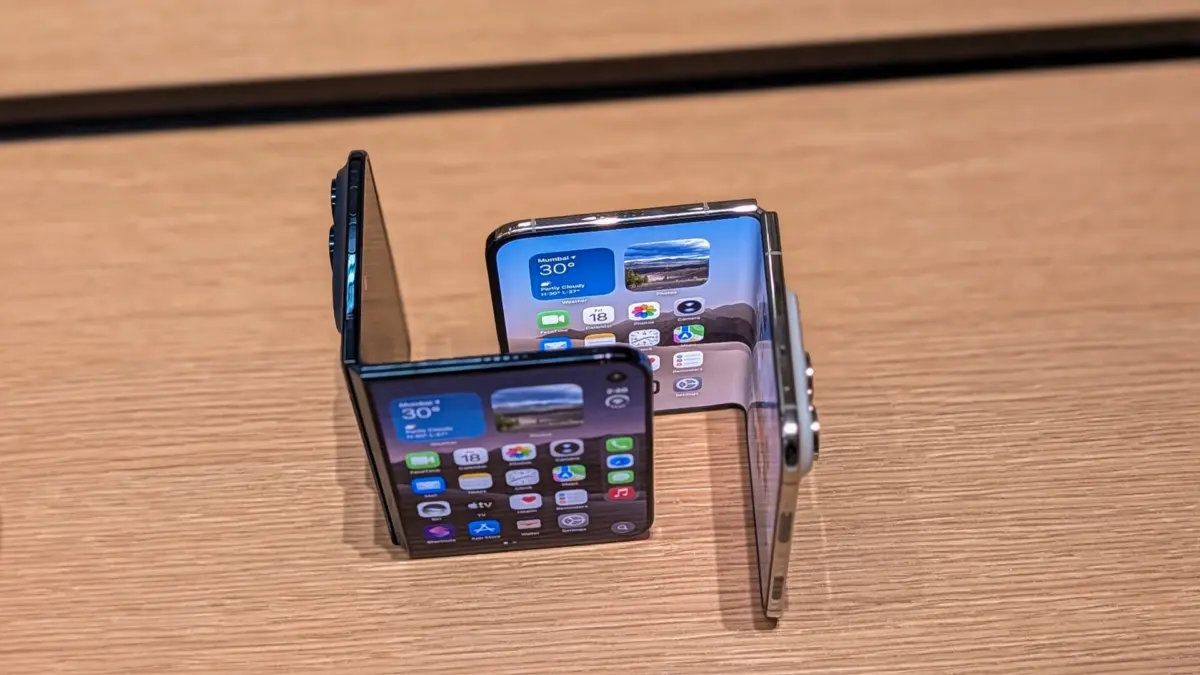
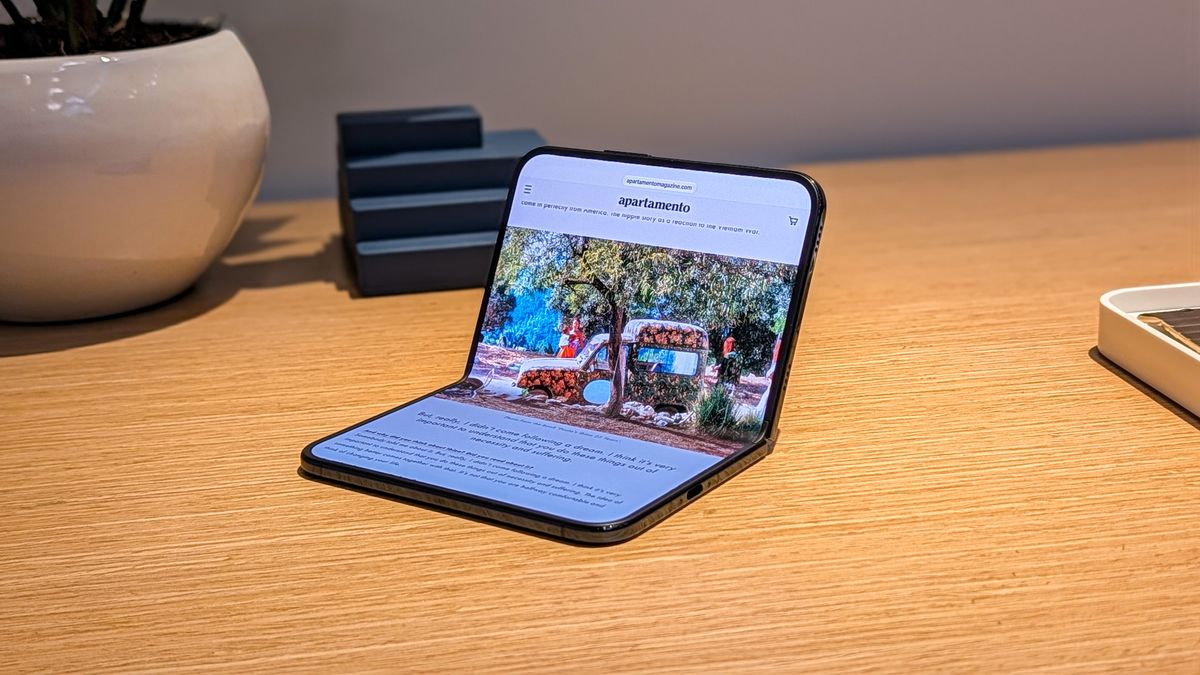
The mechanical hinge mechanism deserves equal praise. It features a smooth, progressive articulation that requires very little force to open, yet closes with a satisfying, reassuring click. Crucially, the hinge holds its position securely across a variety of angles, unlocking new functional use cases. For instance, the device effortlessly supports Apple’s StandBy mode even when disconnected from a charger, effectively transforming the folded device into a premium desktop clock. Furthermore, folding the phone to a 90-degree orientation allows it to sit stably on a flat surface for media consumption, splitting the inner display so that the top half plays video content while the bottom half manages playback controls.
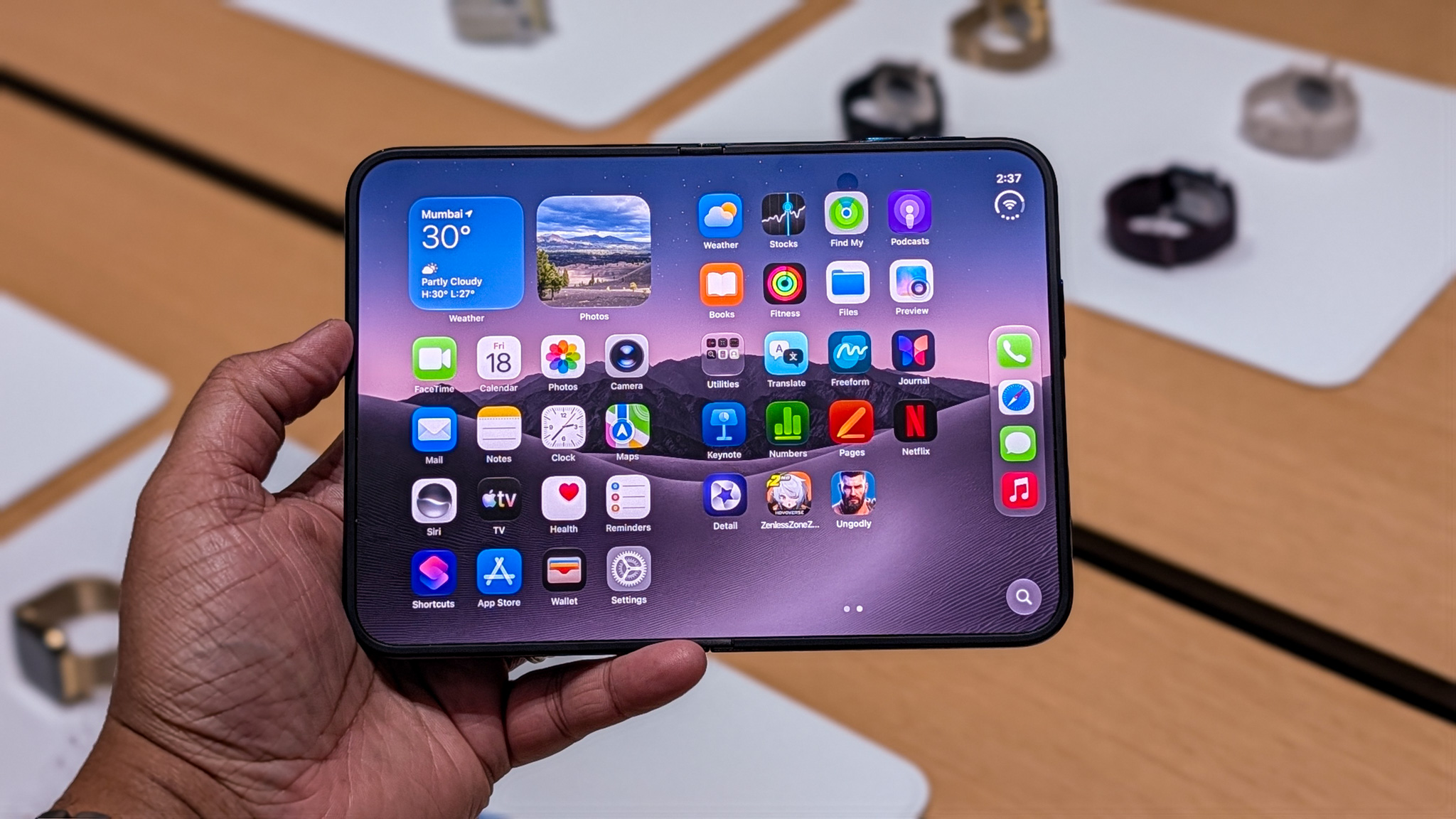
Undoubtedly, the defining feature of the iPhone Duo is its magnificent 7.6-inch OLED inner panel. Apple utilizes an innovative layering system of ultra-thin glass that successfully yields a virtually creaseless inner screen. During hands-on testing, running a finger across the fully flattened display revealed no discernible crease whatsoever, representing an engineering achievement that surpasses every current Android foldable, including the Oppo Find N6 which previously came closest to this milestone. Additionally, the inner display houses an under-display camera, ensuring the lens remains entirely invisible during routine daily tasks.
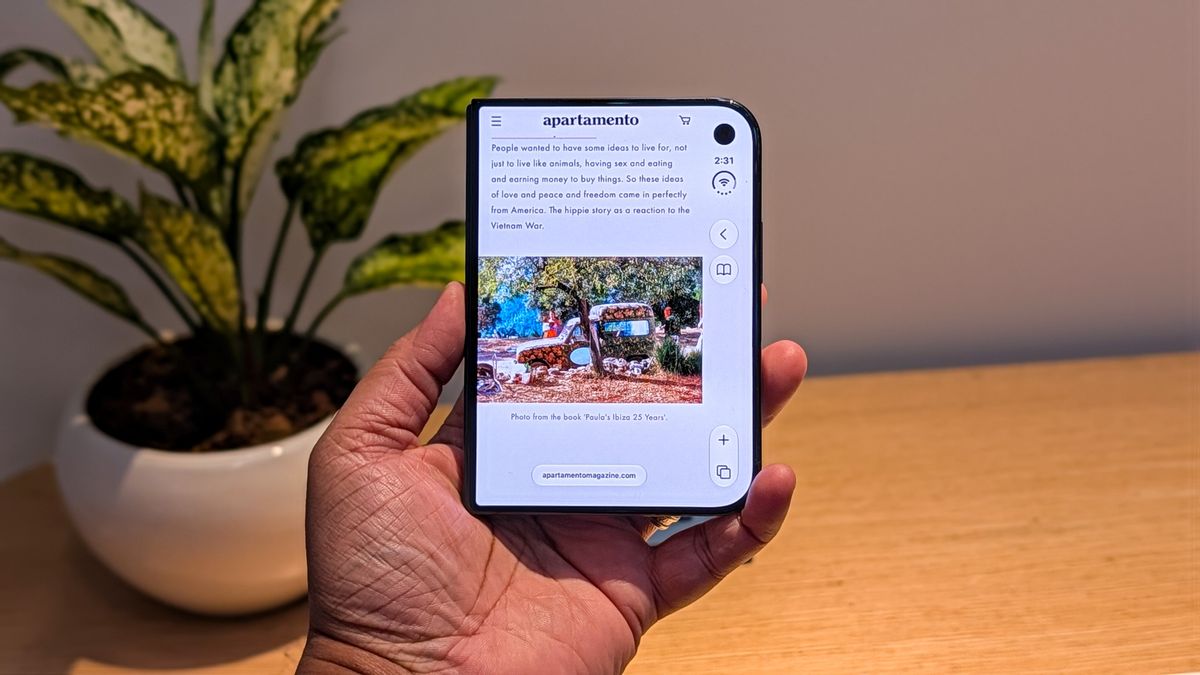
Complementing the creaseless glass is an applied nano-texture matte coating over the inner panel. This specialized surface treatment drastically reduces glare while preserving high peak brightness levels, making the iPhone Duo an exceptional tool for reading digital books or watching video content in brightly lit environments. If competing Android manufacturers take away only two lessons from Apple’s inaugural foldable, they should undoubtedly be the implementation of a genuinely creaseless display structure and the integration of a glare-reducing matte finish.
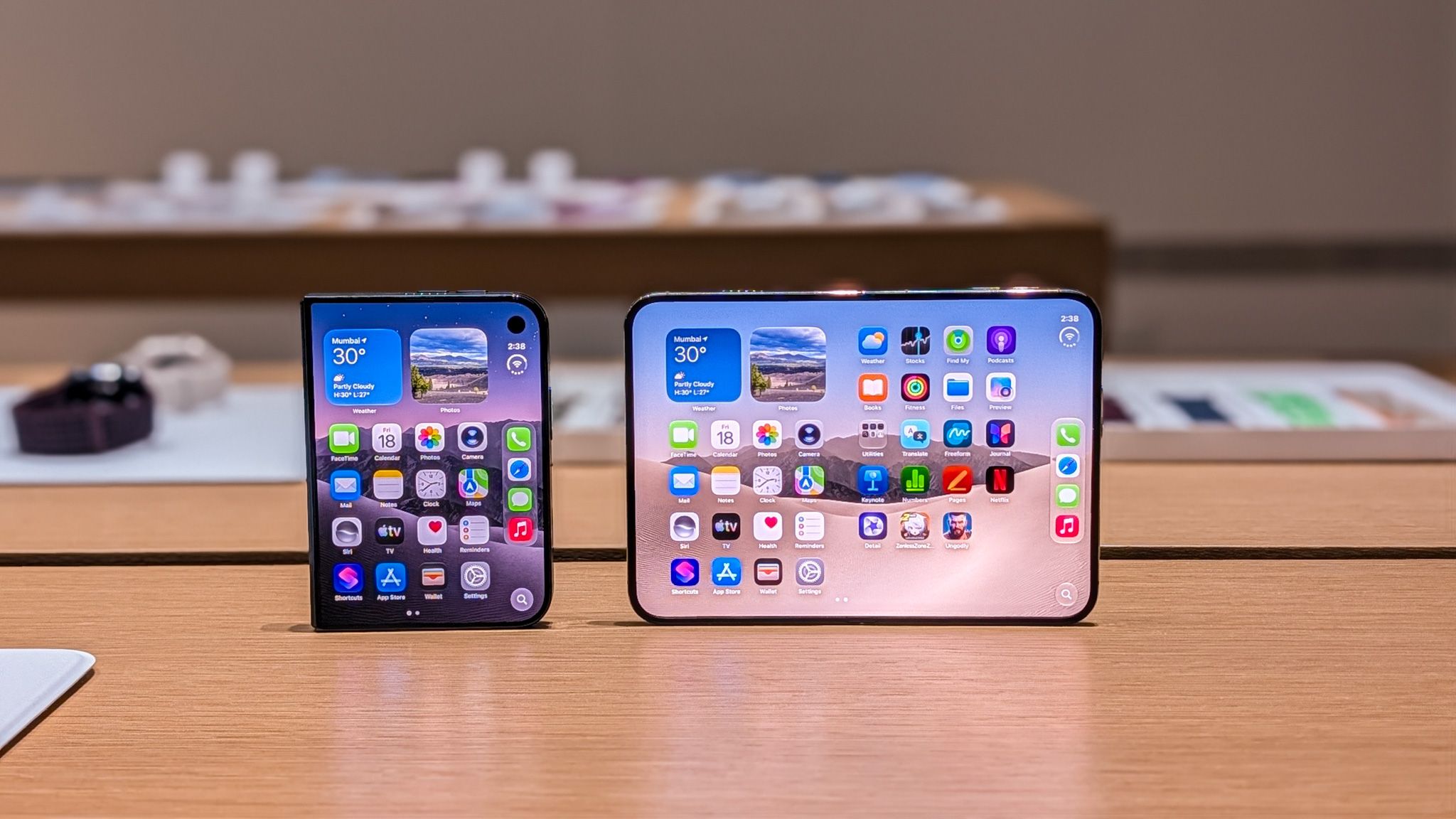
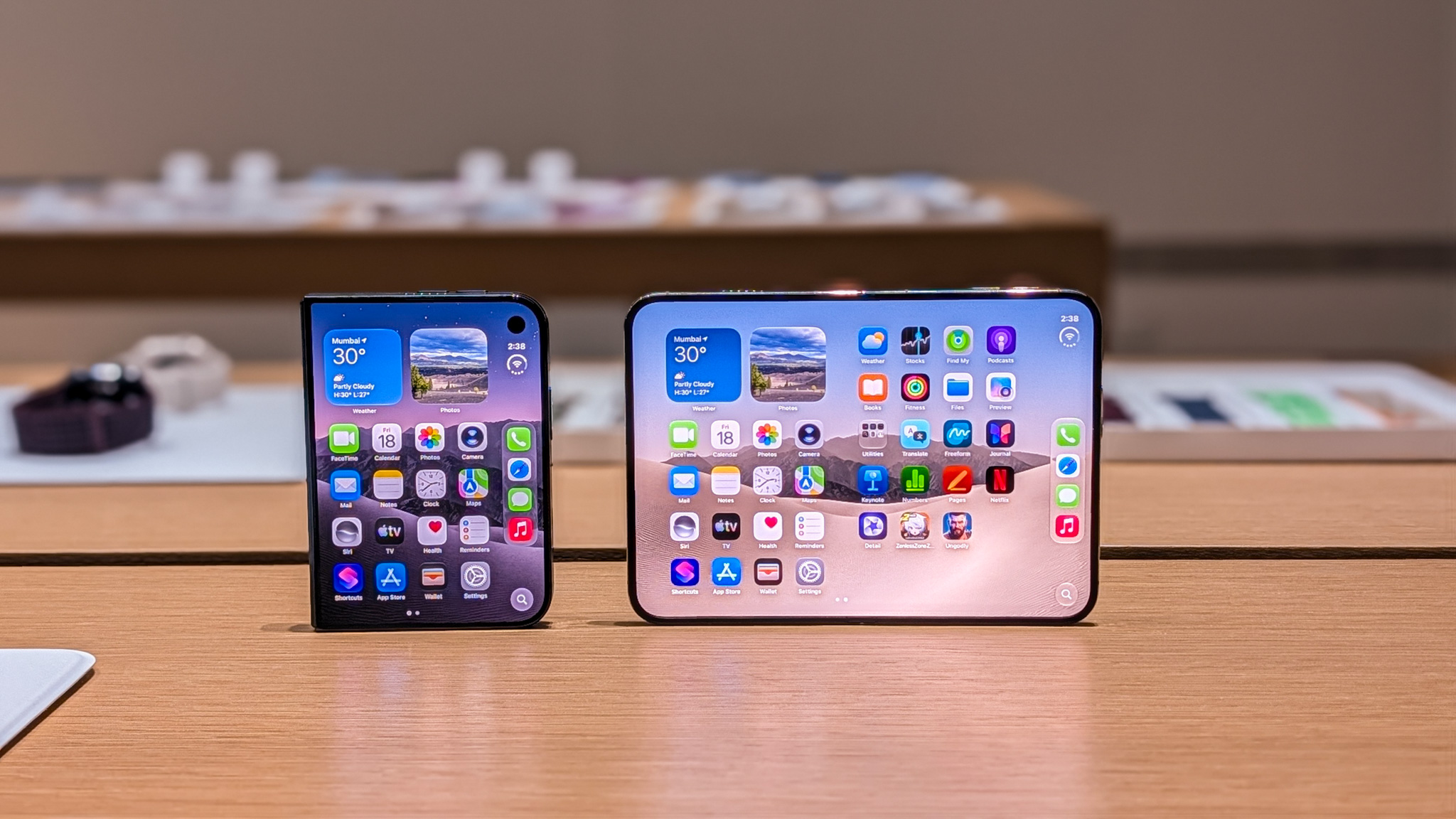
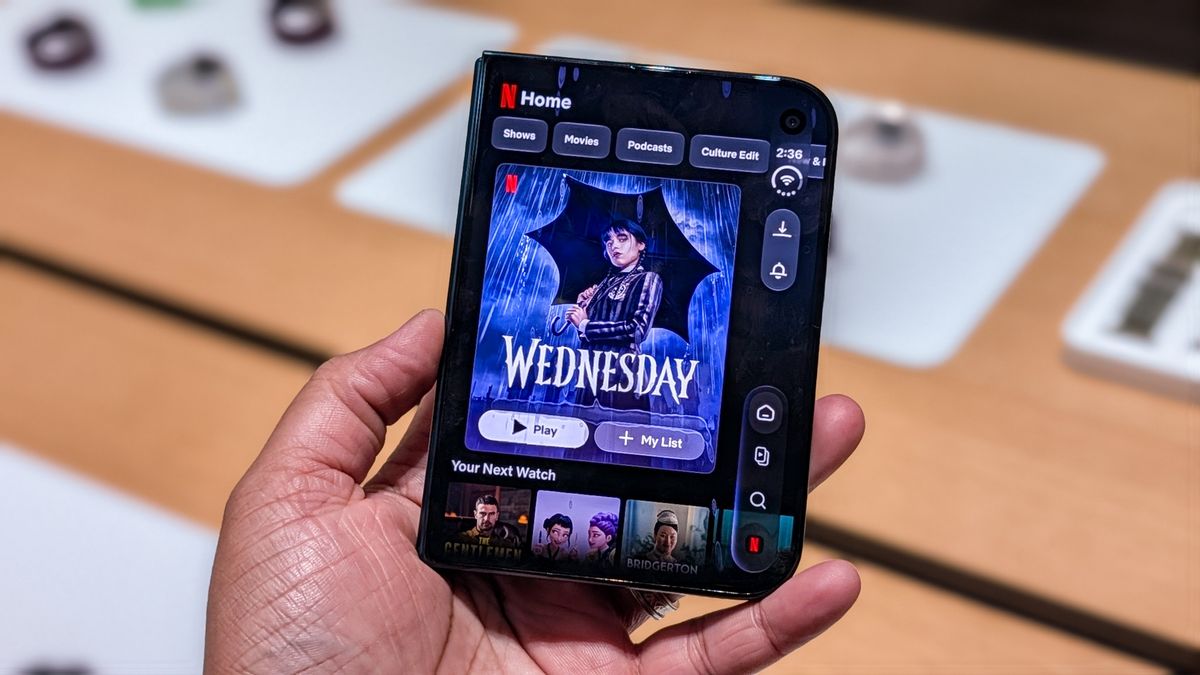
Externally, the 5.4-inch OLED cover screen proves far less restrictive in practice than anticipated. It provides ample screen real estate and maintains a display ratio consistent with the inner panel, ensuring that applications and media scale seamlessly without distortion or layout errors. Both the internal and external screens rely on advanced LTPO display technology, meaning that persistent features like StandBy mode operate efficiently without placing a heavy drain on the battery.
On the software front, Apple has successfully translated its polished user experience into the foldable form factor. The iPhone Duo exhibits fluid, uninterrupted animations when transitioning between the outer and inner displays, while user interface elements are arranged with logical precision. The taskbar is intuitively anchored to the right side of the screen, and the device supports split-screen multitasking capabilities that mirror the functional flexibility found on Android devices. While it lacks certain granular features present in competitor skins—such as ColorOS’s capability to deploy up to four simultaneous floating windows anywhere on screen—the Duo maximizes its expansive canvas with remarkable efficiency.
Beneath the polished exterior lies immense processing muscle. The iPhone Duo is powered by the same cutting-edge 2nm A20 Pro silicon found inside the iPhone 18 Pro, paired with comparable thermal management systems. Although comprehensive performance benchmarking must wait for a dedicated review unit, a brief five-minute gaming session demonstrated that the device possesses an abundance of untapped processing headroom.
The official market introduction of the iPhone Duo acts as a vital catalyst for the broader foldable smartphone industry. Priced at $1,999 with a scheduled release date of October 23, it matches the price point of established competitors like the Samsung Galaxy Z Fold 8, instantly positioning itself as a formidable commercial threat to both Samsung and Google. International buyers outside the United States will face steeper pricing structures, likely pushing the cost closer to $2,700, yet the device is poised to capture significant market share. For many consumers and industry observers, the iPhone Duo stands out as the most exciting and transformative iPhone release in nearly a decade.
Leave a Reply