
Legendary electronic instrument manufacturer Roland is taking its first official step into the realm of generative artificial intelligence music creation with the launch of a new tool called Melody Flip. While the industry has recently seen the rapid rise of platforms capable of generating entire, radio-ready songs from a simple text prompt, Roland’s approach is notably different, focusing instead on providing foundational musical building blocks designed to integrate directly into a traditional music production workflow.
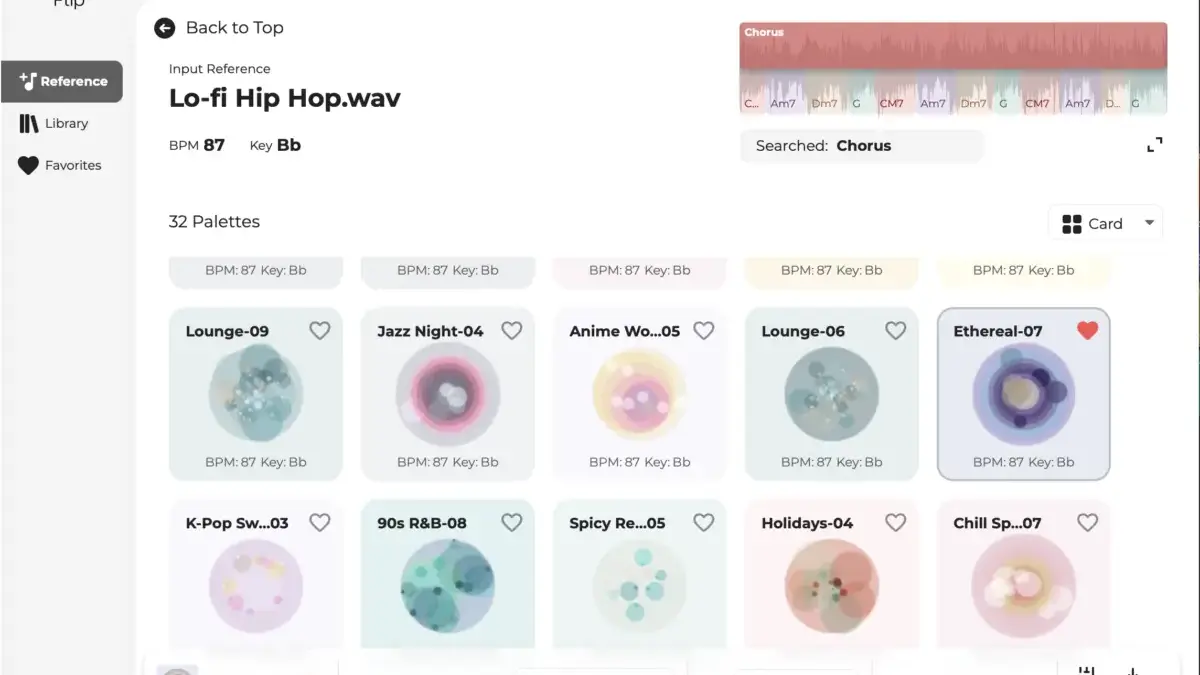
Available as a plug-in for digital audio workstations, or DAWs, Melody Flip relies on a library of approximately 250 curated themes known as Palettes. These Palettes function as genre-specific collections of musical concepts and ideas. Producers using the plug-in have the flexibility to start completely from scratch, prompting the software to generate combinations of melodies, chord progressions, basslines, or drum patterns. Alternatively, creators can feed a reference track directly into the system, instructing Melody Flip to build out new musical ideas inspired by the melodic elements of the provided audio file.
Despite utilizing artificial intelligence, Melody Flip operates under a philosophy that diverges sharply from consumer-facing AI music generators like Suno or Udio. Those platforms are built to spit out fully polished, complete songs featuring vocals and comprehensive arrangements with minimal user intervention. Melody Flip, by contrast, is designed strictly to generate simple musical loops intended to serve as a creative spark, rather than a finished product.
The control set offered by the plug-in is intentionally limited to keep the producer in the driver’s seat. Users cannot type detailed natural language text prompts into Melody Flip to demand hyper-specific compositions. There is no option to type out instructions for an acoustic country rock track featuring clean male vocals, a literate singer-songwriter vibe, gentle brushed drums, and a sparse pedal steel guitar running at precisely 98 beats per minute.

Instead, the workflow is far more traditional and structured. Producers select a genre from a surprisingly fine-grained list, adjust note density, set the beats per minute, define the musical key, and accept the generated output. While mainstream genres like 1980s disco and 1990s R&B are well represented, the software also includes more esoteric and niche categories such as Kawaii Future Bass and Anime World.
Further reinforcing the idea that Melody Flip outputs are not meant to be used straight out of the box, the internal sound selection relies heavily on general MIDI tones reminiscent of the default instrument patches found in 1990s video games. The clear design intention behind the tool is for producers to export the raw MIDI data generated by Melody Flip directly into their digital audio workstation. Once inside the DAW, the user can manipulate the notes, change the timing, and pair the MIDI data with more powerful, high-end third-party synthesizer plug-ins to forge a unique sonic identity.
This foray into generative AI arrives at a fascinating crossroads for Roland as a company. For several years, the iconic manufacturer of the TR-808, TB-303, and Jupiter-8 synthesizers seemed to wander off course, alienating core segments of its customer base. Much of this friction stemmed from the implementation of the Roland Cloud subscription service, which drew widespread criticism across online producer forums for its messy user interface, intrusive management software, and software ecosystem bloat that left many traditional hardware enthusiasts frustrated.
However, the company had successfully regained its footing in recent hardware cycles by returning to what it does best. Recent releases like the ultra-portable P-6 Creative Sampler, the SH-4d desktop synthesizer, and the Gaia 2 addressed major long-standing requests and design complaints regarding the company’s product lineup. Furthermore, Roland finally listened to its dedicated customer base last year by paying a loving, authentic tribute to its legendary analog heritage with the release of the TR-1000 drum machine, winning back substantial goodwill from musicians who felt the brand had lost its way.
Given the deeply skeptical and often hostile response from the broader music community toward generative artificial intelligence, tools, and copyright disputes, Melody Flip is unlikely to earn Roland an immediate wave of industry praise. Musicians and producers have grown increasingly vocal about their fatigue regarding AI clones, unauthorized model training, and platforms that threaten traditional livelihoods. By positioning Melody Flip as an assistive tool for generating raw MIDI sketches rather than a push-button song replacement, Roland is attempting to thread a needle between technological innovation and traditional production workflows, though how the music community ultimately receives this venture remains to be seen.


Leave a Reply