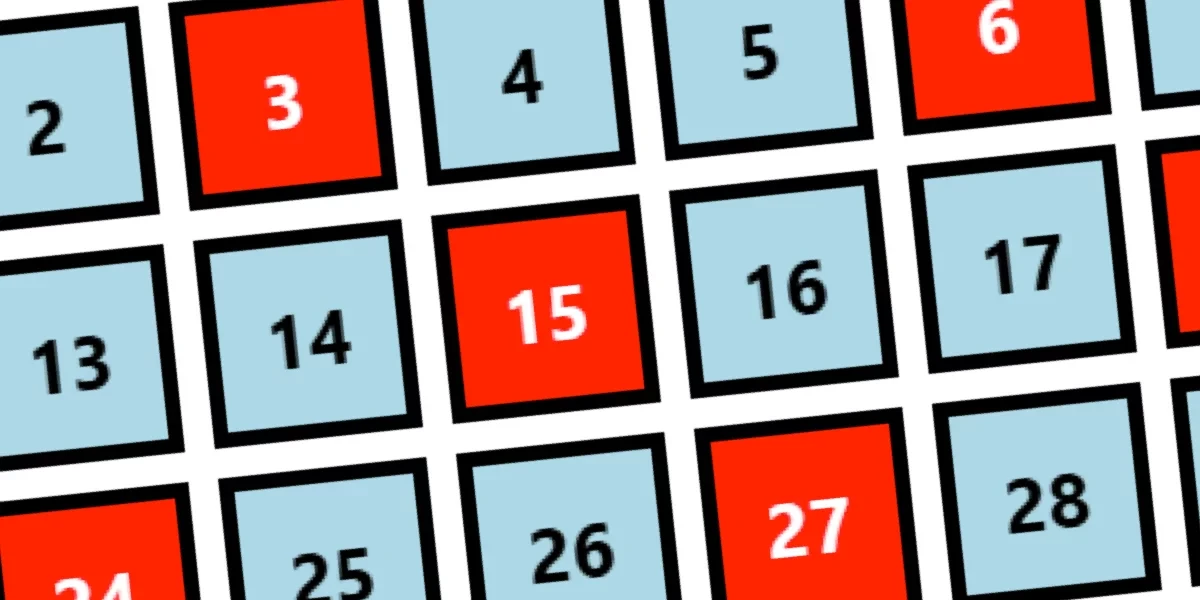
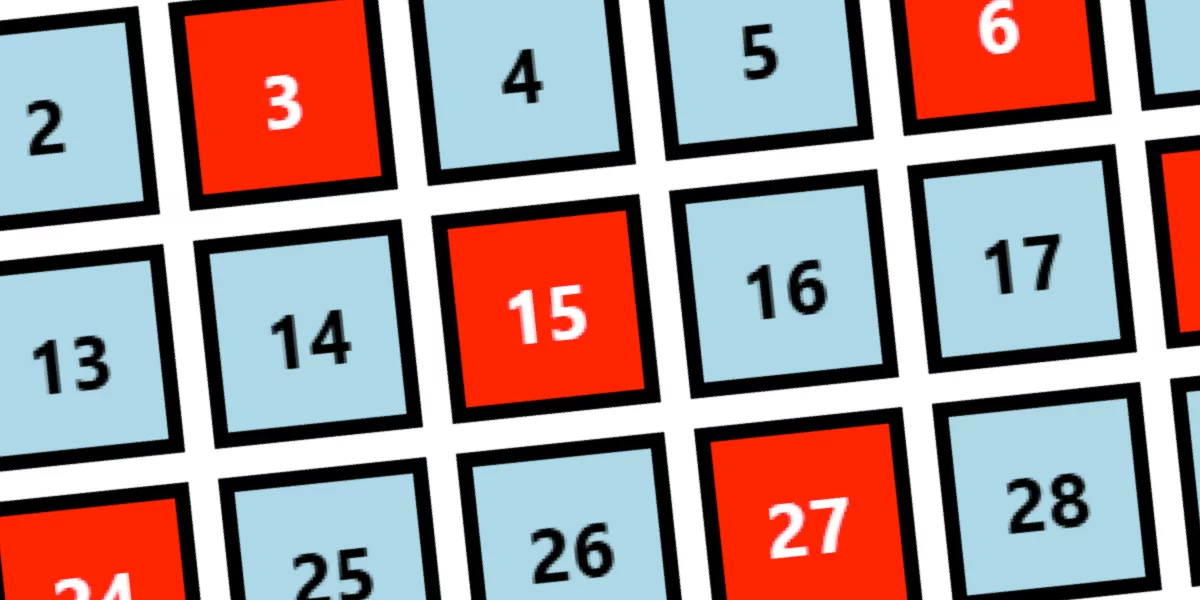
In the ever-evolving landscape of web development, developers frequently encounter limitations that spark creative workarounds. Recently, a developer explored a seemingly counterintuitive concept: re-implementing the native CSS :nth-child() selector from scratch using modern browser features. While reinventing an existing feature might initially appear redundant, the exercise serves two vital purposes. Primarily, it unlocks the ability to adjust :nth-child() arguments dynamically on the fly, transforming static rules into flexible properties driven by CSS variables. Secondly, it offers an engaging sandbox to experiment with cutting-edge CSS specifications, demonstrating how advanced styling functions can intersect to solve complex layout challenges.
Traditional CSS selectors handle patterns through hardcoded values. For instance, creating a repeating pattern of highlighted elements typically involves a fixed expression, such as targeting every fifth element offset by eight using div:nth-child(5n + 8). If a developer wishes to alter the multiplier or the offset later, the only recourse is manually rewriting the source code. Native CSS variables cannot currently be interpolated directly into standard functional notation like div:nth-child(var(--A)*n + var(--B)). However, by leveraging emerging tools like container style queries and the new inline conditional functions, developers can bypass these traditional constraints and manipulate element selection dynamically.
To understand the mechanics behind this approach, the implementation relies on a straightforward document structure: a parent container housing a series of child elements. Within this container, custom properties dictate the behavior of the targeted elements. Rather than enforcing this precise structure as a strict requirement, it provides a clean, predictable baseline for observing how modern layout logic processes sibling relationships.
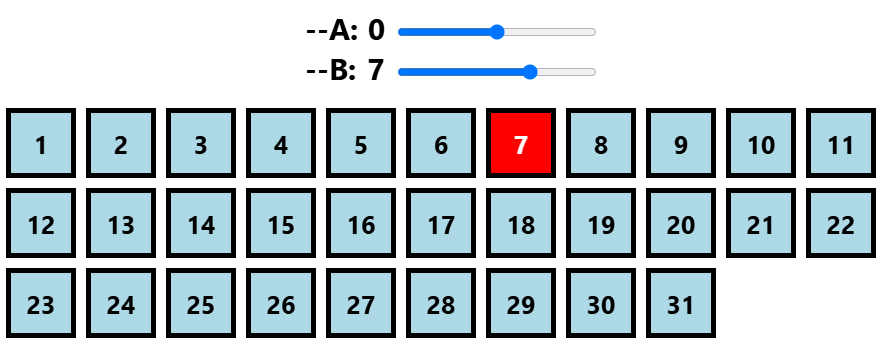
Exploring nth-child(B) and Single Element Selection
The exploration begins with the simplest iteration of the concept: selecting a solitary element based on a specific index, traditionally written as div:nth-child(5). In this scenario, the number represents the precise index of the target. By utilizing the modern if() syntax alongside style queries and the sibling-index() function, developers can replicate this targeting mechanism dynamically.
When translated into modern CSS syntax, the container defines a variable for the target index, while the child elements evaluate their own position against that variable. If the sibling index matches the custom property value, a specific style is applied; otherwise, the property remains unaffected or falls back to an alternative value using an if-else structure. Although this introduces a degree of redundancy compared to native shorthand, it successfully grants runtime control over the targeted index.
The underlying condition relies heavily on style queries, allowing developers to query computed style values or custom properties within an if() function. The condition itself can be written in multiple interchangeable ways, comparing the sibling-index() function directly against the variable. This flexibility highlights the robust nature of the underlying parser, proving that modern layout engines can evaluate relational data much like traditional programming languages.
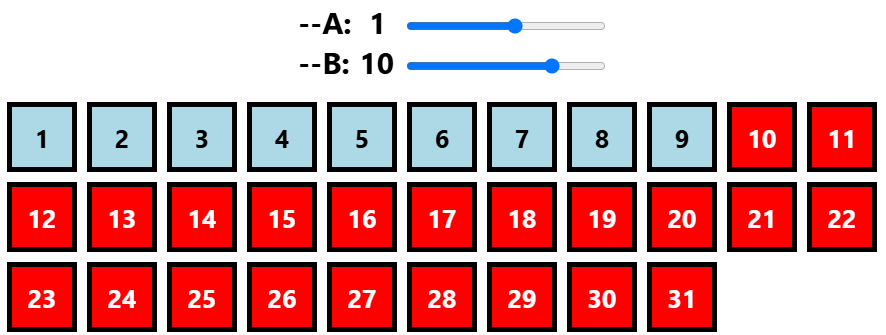
Expanding to Ranges with nth-child(n + B) and nth-child(-n + B)
Moving beyond single-element selection, developers can easily adapt the conditional logic to handle open-ended ranges. A selector like div:nth-child(n + 5) targets every element starting from the fifth child onward. Replicating this behavior requires nothing more than a comparative adjustment in the style query. By checking whether the sibling index is greater than or equal to the custom property representing the threshold, the browser dynamically applies the designated styling to all qualifying elements.
Conversely, selecting elements up to a specific threshold—resembling div:nth-child(-n + 5)—requires evaluating whether the sibling index is less than or equal to the variable. Combining these two logical checks enables full range selection within a single statement, targeting any element residing between a minimum and maximum boundary. This approach often proves more intuitive to read than traditional pseudo-class combinations, which frequently require careful decoding by developers unfamiliar with standard structural pseudo-classes.
Managing Multiples with nth-child(An)
Addressing the multiplier argument A introduces a different mathematical challenge. A selector like div:nth-child(3n) targets every third element, meaning the index must be an exact multiple of the specified number. To achieve this dynamically, developers can utilize the mod() function. By calculating the remainder of the sibling index divided by the custom variable, a result of zero indicates a clean multiple.
While this technique functions smoothly under normal conditions, edge cases require careful handling. Negative numbers, for instance, can occasionally interfere with modulo calculations. To ensure precision, developers can combine multiple conditions using logical operators within the style query, verifying both that the modulo operation equals zero and that the multiplier variable remains a positive integer. The syntax accommodates complex boolean logic, allowing multiple conditions to be chained together seamlessly.
Generalizing the Full nth-child(An + B) Expression
Combining all preceding mathematical concepts yields a comprehensive implementation of the generic pseudo-class form. Expressing the relationship requires determining whether the calculated step value results in a valid, non-negative integer. This involves dividing the difference between the sibling index and the offset variable by the multiplier variable, ensuring the result is both greater than or equal to zero and yields a zero remainder through modulo division.
An additional edge case arises when the multiplier variable equals zero, which would otherwise result in undefined mathematical operations. To resolve this gracefully, developers can introduce advanced mathematical functions like sign() alongside conditional branches to evaluate edge behaviors explicitly. While this adds complexity to the stylesheet, it demonstrates the remarkable power now available to frontend engineers, turning CSS into a surprisingly expressive language capable of complex calculations.
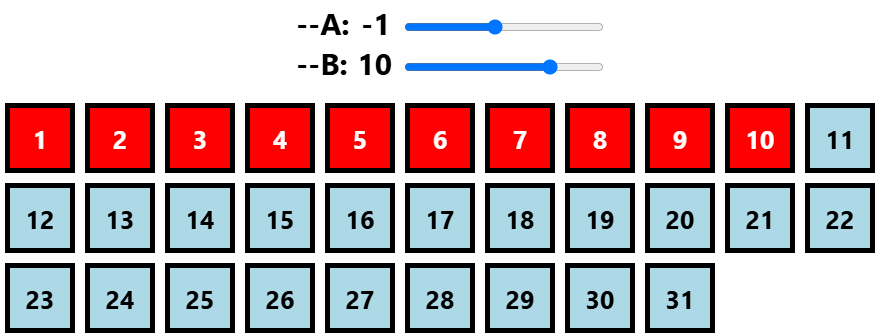
Ultimately, this deep dive into dynamic selectors illustrates the profound shift occurring in modern web styling. By treating selectors less as static rules and more as dynamic sets of conditions, developers gain unprecedented flexibility in how they manipulate DOM elements. Whether this technique sees widespread production use or remains a clever proof of concept, it highlights the expanding horizons of native browser capabilities and offers valuable insight into the future of stylesheet architecture.