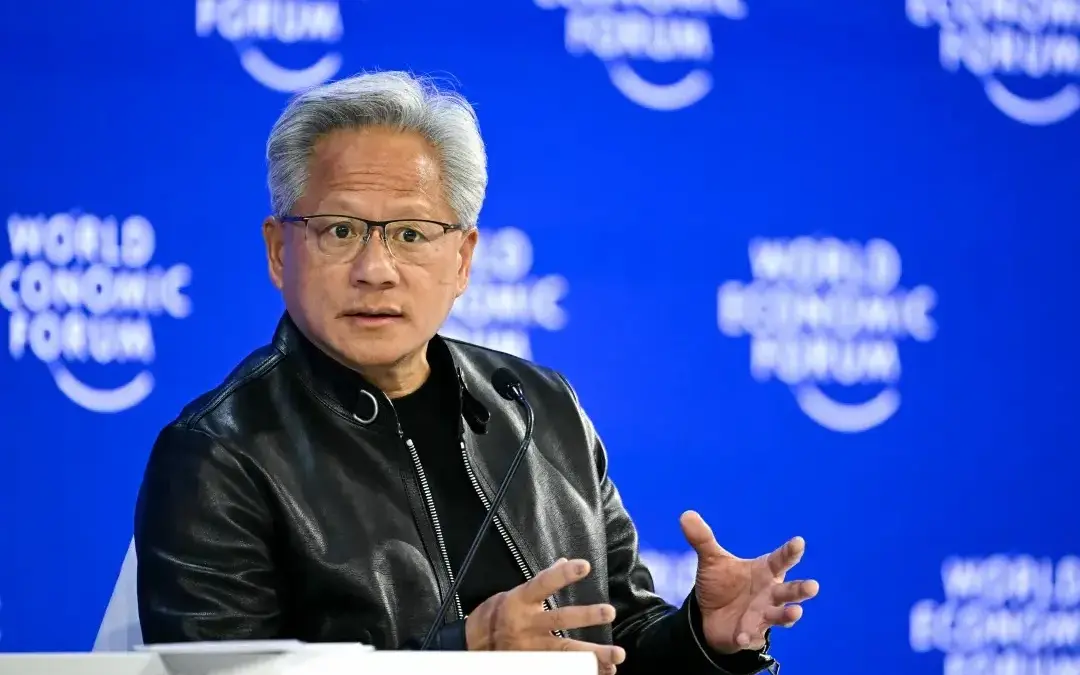
It was a week that highlighted a stark contrast in the fortunes and narrative surrounding Nvidia, depending entirely on whether market observers were looking at the chipmaker’s stellar financial reports or listening to the high-profile tech executives lobbying for the return of former CEO Jensen Huang.
During a recent episode of TechCrunch’s Equity podcast, journalists Kirsten Korosec, Tim De Chant, and Anthony Ha sat down to break down a turbulent week for the artificial intelligence giant. While Nvidia reported soaring revenue and insisted that its business trajectory remains strong under current leadership, the company is simultaneously grappling with tightening geopolitical export controls, shifting strategies in China, and an aggressive public campaign to reinstate Huang.
Korosec characterized the situation as "the tale of two Nvidias this week." On one side, the company’s current executives are attempting to project absolute stability to jittery investors, offering assurances that the ship is steady. On the other side, influential voices like Elon Musk are publicly campaigning to bring Huang back—even circulating petitions—while Huang himself has indicated a willingness to return. Meanwhile, a sliding stock price indicates that Wall Street may not be entirely convinced by the executive suite’s calming words.
A Major Shift in the China Market Strategy
One of the most consequential pieces of news emerging from the earnings cycle was Nvidia’s decisive move regarding the Chinese market. According to interim CEO Colette Kress, Nvidia will no longer sell its H200 chips in China. This announcement arrives in tandem with broader policy discussions within the incoming Trump administration aimed at closing regulatory loopholes, specifically targeting remote access provisions.
Previously, export controls restricted direct sales of advanced AI chips into mainland China. To circumvent these roadblocks, regional data centers were established just outside China’s borders—frequently in countries like Malaysia and other Southeast Asian nations—allowing Chinese firms to access the hardware remotely. Nvidia’s latest public declaration signals that these remote-access pathways are now being actively severed.
This sweeping change touches on a much larger geopolitical puzzle that extends far beyond a single corporate entity. The United States government has maintained a stringent posture regarding technology exports to China across multiple administrations, beginning with rigorous controls toward the end of the first Trump administration and largely continuing through the Biden presidency. However, analysts note that the enforcement landscape had softened or evolved over the past couple of years, temporarily affording Nvidia renewed avenues to capture revenue from the region.
Industry critics estimate that as much as 20% of Nvidia’s business may be tied directly or indirectly to the Chinese market. While these figures do not always appear explicitly as direct sales on corporate balance sheets due to the complex web of intermediary distribution hubs in Southeast Asia, the closure of these remote-access workarounds could deal a notable blow to Nvidia’s bottom line, assuming the company strictly enforces the shutdown. Whether these rigid boundaries will hold or shift again as geopolitical pressures evolve remains an open question for industry observers tracking the first half of 2027.
Financial Resilience Amid Leadership Drama
Despite looming concerns over international trade and regulatory headwinds, Nvidia’s immediate financial performance remains robust. Company guidance continues to impress analysts, exceeding expectations across multiple metrics and pointing to a deep, healthy pipeline of enterprise demand.
Yet, this underlying financial strength is competing for attention against an unprecedented wave of public discourse. Throughout the week, high-profile technology conferences—including the DealBook Summit—became stages for Silicon Valley elites to debate the leadership vacuum left by Huang’s departure. The discourse has created a dual narrative: the formal corporate earnings calls projecting unwavering confidence contrasted sharply with a very public, social-media-driven campaign to restore Huang to his former post.
Supporters of Huang’s return argue that the most recent financial quarter represents the zenith of an era forged under his direct stewardship, leaving the company’s long-term operational health in question without his visionary oversight. Nvidia’s official stance has been defensive, firmly shooting down rumors of an imminent return. Yet, market watchers point out the irony in the company’s messaging trajectory, noting that corporate assurances regarding leadership stability can shift rapidly when subjected to intense market and stakeholder pressures.
Boardroom Dynamics and Governance Pressures
The swiftness with which Nvidia’s board and interim leadership rejected the petitions to bring Huang back suggests a high-stakes dynamic unfolding behind closed doors. Observers suggest that the board is acutely aware of the optics involved, striving to maintain absolute autonomy. Corporate governance experts note that the board wants to avoid the appearance of yielding to external demands from high-profile billionaires like Musk, preferring to project a united front of independent corporate control.
Furthermore, leadership is likely observing recent governance meltdowns at other prominent AI firms, taking deliberate steps to avoid repeating similar leadership crises. However, because Nvidia operates as a publicly traded corporation rather than a tightly held private enterprise, any potential transition would navigate a complex labyrinth of shareholder voting rights, regulatory scrutiny, and institutional governance structures, making a sudden executive coup far more difficult to orchestrate.
As the dust settles on another volatile week for the AI chip pioneer, the tension between operational excellence and executive drama continues to define Nvidia’s immediate future. Whether the current leadership can sustain investor confidence while navigating complex international trade restrictions—and whether the grassroots pressure to recall Huang will ultimately crack the board’s resolve—remains one of the most closely watched storylines in the global technology sector.