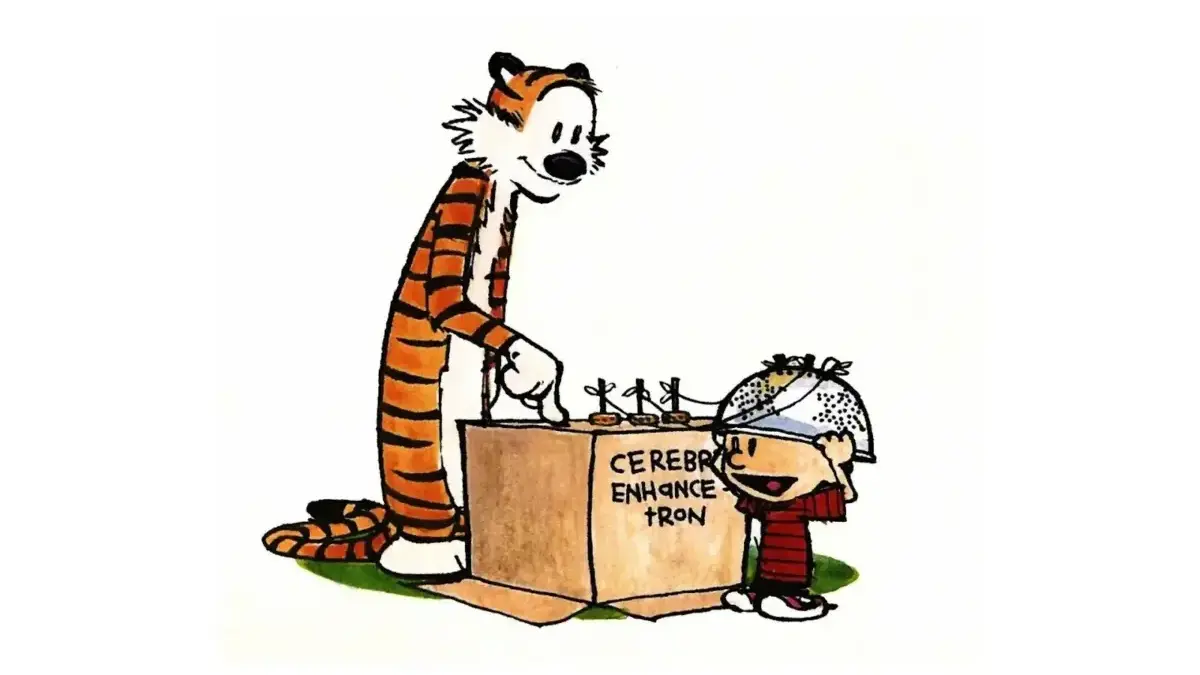
Few comic strips in the history of the medium have achieved the enduring cultural impact, critical acclaim, and deeply personal resonance of Calvin and Hobbes. Created by Bill Watterson, the strip ran for a decade from 1985 to 1995, spanning more than 3,000 individual strips that chronicled the imaginative exploits of a precocious six-year-old boy and his sarcastic, wise-beyond-his-years stuffed tiger. While Watterson’s success relied heavily on the irresistible chemistry of his two lead characters, his legacy is equally anchored in his breathtaking versatility as an artist and writer.
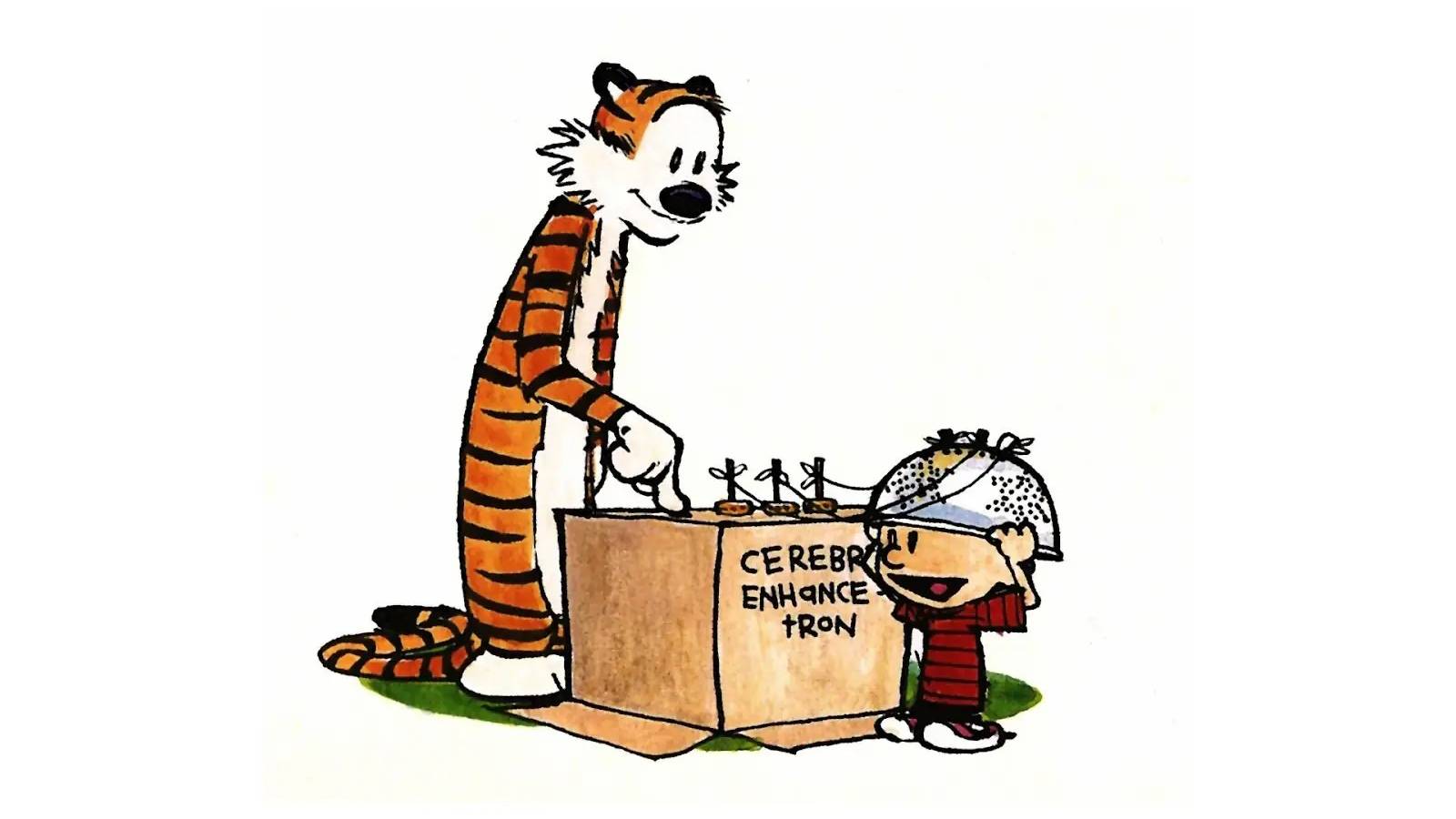
Operating within the often rigid and commercially driven constraints of the newspaper syndication format, Watterson continually pushed the boundaries of what a daily comic strip could achieve. He rejected traditional merchandising, fought for larger display sizes for his Sunday layouts, and ultimately walked away at the peak of his career rather than compromise his artistic vision. Beyond the humor and the heartwarming escapades, Watterson utilized the medium to explore environmentalism, philosophy, childhood psychology, and dark satire, all while deploying a surprisingly broad stylistic range.
Reviewing a selection of remarkable strips from the 1990s highlights the staggering breadth of Watterson’s talents, demonstrating how a simple daily comic strip could transform into a canvas for profound commentary, visual experimentation, and emotional storytelling.

Watterson on the environment
One of the most recurring and deeply felt themes throughout the run of Calvin and Hobbes was Watterson’s unabashed love and admiration for the natural world. Rather than treating the woods and fields surrounding Calvin’s suburban home as mere background scenery, Watterson imbued nature with a sense of wonder and majesty, channeling his own respect for the outdoors directly into his characters.
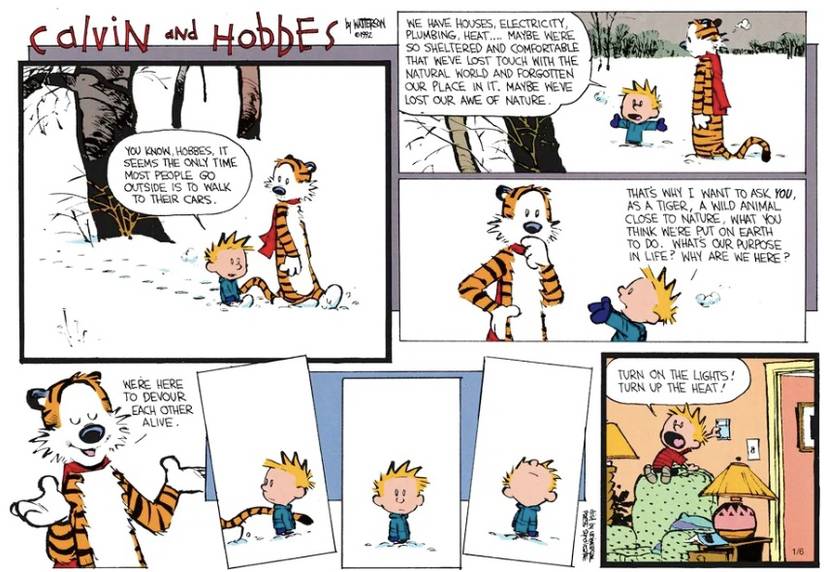
Watterson returned to environmental themes frequently, ensuring his points were delivered with thoughtfulness rather than heavy-handed preachiness. A standout strip from April 1992 captures this philosophy acutely, featuring a poignant moment where Calvin laments that modern humanity has largely lost its foundational "awe of nature." Through Calvin’s fleeting moments of clarity amid his chaotic daily life, Watterson invited readers to pause and reflect on the fragile beauty of the natural environment, contrasting the quiet dignity of the woods with the frantic pace of modern human civilization.
Watterson’s philosophical side
While Calvin was ostensibly a six-year-old child, Watterson frequently used him as an intellectual proxy to explore big, abstract questions about existence, morality, and the universe. These moments often arrived without warning, transforming a mundane suburban setting into a venue for deep philosophical inquiry.
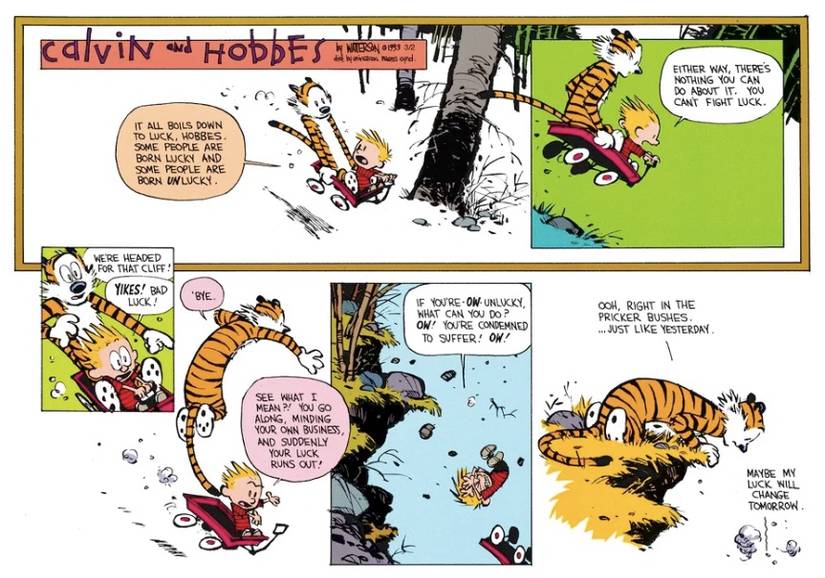
In one memorable strip, Calvin and Hobbes engage in a profound, in-depth conversation regarding the nature of luck while sitting inside a small red wagon. The brilliance of the sequence lies in the juxtaposition between their lofty existential debate and the physical reality of their situation: the wagon is careening dangerously down a giant hill at breakneck speed. The philosophical discussion abruptly ends when Calvin crashes violently into a thicket of prickly bushes, prompting the bruised boy to immediately reconsider his stance on just how unlucky he truly is.
Watterson capturing the imagination of a child
For all of Calvin’s advanced vocabulary and philosophical musings, Watterson never lost sight of what it actually meant to be a six-year-old boy. These high-minded strips were skillfully balanced by adventures rooted entirely in the wild, chaotic, and wonderfully absurd imagination of a child.
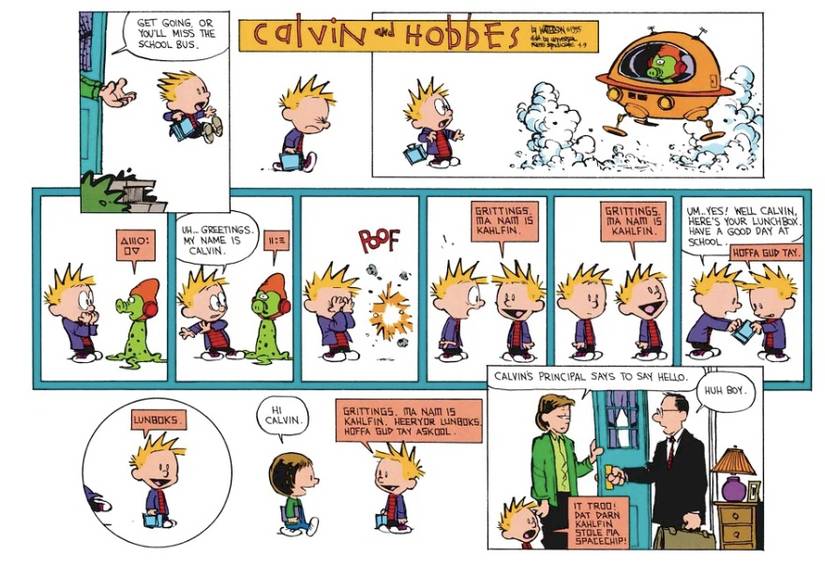
A prime example is a Sunday comic strip from 1995 in which Calvin becomes convinced he has encountered an alien who possesses the uncanny ability to camouflage himself as Calvin. Leaning entirely into the premise, the real Calvin goes to school the following day pretending to be the alien, an escapade that predictably lands him sitting outside the principal’s office. It is a masterclass in capturing the peculiar logic of childhood play, where fantasy and reality blur seamlessly together.
Watterson as a storyteller
While the daily newspaper format demanded a reliable joke-a-day structure, Watterson frequently broke the mold to tell longer, multi-part narratives spanning several days or even weeks. These extended arcs allowed him to build tension, escalate comedic stakes, and develop richer character dynamics.
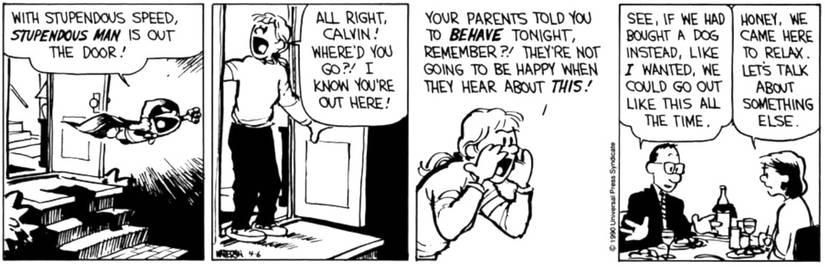
No narrative device tested Calvin’s limits quite like Rosalyn, the beleaguered teenage babysitter who served as his ultimate arch-nemesis. Encounters with Rosalyn regularly transformed into epic, multi-chapter sagas filled with dramatic twists and psychological warfare. A standout storyline from 1990 featured Calvin driving Rosalyn to the absolute brink of sanity simply by leaning into his persona as Stupendous Man, turning a routine babysitting evening into a hilarious war of attrition.
Watterson tugs at the heartstrings
Beyond the slapstick humor, imaginative flights, and philosophical debates, Calvin and Hobbes was capable of staggering emotional depth. Watterson frequently produced strips that bypassed words entirely, relying purely on visual storytelling to evoke powerful feelings of warmth, loneliness, or affection.
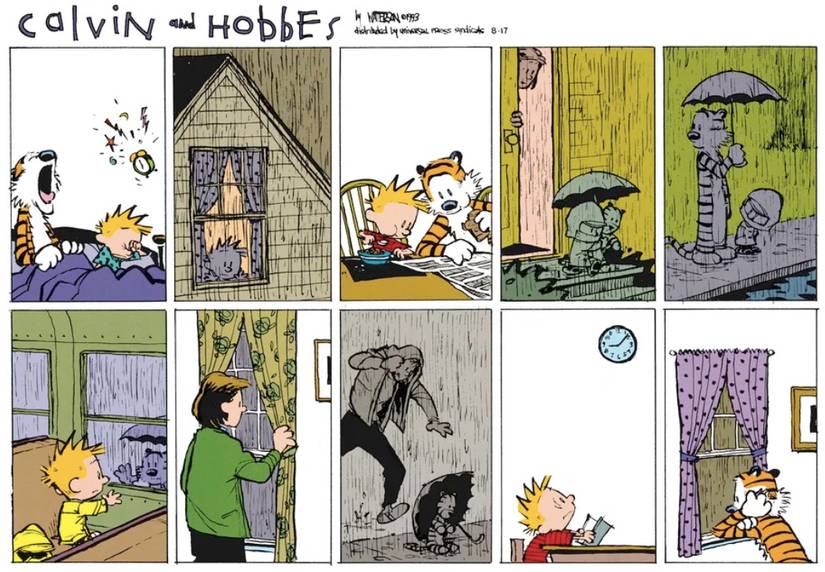
A tender comic strip from 1993 captures a quiet day in the life of the duo, focusing on Calvin and Hobbes as they each experience a profound longing to be reunited with one another. What makes the strip particularly remarkable is its complete lack of dialogue. Watterson relies entirely on posture, expression, and pacing to convey the unbreakable bond between the boy and his tiger, proving his mastery over the emotional register of his art.
Watterson’s dark sense of humor
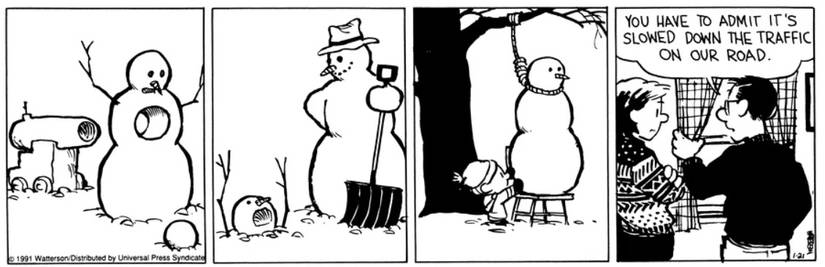
For every heartfelt or whimsical strip Watterson produced, there was a counterpart driven by a surprisingly dark, subversive sense of humor. This delightfully macabre side of the creator’s sensibilities found its ultimate expression in the recurring winter storylines featuring Calvin’s elaborate, highly sinister snowman sculptures.
A strip published on January 21, 1991, showcases this tendency vividly by presenting three distinct snowman tableaus within a single sequence. The panels depict a snowman being blasted apart by a miniature cannon, another being buried alive in a drift, and a third hanging from a noose. The inclusion of such morbid imagery stands in stark contrast to the gentle, child-friendly tone of contemporaneous newspaper comics like Peanuts or The Family Circus, highlighting Watterson’s willingness to push the boundaries of what comic page readers might expect.
Watterson’s incredible illustrations
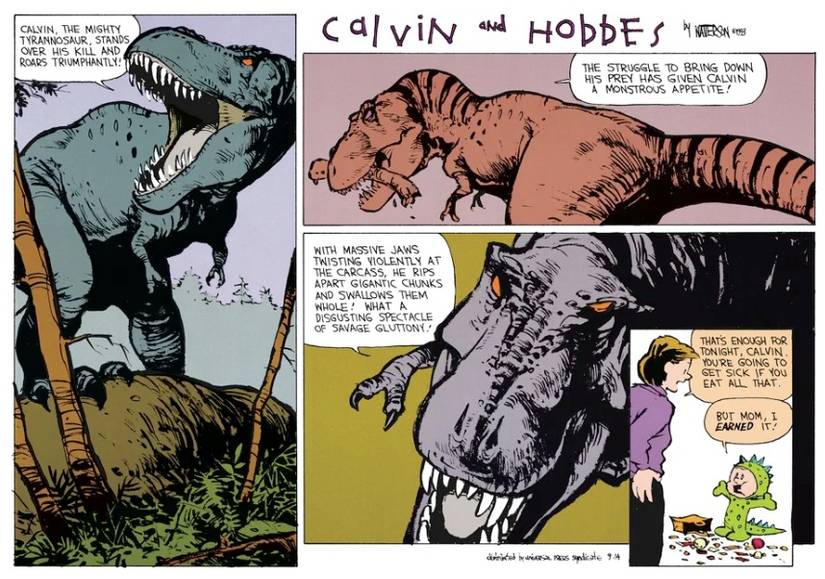
While standard daily installments of Calvin and Hobbes utilized a clean, accessible cartooning style, Watterson frequently seized opportunities to flex his illustrative muscles, producing panels of astonishing detail and texture whenever the narrative called for it.
These artistic showcases often occurred when Calvin’s imagination transformed him into a prehistoric beast. A Halloween-themed strip from 1993 features Calvin imagining himself as a ferocious Tyrannosaurus rex rampaging through a suburban neighborhood. In these panels, Watterson lavished attention on the anatomy of the dinosaur, the dynamic lighting of the urban landscape, and the sense of scale, demonstrating a classical illustration skill set rarely seen on the comics page.
Watterson breaking the format
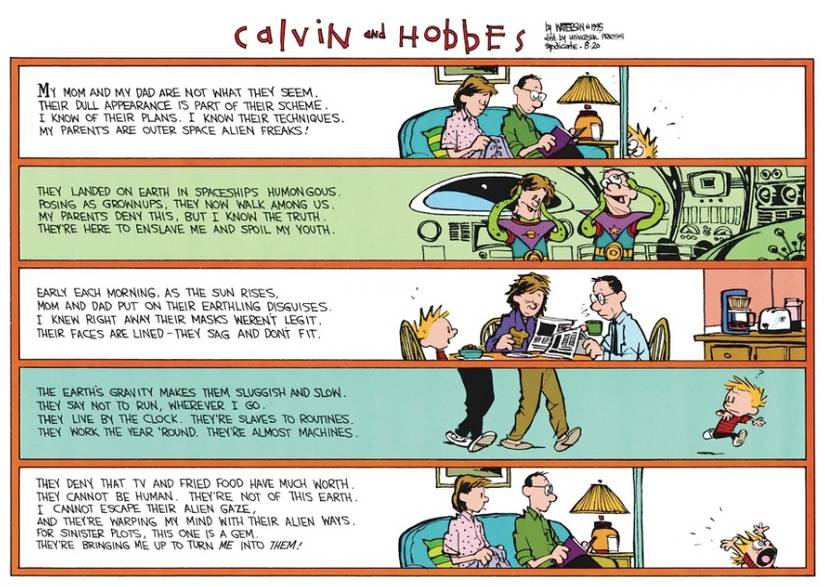
Watterson operated mostly within the traditional rectangular borders of newspaper syndication, but he consistently refused to let those physical boundaries restrict his creativity. His dinosaur strips frequently spilled across panels to emphasize their monstrous scale, while other strips experimented radically with layout and structure.
An August 1995 strip exemplifies this willingness to subvert the format. The entire sequence is dedicated to Calvin’s elaborate, extended internal monologue convincing himself that his parents are actually bloodthirsty space aliens. By altering the pacing and visual focus to match Calvin’s racing, paranoid thoughts, Watterson transformed a simple domestic joke into a brilliant exercise in visual pacing.
Watterson’s farewell
A retrospective of Bill Watterson’s work from the 1990s cannot be complete without acknowledging the strip’s final installment, which was published on December 31, 1995. After ten years and thousands of panels, Watterson chose to end the feature on his own terms.
The final strip featured Calvin and Hobbes standing at the top of a snow-covered hill, looking out over a pristine, freshly fallen landscape. Expressing a sense of wonder about the world around them, they strap onto their sled, prepare for a fast ride, and slide off into the white expanse. It was an open-ended, beautifully understated, and deeply poignant sendoff that captured the timeless spirit of the entire run, providing a conclusion that remains as powerful today as it was upon its original publication.