While courts in the United States have recently pulled back on holding internet service providers liable for the copyright infringement of their subscribers, lawmakers south of the border are moving in the opposite direction. Mexico has advanced a significant overhaul of its intellectual property framework, placing new legal obligations on telecommunication companies and reshaping how digital piracy is handled nationwide.
On Tuesday, Mexico’s Senate overwhelmingly approved a wide-ranging reform of the Federal Copyright Law. The legislative amendments tie internet service provider liability directly to the implementation and enforcement of a formal policy aimed at disconnecting repeat copyright infringers. The vote cleared the upper house with roughly two-thirds of the legislature in support, overcoming opposition from lawmakers who raised concerns over due process and collateral consequences for households.
The Chamber of Deputies had previously approved the exact same legislative text in October. With the Senate’s final backing, the decree now heads to the desk of President Claudia Sheinbaum. Her administration originally proposed the statutory changes back in May as part of a concerted effort to bring Mexican law into closer alignment with the United States-Mexico-Canada Agreement, commonly known as the USMCA.
The push for stricter internet service provider liability rules in Mexico has been a long-standing objective for rightsholders and trade representatives in the United States. In January, the International Intellectual Property Alliance, a coalition representing the U.S. copyright industry, filed formal complaints regarding Mexico’s legislative landscape. The group argued that a prior 2020 reform failed to establish a clear principle of secondary liability for entities that induce or promote copyright infringement.
Subsequent diplomatic and trade pressures yielded tangible shifts. In April, the Office of the United States Trade Representative moved Mexico to a more favorable tier on its annual Special 301 piracy watch list, explicitly pointing to the pending draft amendments as evidence of progressive legislative intent.
Senate Backs ISP Liability Rules
The approval of the amendments on Tuesday marks the culmination of years of intense lobbying by international rightsholders and domestic creative industries. While the governing majority and allied parties carried the vote, the opposition bloc maintained fierce resistance, ultimately voting against the measure.

The legislative trajectory now points straight to the executive branch. Because the lower house already greenlit the exact text, President Sheinbaum’s signature is the final formal barrier before the decree is published in the official gazette. Once enacted, the rules will fundamentally alter the operational landscape for major Mexican telecommunications providers such as Telmex and Izzi.
The USMCA trade pact has consistently acted as the primary catalyst for these copyright law overhauls. An earlier legislative wave in 2020 successfully introduced Digital Millennium Copyright Act-style safe harbor protections into Mexican law. Under those rules, hosting platforms and search engine operators gained legal shields, provided they maintained compliant policies for terminating accounts associated with repeat copyright violations. However, those earlier safe harbor provisions conspicuously omitted regular consumer internet access providers.
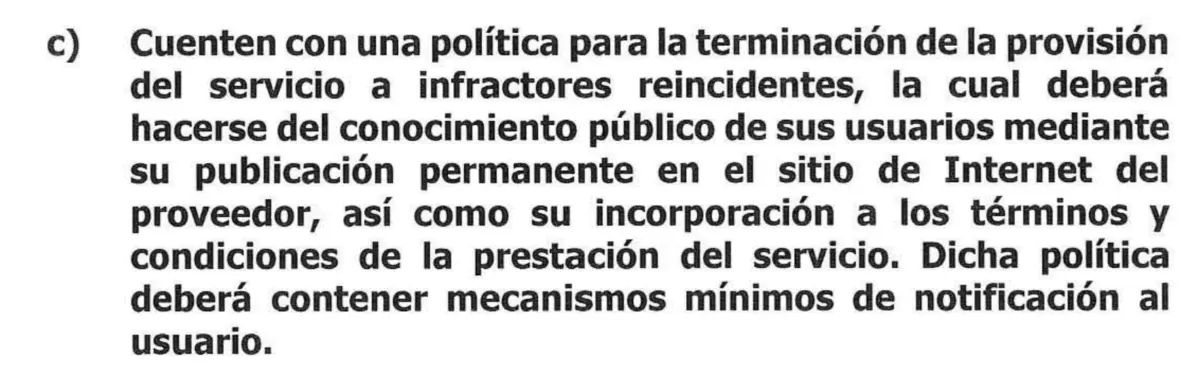
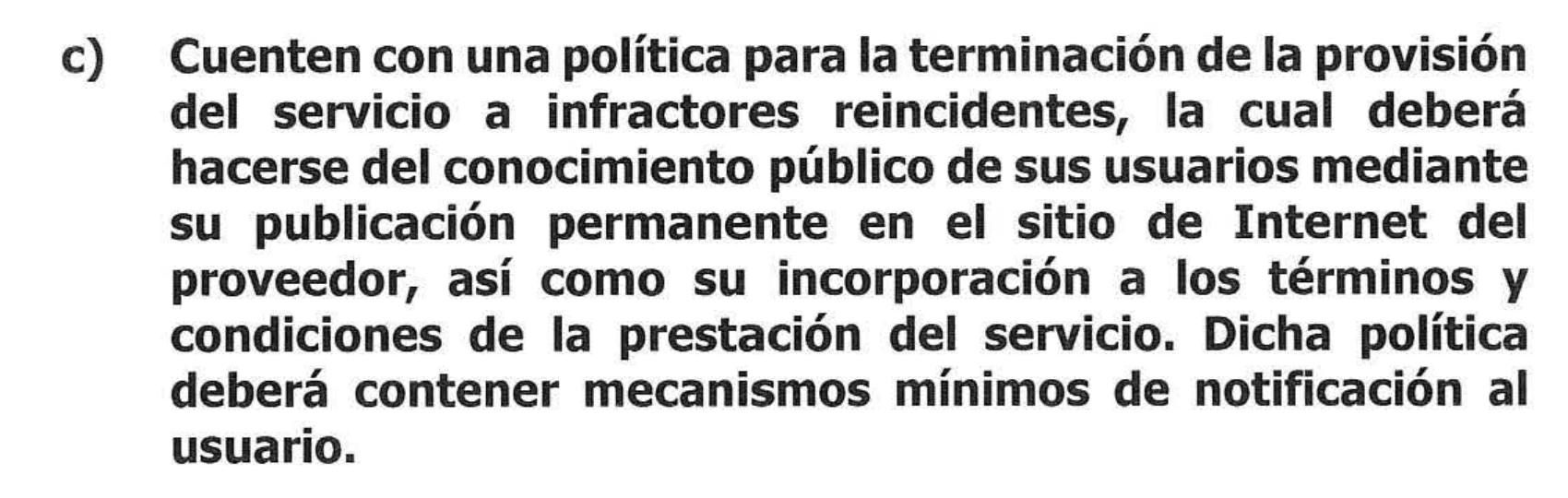
The new amendments officially close that statutory gap. Under the updated legal framework, internet providers are now explicitly mandated to establish, publish, and enforce a policy designed to disconnect repeat infringers. This operational policy must be permanently accessible on the provider’s official website as well as embedded within standard terms of service documents. Furthermore, the framework dictates that providers must implement a basic, functional mechanism to notify users when accusations of infringement arise.
Disconnect Repeat Infringers
The language of the newly approved reform specifies that the sanction in question is the termination of the internet connection itself rather than the mere suspension of a specific user account. This means that consumer access providers must draft clear internal protocols to monitor, evaluate, and act upon copyright infringement notices sent by rightsholders.
Telecommunications providers that fail to comply with these safe harbor conditions face substantial legal exposure. Under the statutory language, any internet service provider that neglects these mandates automatically forfeits its safe harbor protection, rendering the company directly liable for its users’ copyright infringements if the provider is found to have knowingly contributed to, induced, or caused the illegal distribution of protected material.
The same heightened liability applies if an internet provider maintains the technical capacity to control the infringing user and directly profits from the illicit activity. In either scenario of non-compliance, the Mexican Institute of Industrial Property holds the authority to levy severe financial penalties against the offending telecommunications company. Fines can reach up to approximately 4.7 million Mexican pesos, translating to roughly $250,000 USD, depending on the scale and nature of the underlying infringement.
Who Is a Repeat Infringer?
Despite establishing strict mandates for termination, the newly approved law conspicuously omits an explicit definition of what constitutes a "repeat infringer." The legislation leaves a critical void by failing to specify the exact number of piracy accusations or formal notices required before a subscriber’s internet service must legally be cut off.
According to legal experts, this ambiguity places a significant burden of interpretation directly onto individual service providers. Aurora López-Portillo, director of legal services at intellectual property firm ClarkeModet, noted that each telecommunications company will be forced to independently determine its own numerical threshold for termination. She emphasized that prudent internet providers should thoroughly vet incoming piracy accusations to verify whether the claims actually hold analytical and factual weight, while ideally affording accused users a fair opportunity to respond—even though the statute itself does not explicitly mandate such procedural safeguards.
Similar apprehensions were voiced by opposition lawmakers during the heated Senate debate. Senator Gabriel Elizondo cautioned that modern residential internet connections are frequently shared among entire families or apartment complexes, meaning that the unauthorized downloading or sharing activities of a single individual could effectively sever internet access for an entire household, including remote workers and students.
Earlier in the legislative process, opposition members floated alternative proposals that would have required rightsholders to obtain a formal judicial order before any consumer internet service could be suspended. That amendment was ultimately rejected by the majority, leaving the administration of anti-piracy policies primarily in the hands of private corporations.
Not Like Cox
The structural divergence between Mexican copyright enforcement and current legal interpretations in the United States highlights a fascinating global split in digital jurisprudence. While the U.S. DMCA contains provisions requiring internet providers to implement repeat infringer policies to maintain safe harbor protections, the practical application of those rules suffered a devastating legal setback earlier this year.
In March, the United States Supreme Court handed down a landmark ruling that completely wiped out a staggering $1 billion copyright infringement verdict against internet service provider Cox Communications. The nation’s highest court ruled that merely knowing about widespread piracy on a network and failing to take aggressive remedial action is legally insufficient to hold an internet service provider liable for contributory copyright infringement.
Writing for the majority in the Cox case, Justice Clarence Thomas underscored established legal precedent, stating that a company cannot be held liable as a direct or secondary copyright infringer simply for providing a general-purpose utility to the public with the generalized knowledge that some individuals will inevitably misuse that service to break the law. In essence, the U.S. Supreme Court decoupled the safe harbor termination requirement from broader contributory infringement liability if the provider did not actively participate in or induce the specific illegal acts.
Mexico’s statutory model operates along a fundamentally different legal trajectory. South of the border, failing to satisfy safe harbor conditions—including the active enforcement of a repeat infringer termination policy—serves as the primary legal gateway to liability. If an internet provider subsequently contributes to infringement with actual knowledge, or possesses the technical control to stop the infringer while drawing direct financial profit from the activity, civil liability and regulatory fines quickly follow.
The newly minted repeat infringer mandates will officially take effect 180 days following their formal publication in Mexico’s official gazette, a procedural step expected in the near future. As telecommunications giants and legal scholars prepare for the transition, the precise mechanics of how Mexican internet providers will define a repeat infringer and manage the delicate balance between copyright enforcement and consumer rights remain to be seen.