As global internet connectivity expands further into remote and underserved regions, digital infrastructure increasingly underpins everyday mission-critical services. From basic telephony and messaging to advanced financial transactions and telemedicine, reliable power supplies have become non-negotiable for both end-users and the network infrastructure operators striving to keep them connected.
In response to this growing
demand for resilient power, solar photovoltaics (PV) paired with advanced battery energy storage systems have emerged as an increasingly attractive alternative to long, precarious grid supply lines and expensive, high-maintenance diesel generators. Over the past decade, the economics of renewable energy have shifted dramatically. Solar panel manufacturing costs have plummeted to a fraction of their historical prices. Simultaneously, high-capacity lithium iron phosphate batteries have become widely available in commercial quantities at significantly lower price points, cementing solar PV as a valuable addition to both residential and commercial power setups, even in densely populated urban environments.
However, for newcomers stepping into the world of renewable energy, designing and deploying a solar PV system can remain bewilderingly complex. This technical and operational complexity frequently leads to poorly planned projects that fail to meet local demands, stall midway through execution, or are abandoned entirely, leaving behind stranded infrastructure that is ultimately dismantled and never replaced. Such missteps are not restricted to remote outposts; they occur even in projects managed by established power utilities within developed urban areas. For engineers and network operators working in remote or isolated regions, feeling anxious about undertaking a solar transition is entirely understandable. Yet, with careful planning and realistic expectations, these systems can be engineered to succeed.
Assessing Power Requirements and Defining Operational Loads
Before evaluating market pricing, hardware quotes, or equipment specifications, the foundational step in any solar infrastructure project is identifying the exact equipment loads that the system will need to support. Network operators must compile a comprehensive inventory of all active hardware, ranging from servers, routers, and switches to uninterruptible power supply (UPS) units, air conditioning systems, lighting, on-site computing gear, link transmitters, receivers, and power tools utilized by visiting maintenance crews. Compiling this data into a detailed spreadsheet provides a clear baseline for the entire project.
Every electrical device draws a specific amount of power, typically indicated on the manufacturer label with a figure ending in the letter ‘W’ for watts. When hardware lacks a visible data label, operators can reference device specifications online, consult artificial intelligence tools to estimate power consumption based on equipment classes, or deploy plug-in power meters to measure actual draw over time. Special attention must be paid to hidden loads, such as water heaters or auxiliary climate control units hidden behind utility cupboards or enclosures, particularly any device that generates thermal energy. If these loads cannot be physically isolated or excluded from the solar supply circuit, their consumption metrics must be factored into the overall calculations.
Aggregating these figures reveals the minimum instantaneous power output the system must be capable of delivering during peak operational periods. For intermittent loads that do not run continuously—such as electric kettles or cyclical computer power supplies—operators must estimate realistic average usage patterns or measure them directly. Completing this rigorous power audit prevents the procurement of undersized systems incapable of handling real-world operational demands.
Selecting the Appropriate System Architecture
Once power requirements are established, operators must determine the structural configuration of the system, choosing between standalone island setups and grid-connected alternatives.
A standalone island PV system operates completely independently, maintaining no physical connection to any external power grid. This configuration is frequently the only viable choice for deeply remote locations entirely devoid of grid infrastructure. The primary advantage of an island setup lies in its relative architectural simplicity and the absence of administrative hurdles regarding utility interconnection agreements. However, the operational disadvantage is substantial. Because the system cannot export surplus energy, it must be vastly oversized to guarantee uninterrupted power delivery through extended periods of adverse weather or low solar irradiance. Furthermore, any scheduled maintenance requiring a total system shutdown results in an immediate loss of power to connected loads, necessitating temporary bridges like mobile generators.
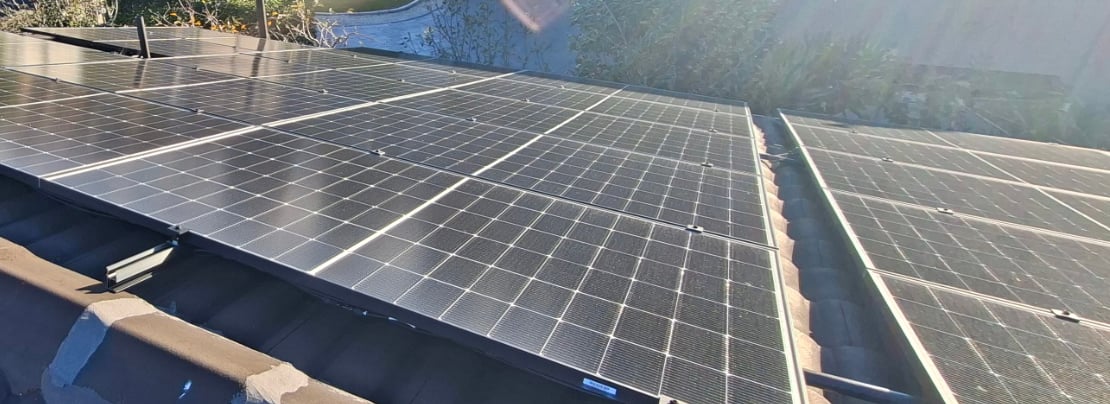
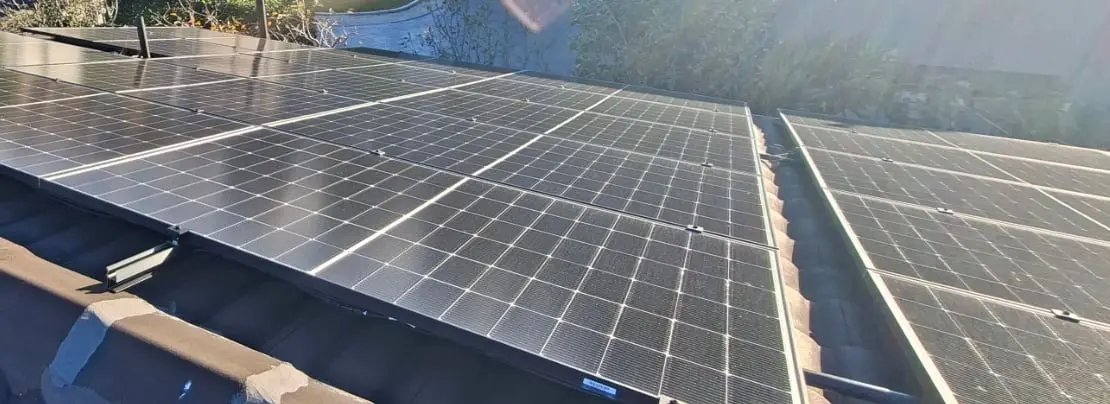
Alternatively, a grid-connected PV system links to a local electrical grid while retaining the technical capability to island itself automatically during unexpected grid failures. This hybrid approach offers significant advantages, notably the ability to export excess generation back into the local grid to offset initial capital expenditures. In localized microgrids, such as those found on Pacific islands heavily reliant on imported diesel fuel, exporting surplus solar power reduces the mechanical load and wear on diesel generators while lowering overall fuel consumption and stabilizing the local grid.
Despite these benefits, grid-connected systems introduce operational complexity. They must manage three potential power sources—solar panels, battery banks, and the utility grid—alongside three distinct destinations for that energy: active loads, storage batteries, and the grid itself. Determining optimal power routing, such as prioritizing battery charging over grid export during specific tariff or generation windows, presents a notable challenge, though modern hybrid inverters manage these transitions effectively.
Additionally, grid-connected installations require dedicated UPS protection for critical network hardware. Because grid-tied inverters must synchronize their alternating current (AC) frequency with the host utility grid, a sudden grid failure forces the system to transition to island mode and generate its own independent AC frequency. Upon the return of the utility grid, the generated frequency will likely drift out of phase with the incoming grid signal, necessitating a brief inverter shutdown during the transition. A UPS is essential to bridge this momentary gap without dropping power to sensitive servers and routing equipment. Experts universally advise against deploying solar PV systems strictly as backup-only reserves, noting that leaving expensive renewable hardware idle while paying for grid power represents the least efficient operational model.
Modelling System Capacity and Generation Yields
With load profiles and architectural choices defined, the next phase involves modeling the physical installation to calculate required generation capacity and verify site feasibility. Standard commercial solar panels typically feature a peak generating capacity ranging between 430 and 460 watts-peak (Wp). However, panels only achieve these maximum ratings under ideal laboratory conditions, featuring direct perpendicular sunlight, clear skies, clean glass surfaces, and cool ambient temperatures. Real-world performance varies considerably, making computational modeling essential.
Engineers rely on specialized simulation tools provided by reputable inverter manufacturers and energy organizations to model expected yields. These software platforms require precise geographic location data, roof pitch and orientation, available physical surface area, and potential shading factors from surrounding topography, vegetation, or structures.
For smaller installations supporting loads under 10 kilowatts, system designers typically specify a hybrid inverter capable of handling at least ten times the calculated average power requirement. This capacity margin allows the inverter to simultaneously power active loads and recharge battery storage during limited daily generation windows. For larger infrastructure deployments, discrete inverter allocations for photovoltaic arrays and battery banks are required. Battery storage capacity, measured in kilowatt-hours (kWh), should be sized to sustain operations for up to five days without active solar recharge. Dividing total storage capacity by the expected load yields the projected autonomous backup duration, with larger panel and inverter arrays allowing for proportionally smaller battery reserves due to faster recharge cycles.
Physical wiring configurations require connecting individual panels in series to form strings, summing their nominal direct current (DC) voltages to reach a target ceiling roughly 100 to 200 volts below the maximum voltage permitted by local electrical codes. These strings are then mapped to the maximum power point tracking (MPPT) inputs of the inverter model to simulate year-round performance under local climatic conditions. Iterative adjustments to panel counts, inverter ratings, and battery banks allow operators to refine the model until they achieve high confidence in the system’s resilience before purchasing physical hardware.
The foundational insights gained from power auditing and system modeling prepare operators for the subsequent phases of component selection, supplier evaluation, cybersecurity assessments, and long-term maintenance planning necessary to ensure enduring network reliability.
Dr Ulrich Speidel is a senior lecturer in Computer Science at the University of Auckland with research interests in fundamental and applied problems in data communications, information theory, signal processing, information measurement, and assessment integrity. His work on connectivity research and implementation has been supported by the APNIC Foundation.