When anime streaming service Funimation officially shut down its website and application in April 2024 as part of its ongoing integration into Crunchyroll, thousands of fans experienced an unexpected digital loss. Beyond the sudden disappearance of a dedicated platform that had served the North American anime community for years, the shutdown severed access to the digital copies that consumers had previously received bundled alongside physical DVD and Blu-ray purchases. This abrupt revocation of access sparked widespread frustration across online communities, highlighting a growing vulnerability inherent in modern digital media consumption where physical ownership is increasingly tethered to fragile online ecosystems.
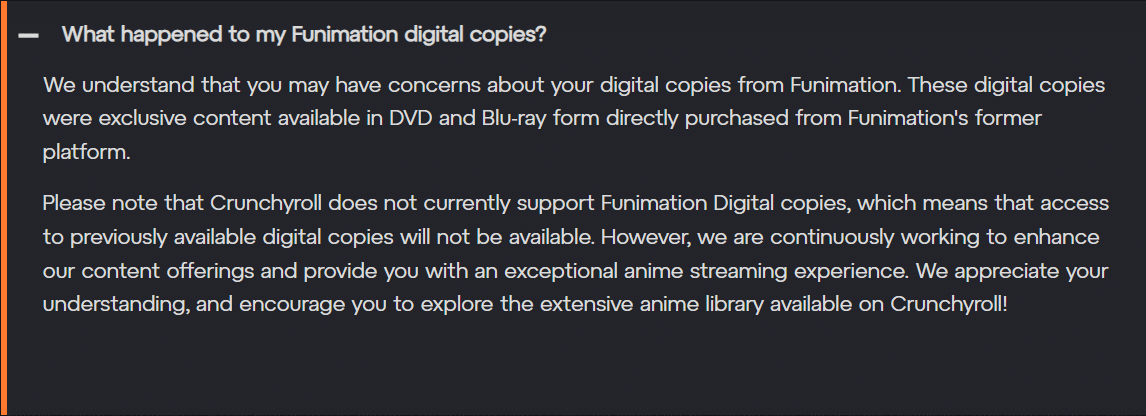
Today, Crunchyroll’s official customer support resources state that the platform does not currently support these legacy Funimation digital copies. Instead, affected consumers are simply directed to explore the separate streaming catalog available through Crunchyroll’s current subscription service. For many fans who specifically purchased physical media to ensure permanent ownership of their favorite series and films, this corporate transition meant that access to their digital libraries evaporated overnight through no fault of their own.
While the movies and television shows remain physically encoded on the discs sitting on consumers’ shelves, unlocking and transferring those files to modern devices for personal, on-the-go viewing remains legally restricted in the United States. Under the Digital Millennium Copyright Act, or DMCA, the law’s strict anti-circumvention provisions prohibit individuals from bypassing the robust encryption protecting commercial DVDs and Blu-rays. Unless a specific, legally sanctioned exemption applies, attempting to create a personal digital backup of legitimately purchased physical media constitutes a violation of federal law, leaving consumers trapped between degrading physical formats and evaporating cloud libraries.
Petitions Seek New Disc Ripping Exemption

To address these mounting consumer rights concerns, the U.S. Copyright Office undertakes a comprehensive review of these regulatory exemptions every three years. Last week, the agency officially opened ten proposed classes of exemptions for public comment and stakeholder review, casting a spotlight once again on the ongoing tension between digital rights management and fair consumer access. Among the various proposals submitted for consideration, two underlying petitions directly target works for which authorized digital access has been abruptly discontinued, with one explicitly citing the fallout from the Funimation shutdown.
One of the prominent petitions was submitted by Jayden Milne, who is formally asking the U.S. Copyright Office to establish a targeted exemption under Section 1201 of the DMCA. This proposed exemption would legally permit owners of DVDs, standard Blu-ray discs, and Ultra HD Blu-ray discs to create a single secured, local backup copy for personal use, specifically when the digital copy originally promised on the product packaging is no longer accessible or supported by the distributor.
Milne’s petition is designed to encompass two distinct scenarios currently facing physical media collectors. The first scenario addresses consumers who successfully redeemed a digital copy associated with their physical purchase, only to lose access entirely when the underlying hosting service shut down or abandoned the platform, as occurred during the Funimation and Crunchyroll consolidation.
The second scenario addresses individuals who purchase newly acquired physical discs whose promotional digital codes have already expired before reaching the consumer. According to documentation cited within the petition, major studios such as Warner Bros. enforce expiration policies based on a title’s initial theatrical or home video release date rather than the actual date of purchase by the consumer. Crucially, these expired codes are not replaced by retailers or distributors. This means a customer can purchase a brand-new physical media release years after it initially debuted on store shelves, only to discover that the bundled digital redemption code is completely dead upon opening the package.
Under Milne’s proposal, physical media owners would be granted the legal clearance to rip a replacement file directly from their legitimately acquired discs, provided they adhere to strict, self-contained conditions. The resulting digital replacement cannot exceed the quality tier originally promised by the physical packaging; for instance, if the box advertised a standard high-definition digital copy, the owner would not be legally permitted to rip an upgraded 4K version. Furthermore, the generated copy must remain strictly restricted to personal, non-commercial use and must be permanently destroyed if the underlying physical disc is subsequently sold, gifted, or lost.
Disappearing Anime Streams
A second, closely related petition submitted by Zakaria Zerhouane takes a broader look at the stability of the anime market, focusing heavily on series and films that have been entirely purged from authorized U.S. streaming platforms following the expiration of licensing agreements. Zerhouane’s petition also addresses physical media released by North American anime distributors that have since gone out of business, leaving consumers with orphaned media collections and zero avenue for official digital replacement.
While Zerhouane’s petition does not explicitly name Funimation, it systematically lists several defunct historical distributors, including ADV Films, Bandai Entertainment, Central Park Media, and Geneon. These historical companies released countless classic titles on physical media decades ago, and the digital rights for many of those properties have since fallen into legal limbo or corporate obscurity.
To combat this systemic volatility, Zerhouane is asking the Copyright Office for an exemption that goes beyond simply bypassing physical disc encryption. His proposal seeks authorization to legally circumvent the complex digital rights management layers, geo-locking protocols, and session-based access controls utilized by modern streaming platforms. The petition argues that such broad legal tools are urgently needed because the contemporary anime licensing market is inherently unstable and prone to sudden catalog contractions.
Streaming platforms frequently remove licensed content with little to no advance notice, actively preventing users from finishing long-running series or preserving works before they completely disappear from the digital landscape. Zerhouane contends that the steady consolidation of the North American anime market under a single dominant corporate entity has dramatically accelerated catalog volatility and reduced consumer choice. Although the petition avoids explicitly naming the corporation, the description unmistakably points toward Sony-owned Crunchyroll, which has steadily absorbed the vast majority of the specialized anime streaming market over recent years.
Neither of the newly filed petitions attempts to secure a sweeping exemption for all video content across the entertainment industry. Zerhouane’s request is intentionally restricted to the anime medium, while Milne’s petition is narrowly focused on physical discs that were explicitly marketed and sold alongside a promised digital copy. Both regulatory requests remain strictly limited to personal, non-commercial uses, emphasizing that the petitioners are seeking preservation and continuity rather than mass distribution or piracy.
Rightsholders Respond in February
The U.S. Copyright Office has grouped these newly submitted requests alongside four other distinct replacement-focused petitions currently moving through the triennial review cycle. These additional petitions advocate for consumer permissions to create personal archival backups of physical discs before the physical media inevitably deteriorates, as well as requests for legal protections to format-shift aging media libraries as legacy playback hardware slowly disappears from the consumer market. These issues grow increasingly pressing with each passing year as older optical formats degrade and specialized hardware becomes obsolete.
Despite the growing urgency expressed by collectors and consumer advocates, the Copyright Office noted in its published documentation that the Register of Copyrights has repeatedly declined to recommend broad format-shifting exemptions during past triennial review cycles. This historical precedent indicates that while these petitions have successfully secured a place on the official administrative agenda, their ultimate approval remains uncertain and subject to rigorous debate.
Before reaching any final determinations, the Copyright Office is actively soliciting detailed feedback and legal arguments from all affected industry stakeholders. The agency has formally requested information regarding the specific copy protection technologies involved, whether the contested titles remain available to consumers through alternative legal viewing avenues, and a detailed justification for why permitting these personal copies would not infringe upon existing copyright frameworks. Additionally, the Office aims to evaluate whether granting such exemptions would cause measurable economic harm to copyright holders and commercial distributors.

Supporters and consumer advocates have been given a deadline of December 7 to submit their initial comments in favor of the proposed exemptions. Meanwhile, rightsholders, major studios, and opposing industry representatives have until February 22 to file their formal objections and counter-arguments. Following the conclusion of the written comment periods, public hearings will be scheduled during the spring to allow stakeholders to present oral testimony before federal regulators make their final recommendations.