
SIDN Labs, the research and development arm of the organization managing the Netherlands’ top-level domain, has launched a dedicated public platform to publish daily statistical insights into the Domain Name System (DNS) traffic hitting the authoritative nameservers for .nl. The newly unveiled initiative, accessible via rssac002.sidnlabs.nl, marks a significant step forward in transparency for country-code top-level domains (ccTLDs). Alongside the new website, all associated data sets have been made freely available to the public via GitHub, offering researchers, network operators, and internet governance experts an unprecedented look into the inner workings of one of the world’s largest national registries.
Every single day, the infrastructure powering the .nl domain answers billions of individual DNS queries originating from every corner of the globe. To make this massive influx of information digestible, SIDN Labs has distilled the telemetry into a concise set of daily metrics. These cover fundamental operational indicators, including total query and response volumes, distribution of response codes, and the sheer number of unique querying sources interacting with the system. While publishing DNS traffic statistics is not an entirely novel concept—with entities like CZ.NIC sharing figures for the .cz domain and various registries including data in annual reports—the lack of standardization has historically hindered cross-comparison. Different registries have traditionally relied on their own proprietary metrics, definitions, and file formats, making it nearly impossible to benchmark a national domain against global infrastructure like the internet’s root servers.
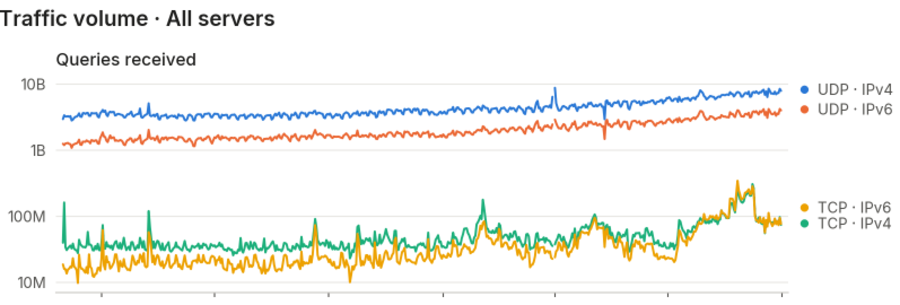
To solve this fragmentation, SIDN Labs adopted the RSSAC002 specification, a rigorous reporting standard established by the Root Server System Advisory Committee (RSSAC) under the auspices of ICANN. Root server operators have utilized this standardized format for years, publishing comprehensive files that allow for deep analytical consistency. According to available records, .nl is now the very first top-level domain registry to format and publish its comprehensive traffic data in strict accordance with the RSSAC002 standard. Visitors to the new portal will find daily YAML files, dynamically generated graphs, comprehensive metric descriptions, and a transparent breakdown of the underlying methodology used to aggregate the data.

Understanding the Value of Open DNS Telemetry
The Domain Name System acts as the fundamental address book of the global internet. Before any web browser can successfully navigate to a .nl website, a recursive resolver must query the authoritative nameservers to locate the correct destination. The data published by SIDN Labs sheds light on how this critical infrastructure operates immediately below the root level, offering visibility that mirrors the insights provided by root server operators, but tailored specifically to a massive national namespace.
Because the data format is identical to that used by the root server system, .nl traffic can now be directly and accurately compared against root server metrics. For instance, operational comparisons reveal that on a typical day, the collective .nl nameserver infrastructure handles a volume of traffic roughly comparable to D-Root—one of the thirteen foundational root servers—and outpaces B-Root by approximately fifty percent. This level of comparative transparency allows the broader technical community to visualize national traffic patterns within the broader context of global internet architecture.
Researchers can leverage these consistent data sets to conduct advanced DNS measurements and longitudinal trend analyses without needing to reconcile conflicting data formats. Meanwhile, network operators can benchmark their own regional or organizational traffic against a major ccTLD and the global root. Because the data adheres strictly to established protocols, existing visualization and processing tools engineered specifically for root server telemetry—such as the official RSSAC002 charts—can ingest and process .nl data natively without requiring any modifications.

Collaborative Open Source Foundations
At the core of this initiative is a firm belief within SIDN Labs that telemetry concerning the core plumbing of the internet should remain open and accessible. Having previously utilized RSSAC002 root server data in their own published academic research, the team at SIDN Labs recognized firsthand how valuable standardized data can be to the scientific community, prompting them to give back by opening up their own operational metrics.
Remarkably, the technical pipeline driving this transparency is entirely open source. The raw telemetry is sourced from ENTRADA, an open-source DNS data warehouse developed by SIDN, while the core metrics are computed using a specialized tool. This tool itself is a fork of an original project crafted by computer science students at Delft University of Technology (TU Delft). Developed as part of a demanding Software Project course where bachelor students spend three months engineering production-ready software for external clients, the project highlights the tangible value of academic collaboration. By turning a practical operational requirement into robust open-source code, the student team created a utility that other TLD operators can readily adopt. Any user of the ENTRADA platform can now deploy the tool to generate identical statistics for their own authoritative servers, raising hopes within SIDN Labs that other registry operators will follow suit and publish their own standardized data sets.
Protecting Privacy and Looking Forward
A critical aspect of the newly launched platform is its strict adherence to user privacy and data minimization. The published files contain exclusively aggregated, daily statistical summaries. No Personally Identifiable Information is exposed, ensuring that raw IP addresses, individual user queries, and specific looked-up domain names are entirely absent from the public repository.
While the data is currently published in systematic batches, SIDN Labs is actively working toward full automation. The next phase of development will see the pipeline configured to release fresh metrics continuously on a daily basis, removing the need for manual intervention and ensuring that the global technical community has near real-time visibility into national DNS trends.
As researchers and operators begin working with the newly available telemetry, SIDN Labs has expressed keen interest in learning how the data is applied across the industry, inviting interested parties to reach out with feedback or project inquiries as the platform continues to evolve.