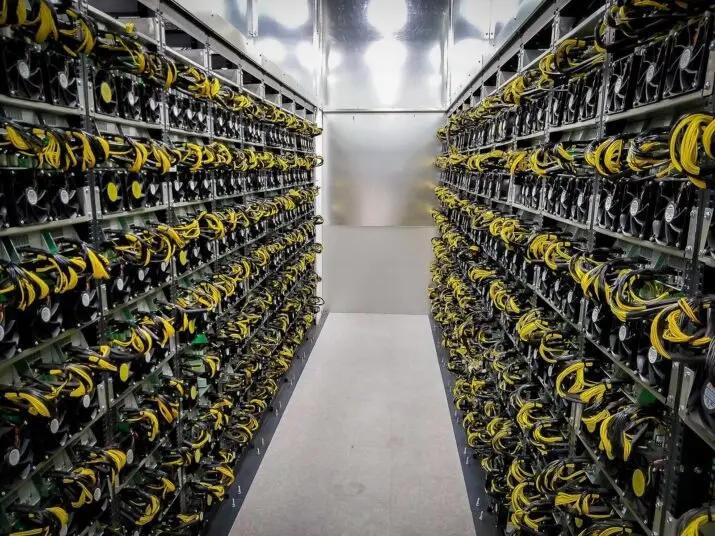
Cloud-mining and digital asset infrastructure provider BitFuFu experienced a notable contraction in its monthly Bitcoin output during October, underscoring the relentless and competitive realities of the global mining sector. According to the company’s latest monthly operating statement released on November 6, BitFuFu produced 137 Bitcoin (BTC) in October, marking a significant decrease from the 167 BTC mined in September. This downward movement occurred even as the total computing power under the company’s management remained virtually unchanged, providing a textbook illustration of why a steady capacity does not automatically translate into steady coin production.
The latest financial and operational disclosures from digital asset miners frequently highlight the complex interplay between hardware deployment, network-wide competition, and treasury management. In BitFuFu’s case, the operational data reveals that the total hashrate under its management stood at approximately 19.5 exahashes per second (EH/s) at the end of October, showing almost negligible movement from the 19.4 EH/s recorded a month earlier. Despite this stable computational footprint, the actual yield of newly minted Bitcoin dropped by roughly 18%.
At the same time, the company’s aggregate Bitcoin treasury balance moved in the opposite direction. BitFuFu reported holding 1,454 BTC at the close of October, an increase from the 1,388 BTC held at the end of September. This divergence—where production decreased while the cumulative treasury balance increased—highlights a fundamental reality of corporate crypto management: production output and coin retention strategy are entirely separate metrics. A firm can accumulate digital assets through various means, including market purchases or strategic holding of previously mined reserves, even during periods when organic block reward capture slows down.
Difficulty Makes the Same Equipment Earn Less
The primary driver behind BitFuFu’s reduced output lies in the mathematical mechanics of the Bitcoin network itself. The company pointed out that global network difficulty surged by approximately 11.8% over the course of October. Specifically, network difficulty climbed from 132.76 trillion at the start of the month to 148.36 trillion by the time October came to a close.
Bitcoin’s automated difficulty adjustment mechanism is designed to ensure that blocks are found roughly every ten minutes, regardless of how much computing power joins or leaves the global network. When overall network competition intensifies and total hashrate rises, the mathematical puzzle becomes harder to solve. Consequently, an individual miner operating an unchanged share of the global computing power will naturally capture a smaller proportional slice of the available block rewards.
A closer examination of BitFuFu’s internal operational segments reveals distinct trends across its business lines. The company’s self-mining production experienced the brunt of the difficulty increase, falling sharply from 98 BTC in September down to 67 BTC in October. By contrast, its cloud-mining production remained remarkably flat, registering 70 BTC in October compared to 69 BTC in the previous month. Because of this division, the total monthly production decline of 30 BTC was unevenly distributed, impacting the company’s proprietary balance sheet operations much more heavily than its cloud-hosting clients.
This dynamic reflects broader trends across the entire cryptocurrency mining ecosystem. Recent industry analyses, including market examinations of the network hashrate rebounding above the milestone of one zettahash, demonstrate that global competition has intensified significantly. While robust network hashrate is broadly viewed as a positive indicator for the overall security, decentralization, and resilience of the Bitcoin network, it simultaneously creates a more demanding economic environment for individual operators, who must continuously optimize their operations just to maintain historical reward levels.
Efficiency Improves, but Economics Remain Demanding
To counteract rising network difficulty and diminishing marginal returns, mining operators continually seek to upgrade their hardware fleets and optimize energy consumption. BitFuFu reported a positive development on this front, noting that its average fleet efficiency improved to 16.3 joules per terahash (J/T) in October, compared to 16.7 J/T in September.
Achieving a lower energy consumption rate per unit of computational output is a critical operational achievement for any industrial-scale miner. More efficient hardware allows operators to extract more computational work out of every watt of electricity consumed. However, the company’s disclosures also emphasize that hardware efficiency gains do not occur in a vacuum. Incremental improvements in fleet efficiency are often insufficient on their own to completely offset the headwinds caused by soaring network difficulty, fluctuating power prices, rising financing costs, or broader shifts in the market price of Bitcoin.
In addition to fleet efficiency metrics, BitFuFu reported that its total power capacity under management stood at 317 megawatts (MW) at the end of October, down slightly from 324 MW a month earlier. This reduction in managed power capacity, paired with flat hashrate and improved efficiency, paints a picture of a company actively fine-tuning its infrastructure to maximize output per megawatt in an increasingly crowded market.
For institutional investors and market analysts, these operational nuances are critical when evaluating businesses that operate hybrid models combining direct proprietary exposure to Bitcoin with computing services sold to third parties. Managed hashrate figures frequently encompass hardware owned by external clients or hosted via third-party agreements, rather than exclusively representing equipment listed directly on the company’s balance sheet. Consequently, financial evaluations require a careful separation of self-owned hashrate, contractual energy capacity, fleet energy efficiency metrics, and the actual volume of coins successfully credited to the treasury.
Furthermore, while a miner’s decision to accumulate coins can successfully enhance its overall exposure to Bitcoin price appreciation even during periods of decelerating production, treasury growth alone does not tell the full story. Accumulation metrics reveal little about the underlying cash cost required to mine each individual Bitcoin, nor do they detail the operational expenditures needed to keep heavy data center equipment running smoothly. The ultimate test for any commercial mining enterprise remains its underlying operational resilience during phases when network difficulty outpaces both hardware upgrades and market price appreciation.
What November’s Update Should Establish
As the digital asset sector moves forward, upcoming monthly operational updates will provide vital clues as to whether the production dip observed in October was merely a temporary reaction to a sudden difficulty spike or the beginning of a persistent trend under a heavier computational burden. Observers will be closely watching metrics such as self-mined output versus third-party hosting contributions, installed and energized electrical capacity, average fleet efficiency ratios, and the specific retention rates of newly minted coins versus those liquidated to cover operational overhead.
BitFuFu’s monthly figures consist of unaudited operational metrics rather than a comprehensive accounting of corporate profitability. Nevertheless, the company’s recent report successfully highlights a timeless truth of the digital asset economy: Bitcoin mining is an intensely competitive, zero-sum race where an operator can successfully enhance its underlying hardware efficiency and still wind up with fewer digital coins at the end of the month. That fundamental dynamic explains why accurate industry comparisons require examining far more than a simple headline hashrate figure.