
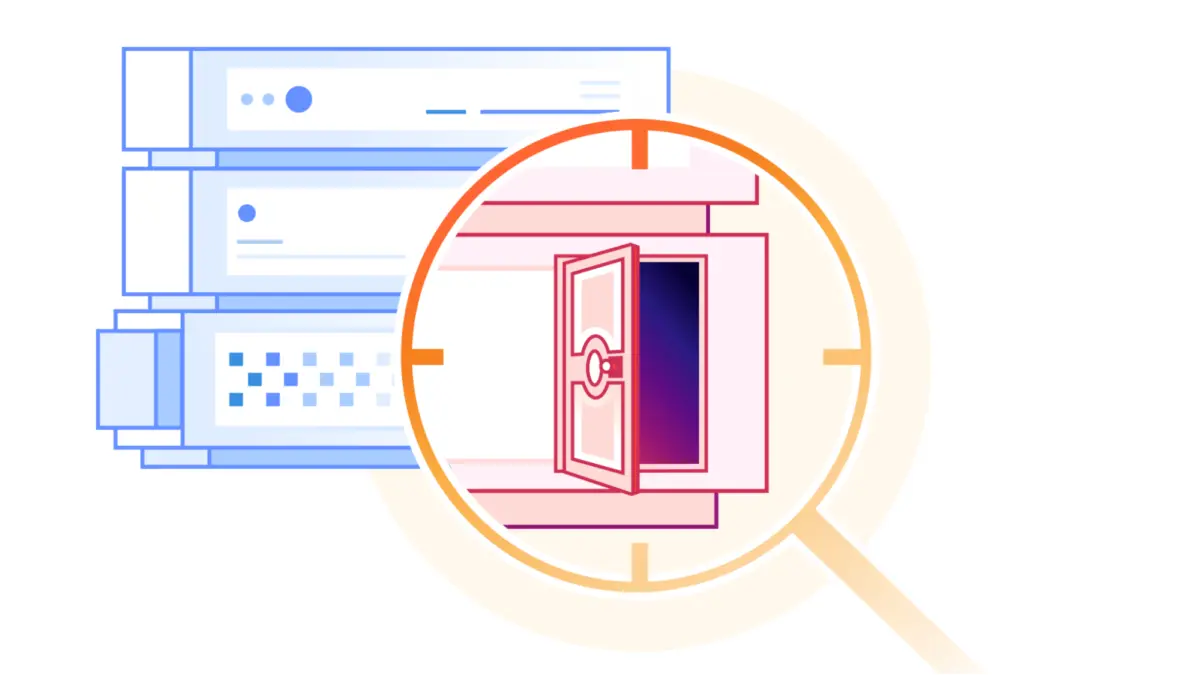
The recent disclosure of a major vulnerability in Citrix NetScaler has once again underscored a pervasive and dangerous weak point in modern enterprise architecture: the traditional login page. Publicly accessible authentication portals function as vital attack surfaces that, when compromised, can grant malicious actors direct entry into an organization’s application servers. Indeed, security advisories released by Citrix detailed an actively exploited flaw that allowed unauthorized attackers to execute arbitrary commands on affected gateways without even requiring valid credentials. As is always the case with high-stakes emergency patches, systems administrators found themselves caught in a difficult operational bind, forced to weigh the risks of cutting off or disrupting active user access against the severe cyber threats posed by delaying a critical security update.
For organizations running Citrix NetScaler that have yet to apply the necessary patches, security professionals urge immediate remediation, emphasizing that the exploited vulnerabilities are severe. Once systems are updated, however, security teams must look beyond short-term fixes and evaluate how to prevent future emergency drills by implementing robust, multi-layered defensive controls. This architectural challenge extends far beyond NetScaler alone, applying universally to any internal application or management console exposed to the open internet. Remote desktop portals, administrative interfaces, and other publicly facing authentication pages all demand rigorous scrutiny regarding whether their intended audience truly requires unrestricted internet reachability, and whether an attacker could bypass authentication checks to reach underlying application servers.
In response to the crisis, Citrix rapidly released software updates to address the underlying flaws, while infrastructure and security providers like Cloudflare rolled out emergency web application firewall rules to help mitigate the threat. Yet, the availability of a patch does not equate to immediate safety across an enterprise. Every individual instance of vulnerable software must be systematically identified, updated, and thoroughly tested. Applying software updates across complex, live production environments is notoriously difficult, frequently resulting in unexpected downtime or operational disruptions for employees who rely on uninterrupted access to their desktop environments. End users, customers, and patients who depend on services hosted through remote infrastructure care little about the administrative challenges of deploying emergency security patches.
Relying solely on a web application firewall can buy valuable time before an organization can complete a full software rollout, but such measures remain inherently reactive and often fail to anticipate the next novel exploit discovered by malicious actors. While security vendors work tirelessly to cover attack variations and emerging vectors, the increasing adoption of artificial intelligence by threat actors has dramatically accelerated the rate at which new exploits are discovered and weaponized. This reality highlights why building a comprehensive defense-in-depth strategy is essential, ensuring that a single software failure or zero-day vulnerability does not automatically escalate into a catastrophic security breach.
Modern defensive strategies increasingly combine granular access policies, advanced web application security, and strictly restricted origin connections to protect authentication services long before new vulnerabilities are publicly disclosed. Access controls actively limit who can reach an application server, web application firewall inspections evaluate incoming HTTP requests for malicious intent, and strict origin restrictions prevent direct internet connections from bypassing these protective perimeters. Together, these measures reduce an organization’s exposure surface without requiring administrators to wait for a new exploit signature or immediately rip out and replace their existing desktop infrastructure.
The NetScaler Exploit
Citrix bulletins published in late September reported observed active exploitation of critical vulnerabilities designated as CVE-2026-88771 and CVE-2026-88772. The first of these vulnerabilities permitted unauthenticated remote command execution on affected appliances, including systems running in their default out-of-the-box configuration. The second flaw targeted configurations utilizing Datagram Transport Layer Security, commonly known as DTLS. Subsequent security advisories addressed additional vulnerabilities discovered within SAML configurations, which similarly allowed attackers to execute arbitrary scripts on target machines and launch crippling denial-of-service attacks.
Alerts from the Cybersecurity and Infrastructure Security Agency alongside technical investigations conducted by threat intelligence firms detailed the precise nature of the vulnerabilities, observed in-the-wild exploitation techniques, and comprehensive response guidance. In a typical Citrix deployment workflow, a user initiates authentication through the NetScaler Gateway, which then leverages a secure ticket authority to pass the connection through to StoreFront, presenting the specific applications and desktops available to that user. The locally installed Citrix client application subsequently uses this information to establish an independent network connection utilizing the Independent Computing Architecture protocol. The gateway validates the session ticket prior to proxying the virtual desktop connection, representing distinct stages in the overall connection workflow. The fundamental root of the exploit stems from a basic architectural requirement: the gateway must remain publicly accessible on the open internet to allow remote users to initiate their desktop sessions in the first place.
Putting the Access Decision in Front of the Authentication Server
The most effective strategic step an organization can take, following the immediate patching of all vulnerable instances, is to place any publicly accessible login pages or applications behind a single sign-on mechanism before incoming requests ever reach the target server. Implementing an independent access policy ahead of the existing gateway server ensures that unauthorized traffic is intercepted early. While the Citrix environment continues to handle the logic of determining which desktop a user is permitted to launch and validating the resulting session tickets, the additional security boundary guarantees that an attacker cannot reach the core gateway server to execute specific exploits, encountering only an independent login interface instead.

This architectural approach shifts the security decision away from merely recognizing known exploit signatures and blocking them reactively, relying instead on Zero Trust policies that evaluate whether an individual should even have network visibility to begin with. As the threat landscape evolves and sophisticated attacks grow more frequent, adopting rigorous Zero Trust controls across enterprise networks represents a critical priority. This philosophy mirrors best practices observed in advanced network architectures, where organizations systematically reduce their exposure and employ independent defenses so that a single software flaw cannot result in a total compromise.
Protecting the primary web authentication path adds an essential boundary in front of existing Citrix controls, though it does not automatically extend protection to secondary gateway services, such as DTLS-enabled listeners. Those specific interfaces continue to require independent exposure reviews and applicable security updates, even when the desktop sessions they support already enforce user authentication.
Ensuring Origin Connections Enforce the Same Boundary
Simply modifying a DNS record and enforcing upstream access policies is rarely sufficient on its own. If an attacker can successfully connect directly to an origin server’s original IP address or an alternative hostname, they can effortlessly bypass any security controls placed in front of it. Access policies typically enforce specific hostnames, meaning that if an authentication server remains reachable via a raw IP address or secondary hostname, the upstream access policy enforcement is rendered ineffective. Consequently, organizations must take deliberate steps to guarantee that all incoming traffic originates exclusively from requests validated by their access management layer.
Various approaches exist to achieve this level of origin protection based on internal enterprise architecture. Establishing outbound-only tunnels from application servers allows organizations to completely eliminate inbound public IP traffic, ensuring that the server possesses no public IP address capable of being reached directly by unauthorized parties. In scenarios where maintaining a public origin IP address is unavoidable or connector software cannot be easily deployed, strict network restrictions and origin authentication must constrain accepted connections. Dedicated egress IP addresses, for instance, provide accounts with dedicated source addresses for traffic flowing from security platforms to origin servers, allowing application firewalls to whitelist those specific addresses while rejecting all other sources.
Furthermore, mutual TLS configurations can be deployed to verify connections between proxy services and origin servers, while origins capable of supporting advanced token validation can inspect JSON Web Tokens, verifying signatures, issuers, expirations, and intended application audiences to guarantee proper authentication.
Protecting the Web-Facing Authentication Service
Integrating web application firewalls with access controls provides continuous inspection of HTTP traffic destined for protected services. Because WAF inspection typically occurs prior to access authentication checks, administrators gain the capability to preemptively block known malicious IP addresses, specific geographic regions, autonomous system numbers, or other attributes that have no legitimate business accessing enterprise applications. This protective layer runs continuously across all incoming traffic, identifying and neutralizing users who manage to authenticate but subsequently attempt to execute attacks tied to known CVE signatures.
Beyond managed CVE signatures, machine learning models evaluate web traffic to detect potentially malicious requests that do not strictly match predefined rules, allowing security teams to block or challenge suspicious activity dynamically. Organizations subscribing to advanced threat intelligence feeds can also incorporate live threat indicators directly into their firewall policies, adding critical contextual awareness regarding known malicious sources. However, risk reduction does not eliminate threats entirely if an attacker has already established a foothold within a network, reinforcing the absolute necessity of applying patches promptly and following established incident response guidelines in the event of a suspected compromise.
Extending Zero Trust to Desktop Access
Securing web authentication serves as a powerful initial step in modernizing network security, but it often functions as a stepping stone toward a broader Zero Trust architecture. Implementing private-network connectivity and client-based controls allows security teams to tightly restrict which users and devices can reach endpoints carrying sensitive desktop traffic, including legacy Independent Computing Architecture paths. For certain workflows, organizations can eliminate desktop protocol dependencies entirely by leveraging browser-based remote desktop access, connecting users to Windows hosts securely without requiring local remote desktop client software.
Ultimately, organizations must strategically evaluate which authentication services genuinely need to remain public. While consumer-facing login pages and identity provider endpoints may need to stay publicly accessible to establish initial sessions, they should be protected intentionally to avoid circular authentication dependencies. By mapping web and non-web paths, placing access decisions ahead of authentication surfaces, and continuously verifying logs rather than relying solely on browser displays, enterprises can build resilient defenses capable of withstanding the next wave of zero-day threats.


Leave a Reply