
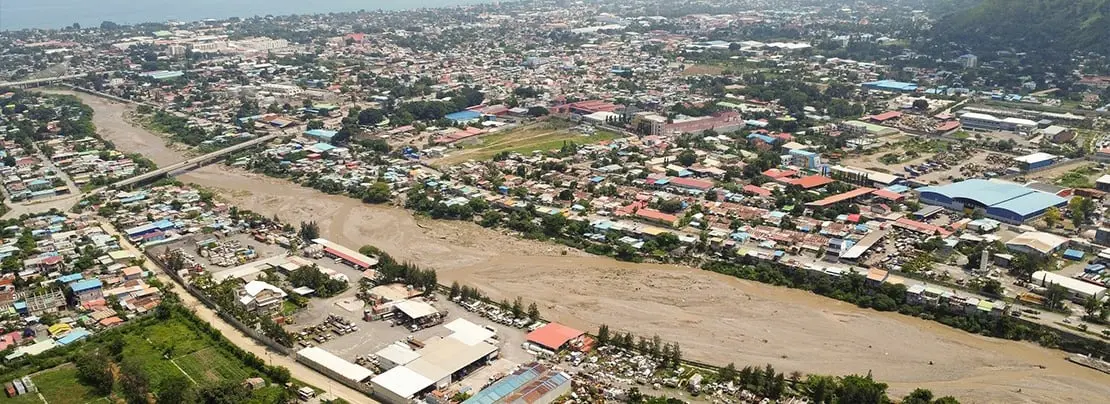
Timor-Leste is rapidly advancing its digital landscape as the nation capitalizes on new international connectivity, expanding mobile penetration, and strategic regional integration following its recent accession to the World Trade Organization and ASEAN. Occupying the eastern half of the island of Timor alongside the Oecusse enclave and the islands of Atauro and Jaco, the nation of approximately 1.44 million people has historically relied heavily on petroleum revenues and public spending. However, economic diversification and the fostering of a robust domestic private sector have emerged as critical national priorities.
As the country navigates this evolving economic chapter, digital development plays a pivotal role. Enhanced connectivity supports expanded access to online services, digital businesses, and e-commerce, while simultaneously unlocking new avenues within the burgeoning digital economy. This digital modernization aligns directly with national initiatives such as Timor Digital 2032, alongside comprehensive efforts to digitalize government operations and trade services to bolster the economy’s participation in regional digital trade, cross-border data exchange, and digital payments.
Internet adoption across Timor-Leste has experienced remarkable growth over recent years. While Internet penetration stood at a modest 35% in 2021, estimates for 2026 indicate that roughly 62% of the population now utilizes the Internet. This expansion is driven largely by mobile connectivity, supported by approximately 1.2 million mobile Internet subscriptions. Underpinning this growth is a fundamental transformation of the nation’s connectivity infrastructure, combining Low Earth Orbit satellite services to reach isolated communities with high-capacity international submarine fiber.
Connectivity Overview
Timor-Leste liberalized its telecommunications sector in 2012, sparking healthy market competition and facilitating the widespread expansion of mobile services. Today, three major telecommunications operators—Timor Telecom, Telkomcel, and Telemor—deliver services alongside 19 Internet Service Providers (ISPs). While telecommunications operators manage the underlying network infrastructure, ISPs provide direct Internet access to end users.
Despite this framework, the ISP market remains heavily concentrated in the capital city of Dili, where high population density and robust commercial demand make fixed and wireless infrastructure financially viable. Outside Dili, deploying conventional ISP infrastructure presents significant economic hurdles. Lower population densities and the substantial costs associated with extending backhaul and access networks make it difficult for smaller providers to secure adequate returns on investment, creating a pronounced urban-rural divide in digital service delivery.
To bridge this gap, satellite connectivity has become an essential tool for reaching remote communities. Starlink has emerged as a prominent connectivity option, with several local ISPs choosing to resell satellite-based services rather than investing heavily in traditional access infrastructure. In 2026, the Ministry of Transport and Communications, supported by deployment partner Vorakai Lda, utilized Starlink to connect 450 remote villages. This initiative brought vital connectivity to populations that remain difficult to reach via terrestrial networks, underscoring the ongoing challenge of building sustainable domestic infrastructure beyond the capital.
Together, mobile networks, satellite services, and submarine cables are forging a more diverse connectivity environment. Timor-Leste is successfully shedding its historical reliance on expensive and capacity-constrained satellite and microwave links for international transit, paving the way for a more resilient national network.
Internet Infrastructure
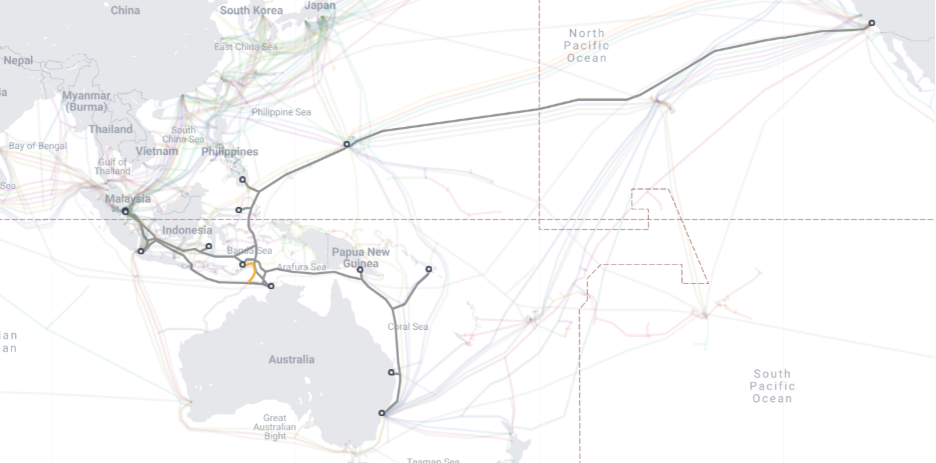
The launch of commercial operations for the Timor-Leste South Submarine Cable System in July 2026 marks a transformative milestone for the nation’s international Internet infrastructure. Owned by state-owned Cabos de Timor-Leste, the TLSSC provides the economy with its first direct international submarine fiber connection, drastically reducing dependence on costly radio links and satellite bandwidth.
Looking ahead, additional submarine cable projects promise to further expand international capacity and route diversity. Inligo Networks’ planned Asia Connect Cable System features a landing in Dili designed to connect Timor-Leste directly with Australia, Indonesia, and Singapore, with onward routes extending to the Philippines, Guam, and the United States. Additionally, the planned Hawaiki Nui 1 system, developed by BW Digital, aims to connect Australia, Indonesia, and Singapore with optional branches reaching Timor-Leste, Papua New Guinea, and the Solomon Islands. With completion projected for 2027-2028, these upcoming systems will minimize single-point-of-failure risks and strengthen connections across Southeast Asia and the wider Pacific.
Domestically, Internet infrastructure is evolving in tandem with international improvements. The Autoridade Nacional de Comunicações is establishing the Timor-Leste Internet Exchange Point, which will enable ISPs and local networks to exchange domestic traffic locally rather than routing it through international connections. Plans for the exchange point include dedicated route servers, DNS root mirrors, comprehensive monitoring infrastructure, and routing security measures such as Resource Public Key Infrastructure validation.

Local content delivery is also taking root. Internet Society measurements indicate that 66% of Timor-Leste’s 1,000 most-visited websites are accessible via in-economy servers or caches. Furthermore, Meta content delivery network infrastructure is active in Dili, bringing frequently used platforms like Facebook, Instagram, and WhatsApp closer to local users. Concurrently, TIC Timor IP, the information technology and communication agency under the Ministry of Transport and Communications, has been tasked with developing a national data centre, further solidifying the domestic digital ecosystem.
RPKI and IPv6 Adoption
Timor-Leste has made notable strides in enhancing routing security through Resource Public Key Infrastructure, particularly by generating Route Origin Authorizations. Measurements from APNIC Labs indicate that approximately 60% of announced IP address space in the country is covered by valid ROAs. ROAs enable network operators to publicly declare which Autonomous Systems are authorized to originate specific IP address prefixes, allowing Route Origin Validation to identify and filter out unauthorized route announcements. Data from mid-2026 measured invalid-route filtering in Timor-Leste at 34.42%, comparing favorably against broader regional and global averages.
Conversely, IPv6 deployment remains in its early stages. As of October 2026, Timor-Leste’s IPv6 capability rate sits at roughly 9%, trailing significantly behind the broader Southeast Asia average of 36.5%. While modest growth has been catalyzed by the introduction of Starlink, the majority of domestic operators have yet to implement the protocol. Wider adoption of both RPKI and IPv6 continues to be constrained by limited technical expertise, a lack of specialized engineering capacity, and insufficient awareness of their operational benefits across government, regulatory, and private-sector entities. Continued training and closer engagement between technical practitioners and policy decision-makers will be essential to accelerate future deployment.
Internet Security and Governance
As the digital economy expands, cybersecurity has justifiably taken center stage to protect critical national infrastructure and mitigate rising cyber threats. In August 2026, the government established the Interministerial Committee on Cybersecurity and the Digitalization of State Services, succeeding the earlier Interministerial Cybersecurity Working Group. This high-level committee provides a centralized mechanism to coordinate cybersecurity policy, digital transformation, and the defense of critical digital assets across government bodies.
Timor-Leste is also fortifying its legislative frameworks through strategic international partnerships, notably with Australia, which has provided support in cybersecurity assessments, resilience planning, and risk management surrounding critical infrastructure like the TLSSC. Concurrently, efforts to establish a national Computer Security Incident Response Team are moving forward. Following a national CIRT maturity assessment conducted by the International Telecommunication Union in 2024, specialized training sessions focused on incident handling, malware analysis, and digital forensics have helped build foundational technical capabilities for coordinated cyber-incident response.
Internet Community and Digital Inclusion
A vibrant network of technical organizations, community groups, and regional partners continues to drive digital inclusion and technical capacity building within Timor-Leste. The Timor-Leste Network Operators Group, established in August 2024 and formally registered in July 2025, serves as a vital forum for network engineers and technical professionals to collaborate, share knowledge, and advance operational skills. Events such as the TLNOG conferences have placed a strong emphasis on network security and practical engineering capabilities.
Digital inclusion is further championed by local non-profit and civil society organizations. The Hadomi Timor Foundation focuses on digital rights, inclusion, literacy, and cybersecurity, while the Fundasaun Desenvolvimento Software Livre promotes open-source software and digital skills development. Additionally, initiatives like redEsperansa.tl, supported by APNIC Foundation grants, have concentrated on last-mile connectivity and locally hosted educational services for underserved communities and schools.
Regional engagement remains a cornerstone of this progress. Programs such as EmpowerTech, organized by the APNIC Foundation, bring together local technical experts and industry leaders to address persistent challenges and foster inclusivity. Despite these achievements, community participation remains limited by the small size of the technical sector, its geographic concentration in Dili, language barriers, and restricted access to advanced technical training. Strengthening these domestic networks and deepening regional ties will be vital to sustaining Timor-Leste’s long-term digital growth.

Leave a Reply