
As of Monday, October 12, tracking data provided by NASA’s Daily Moon Guide indicates that Earth’s natural satellite is currently situated firmly within the waxing crescent phase. At this stage in the cycle, approximately three percent of the lunar surface facing our planet is illuminated by direct sunlight and visible to stargazers around the globe, marking the official return of the Moon to our evening twilight skies after days of near-total obscurity.
For skywatchers and amateur astronomers tracking the lunar calendar, the progression of this current cycle brings forward the anticipation of the next major lunar milestone. The upcoming Full Moon is scheduled to take place on either October 25 or October 26, depending entirely on the specific geographic timezone of the observer. This upcoming celestial event will offer a fully illuminated lunar disk, dominating the night sky and providing ample illumination for nighttime observations.
To fully understand why the Moon changes its appearance so dramatically from one night to the next, it helps to examine the mechanics of its orbit. The Moon completes one full, uninterrupted orbit around Earth in roughly 29.5 days, a duration commonly referred to as a synodic month. During the course of this steady journey, the Moon’s spatial position shifts constantly relative to both the Earth and the Sun. This continuous orbital motion alters the exact angle at which sunlight strikes the lunar surface from our perspective on Earth, directly changing how much of the illuminated half of the Moon is visible to stargazers.
This celestial geometry produces the familiar and predictable sequence of lunar phases that humans have tracked for millennia. The cycle always begins anew with a thin, nearly imperceptible crescent, progresses steadily through the various quarter phases, and ultimately culminates in a brilliant Full Moon before the cycle begins to reverse itself and repeats as the Moon continues its orbital path. According to insights shared by NASA, the specific phase visible from the surface of Earth at any given moment is entirely determined by this dynamic, changing relationship in the positions of the Sun, Earth, and Moon.
Astronomers divide this 29.5-day cycle into eight distinct, sequential phases that describe the Moon’s appearance and orbital progress. The journey begins with the New Moon, a period during which the Moon positions itself directly between the Earth and the Sun. Because the illuminated side of the Moon is facing entirely away from our planet during this alignment, the side facing Earth remains completely in shadow, making the lunar body virtually invisible to the unaided eye.
Following the New Moon comes the Waxing Crescent phase, which is the exact celestial alignment currently visible in our skies. During this stage, as the Moon moves slightly further along its orbital path away from the direct glare of the Sun, a small sliver of reflected light begins to appear on the right side of the lunar disk for observers located in the Northern Hemisphere.
As the days pass and the angle between the Sun, Earth, and Moon widens further, the lunar cycle reaches its First Quarter phase. At this point, exactly half of the Moon’s visible disk is illuminated by sunlight on the right side. Despite its name, which derives from the fact that the Moon has completed approximately one-quarter of its total monthly orbital journey, the illuminated shape visually resembles a classic half-Moon in the evening sky.
Continuing its steady growth, the Moon then enters the Waxing Gibbous phase. During this period, more than half of the lunar face is lit up by the Sun, but it has not yet reached its maximum illumination, appearing swollen and asymmetrical as it builds toward peak brightness.
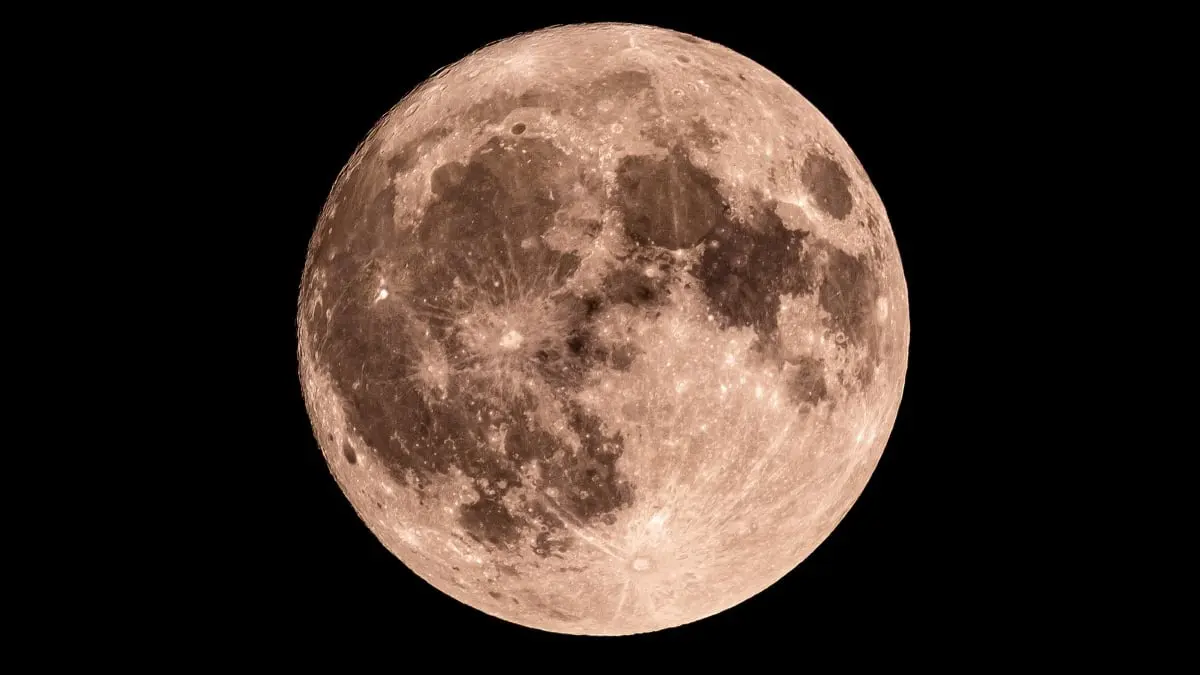
This growth culminates in the Full Moon, the midpoint and most visually striking part of the lunar cycle. During a Full Moon, the Earth, Moon, and Sun are aligned nearly in a straight line, with Earth positioned directly between the other two bodies. This alignment allows the entire face of the Moon turned toward Earth to be fully illuminated by direct sunlight, rendering it completely visible, bright, and prominent throughout the entire night.
Once the Full Moon has passed, the lunar cycle enters its second half, characterized by a gradual reduction in visible illumination. The Waning Gibbous phase marks the beginning of this retreat, as the Moon starts losing light progressively from the right side of the disk from the perspective of the Northern Hemisphere.
As the orbit continues, the Moon reaches the Third Quarter, also frequently referred to as the Last Quarter phase. Much like the First Quarter, this phase presents observers on Earth with a half-illuminated lunar disk, but with a crucial difference: now, the opposite side, the left half of the Moon, is lit up by the Sun as the lunar body moves closer toward the direction of the sunrise.
The final leg of the lunar journey is the Waning Crescent phase. During these final few nights before the cycle resets entirely, only a thin, fading sliver of light remains visible on the left side of the lunar disk. Soon, this remaining light diminishes completely as the Moon moves back between the Earth and the Sun, plunging the visible face into shadow and preparing to begin the entire sequence anew with the next New Moon.



Leave a Reply