
Federal Bureau of Investigation agents have arrested a prominent executive at a Canadian cybersecurity firm in connection with an escalating international investigation into the notorious ShinyHunters hacking collective. The arrest comes on the heels of a massive data breach attributed to the group that compromised sensitive records belonging to thousands of federal law enforcement agents.
According to multiple sources familiar with the ongoing probe, the suspect was taken into custody in Pennsylvania while visiting the United States to attend a prominent cyber insurance conference. The arrest represents a major escalation in a sweeping federal crackdown on ransomware facilitators and cyber extortion negotiators, a shadowy sector of the digital security industry that has increasingly drawn the scrutiny of law enforcement agencies worldwide.
The high-profile arrest was first reported publicly by The New York Times, which revealed that a Canadian man had been apprehended in Pennsylvania on suspicion of providing illicit assistance to the ShinyHunters group. Neither the initial media reports nor a subsequent social media statement issued by FBI Director Kash Patel explicitly identified the detained executive by name. However, specialized reporting and federal court records have since brought the details of the detention to light.
Sources close to the investigation disclosed that the individual was in Pennsylvania to participate in the Cyber Risk Summit, an annual industry gathering held at the Loews Philadelphia Hotel. Conference materials and online speaker rosters indicate that the event brought together leading figures in cyber risk management, insurance, and incident response. Among the primary corporate sponsors of the summit was Cypfer, a Canadian security firm specializing in digital extortion and ransomware advisory services.
Publicly available professional profiles on LinkedIn indicate that Edward Dubrovsky, a well-known figure in the Canadian cybersecurity community, has long-standing ties to Cypfer. Dubrovsky’s online footprint described him as a former founder and managing director of the firm before moving on to another Canadian security company and conference sponsor known as CyberSteward. In the weeks leading up to the conference, Dubrovsky had actively posted on professional networks regarding his plans to travel to Philadelphia alongside colleagues from CyberSteward to participate in panel discussions and industry networking.

In response to inquiries regarding the arrest, a spokesperson for Cypfer clarified that Dubrovsky was never a founder or co-founder of the firm, despite claims on his LinkedIn profile. Instead, the company stated that he had served in the capacity of a managing director prior to his resignation from the organization in November 2025.
Federal court records filed in Pennsylvania reveal that an individual named Edward Dobrovsky—with a slight spelling variation in the surname—was arrested on October 8 on specific federal charges involving cyber extortion and conspiracy. While a significant portion of the early case documentation, including the primary criminal complaint, remains under seal, a handful of records indexed through public legal tracking platforms provide insight into the charges. The available summaries indicate that the defendant faces formal counts of conspiring to threaten the impairment of information confidentiality with the intent to extort money, alongside charges of interfering with commerce through threats.
Inmate tracking systems maintained by the U.S. Bureau of Prisons subsequently confirmed that a 54-year-old individual matching Dubrovsky’s description was being held at a federal detention facility in Philadelphia. However, court docket entries show that the legal proceedings were quickly ordered to be transferred to the Eastern District of Texas. Legal sources indicate that the federal field office in Texas has quietly assumed centralized control over the broader, multifaceted investigation into the ShinyHunters organization and its associates.
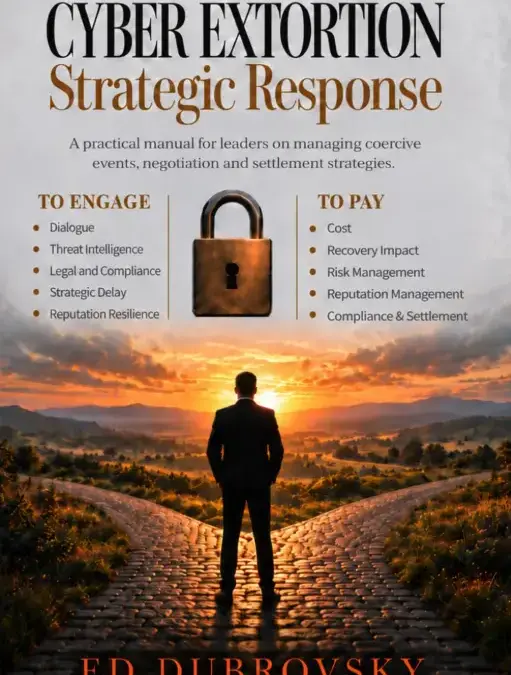
Dubrovsky’s professional background includes authorship within the specialized niche of digital extortion response. He wrote a comprehensive book focusing on the operational intricacies of ransomware negotiations, designed to guide organizations through the complex decision-making processes required during major cyber attacks. Promotional descriptions for the text emphasize a critical strategic distinction frequently debated within the incident response community: that maintaining communication with a malicious cybercriminal actor is distinct from agreeing to financial extortion terms, and that dialogue can serve tactical objectives such as gathering intelligence and buying time while victims evaluate their options.
At the time of his initial court appearances, available public dockets indicated that Dubrovsky had not yet retained private legal counsel, nor had the court formally appointed a public defender to represent him. Representatives for CyberSteward could not be reached immediately for comment regarding the arrest of their associate.
The federal case against the Canadian executive unfolds against the backdrop of a relentless campaign by ShinyHunters, a cybercrime syndicate known for utilizing targeted phishing tactics and stolen corporate credentials to siphon proprietary data from software-as-a-service providers and enterprise networks. Once data is exfiltrated, the group routinely subjects victims to aggressive extortion tactics, threatening to leak sensitive corporate or government secrets onto public forums unless substantial financial demands are met. According to internal estimates shared by federal law enforcement, the collective has successfully extorted upward of $70 million from corporate and institutional victims over the course of the year.

Investigators are currently poring over digital devices and forensic evidence seized during a series of coordinated international raids. Last month, Dutch law enforcement authorities arrested Pepijn van der Stap, a reformed cybercriminal whose apprehension was directly tied to the expanding ShinyHunters inquiry. Federal sources suggest that the ongoing analysis of seized hardware could soon lead to additional criminal charges against principals and operatives at other specialized companies that engage in ransomware negotiations on behalf of victimized organizations.
The investigation took on an intensely personal dimension for federal law enforcement following the arrest of Van der Stap. Immediately after his apprehension, an individual operating under the online persona "Rey"—believed to be a primary leader within the ShinyHunters hierarchy—assumed direct operational control of the group’s public channels. In a brazen display of defiance, Rey began openly taunting the FBI after the collective successfully breached and exfiltrated sensitive data from the bureau’s online recruitment portal. The stolen material included detailed personnel records containing staff units, specializations, and confidential medical and psychiatric histories.
The brazen taunts came to an abrupt halt when international law enforcement and intelligence operations closed in on the individual behind the online persona. Investigative reporting by Reuters and other outlets identified Rey as Saif Al-din Khader, a teenager who was subsequently detained and began cooperating with federal investigators. Court and reporting details revealed that Khader was apprehended just as the cybercrime group attempted to execute an extortion plot against a digital aviation and navigation unit that had been divested by Boeing.
As federal authorities continue to untangle the complex web of facilitators, negotiators, and core hackers associated with the ShinyHunters syndicate, the case remains an active and fast-evolving focal point of U.S. cybersecurity enforcement.



Leave a Reply