
Federal Bureau of Investigation agents in Pennsylvania have arrested a prominent executive at a Canadian cybersecurity firm in connection with an escalating international investigation into the notorious ShinyHunters hacking syndicate. The high-profile arrest comes on the heels of a massive digital breach that saw the cybercrime collective siphon highly sensitive files containing personal, medical, and psychiatric records belonging to thousands of federal agents from the bureau’s internal systems.
According to multiple sources speaking to KrebsOnSecurity and reporting by The New York Times, the suspect was taken into custody earlier this week while visiting Pennsylvania to attend a prominent cyber insurance conference. While the initial statements released by FBI Director Kash Patel and subsequent mainstream news reports did not explicitly name the individual, federal court records and industry sources have identified the arrested man as Edward Dubrovsky, a well-known Canadian security professional, author, and former executive deeply entrenched in the specialized niche of ransomware and digital extortion negotiations.
The investigation into Dubrovsky and his alleged ties to the ShinyHunters network marks a dramatic escalation in federal efforts to dismantle the group. Sources close to the inquiry indicate that operational command and control over the sprawling ShinyHunters investigation have now been centralized under the jurisdiction of an FBI field office in Texas, reflecting the gravity and cross-border nature of the threat.
A Conference in Philadelphia and Ties to the Cyber Insurance Sector
The unfolding timeline places Dubrovsky in Pennsylvania during the annual Cyber Risk Summit, held between October 5 and October 7 at the Loews Philadelphia Hotel. The summit drew hundreds of insurance professionals, risk assessors, and cybersecurity specialists from across North America. Among the event’s prominent corporate sponsors was Cypfer, a Canadian security firm specializing in incident response and extortion advisory services.
Publicly available professional profiles indicate that Dubrovsky had previously held leadership roles at Cypfer before transitioning to another Canadian security firm, CyberSteward, which also served as a sponsor for the Philadelphia summit. Approximately a month prior to his arrest, Dubrovsky shared plans on professional networking platforms to attend the gathering alongside members of the CyberSteward team to discuss global strategies for managing ransomware and coercive digital extortion threats.

Following inquiries regarding Dubrovsky’s corporate affiliations, a spokesperson for Cypfer clarified that Dubrovsky was never a founder or co-founder of the firm, contrary to claims on his professional profile. Instead, the company stated that he served as a managing director before ultimately tendering his resignation in November 2025.
Federal court records reveal that an individual under the name Edward Dobrovsky—noting a minor spelling variation in the surname—was formally booked in Pennsylvania on October 8 on specific charges including cyber extortion, conspiracy to threaten to impair the confidentiality of information with the intent to extort money, and interference with commerce by threats. While the core criminal complaint and several accompanying documents remain sealed by the court, basic case summaries and dockets have been indexed on public legal tracking platforms such as CourtListener.com.
U.S. Bureau of Prisons inmate records indicate that a 54-year-old Edward Dubrovsky is currently being detained at a federal holding facility in Philadelphia. However, court documents filed on October 9 show that the case has been officially transferred to the U.S. District Court for the Eastern District of Texas, aligning with intelligence that the region has become the operational nucleus of the bureau’s ongoing ShinyHunters probe. The FBI has consistently declined to comment on the specifics of the pending litigation.
Expertise in Extortion and the Anatomy of ShinyHunters
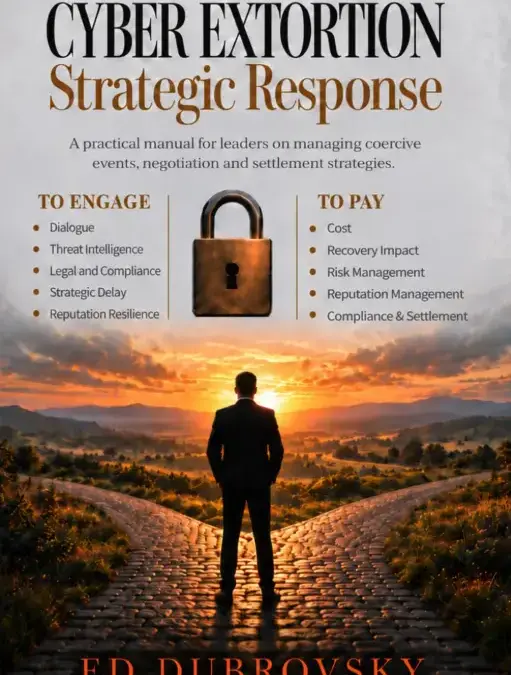
The arrest of a veteran security executive specializing in ransomware negotiation underscores the complex and sometimes murky intersection between the cybersecurity industry and the subterranean world of cybercrime. Dubrovsky is the author of Cyber Extortion Strategic Response, a 252-page volume marketed to corporate leaders seeking to navigate the labyrinthine decisions required during high-stakes digital ransom demands.
Excerpts from the book’s publisher emphasize a nuanced philosophy regarding threat actor engagement. The text asserts that communicating with a criminal does not automatically equate to negotiating a payment, and that entering into dialogue is not a binding commitment to transfer funds. According to the publication, structured engagement can serve alternative defensive objectives, such as validating threat actors’ claims, gathering actionable intelligence, buying critical time, and preserving corporate options while executives evaluate remediation strategies.
Law enforcement agencies, however, are increasingly scrutinizing whether advisory firms and negotiators cross ethical and legal boundaries when dealing with cybercrime syndicates. ShinyHunters itself has established a fearsome reputation within the global threat landscape by utilizing sophisticated phishing campaigns and stolen credentials to infiltrate corporate environments, particularly software-as-a-service providers. Once inside, the group extracts massive repositories of proprietary and confidential data, threatening to leak the information publicly unless exorbitant ransom demands are satisfied. According to estimates cited by federal law enforcement, the syndicate has successfully extorted upwards of $70 million from corporate and institutional victims over the course of the year.

A Rapidly Expanding Global Investigation
The current dragnet targeting ShinyHunters has accelerated over the past several weeks, fueled by international law enforcement cooperation and digital forensics. Sources indicate that federal investigators have spent weeks meticulously analyzing digital devices and hardware seized last month when Dutch police forces apprehended Pepijn van der Stap, a reformed hacker and convicted cybercriminal linked to the infrastructure of the ShinyHunters enterprise. Federal authorities are reportedly weighing additional criminal charges against principals and associates at other security and negotiation firms as the investigation deepens.
The urgency within the FBI intensified dramatically following Van der Stap’s arrest. Shortly after law enforcement moved in, a prominent core member of the ShinyHunters network operating under the alias "Rey" assumed leadership of the fractured group and launched a brazen campaign of digital taunts directed at the bureau. The provocations stemmed from a devastating security compromise in which the hackers breached an online recruitment portal utilized by the FBI, making off with sensitive personnel files that detailed agents’ specific units, operational specializations, and confidential medical and psychiatric histories.
Investigative reporting by international media outlets subsequently identified "Rey" as a teenager named Saif Al-din Khader. Law enforcement authorities tracked and detained Khader, who sources indicate has begun cooperating with federal investigators. Details regarding Khader’s apprehension emerged as part of an attempted extortion plot targeting a prominent navigation and digital aviation unit recently divested by aerospace giant Boeing in late 2025.
As federal prosecutors in Texas prepare to build their case and additional court documents are unsealed, legal representatives for Dubrovsky have yet to be publicly established in available dockets. Federal authorities indicate that the investigation remains active and fluid, with further developments expected as investigators trace the financial flows and communication channels connecting corporate incident responders to the upper echelons of the cybercrime underworld.



Leave a Reply