
Federal Bureau of Investigation agents have arrested the co-founder of a prominent Canadian cybersecurity firm in connection with a sprawling international investigation into the ShinyHunters hacking syndicate. The group recently made headlines after successfully breaching federal systems and obtaining sensitive personal and professional data concerning thousands of law enforcement agents. Multiple sources familiar with the ongoing investigation confirmed the arrest to KrebsOnSecurity, shedding light on a fast-moving federal case that spans international borders and touches the upper echelons of corporate ransomware advisory services.
The arrest was first signaled publicly when The New York Times reported that federal authorities had taken a Canadian man into custody in Pennsylvania on suspicion of assisting the ShinyHunters hacking group. Neither that initial report nor a brief statement posted to social media platform X by FBI Director Kash Patel identified the suspect by name. However, sources close to the unfolding investigation revealed that the individual was visiting Pennsylvania to attend a prominent cyber insurance conference, and that his professional background involved managing high-stakes ransomware negotiations on behalf of victimized organizations.
An examination of public records and conference listings indicates that the event in question was the Cyber Risk Summit, which took place at the Loews Philadelphia Hotel. According to the summit’s official website and promotional materials, the conference was supported by several corporate sponsors, with its largest sponsor being a Canadian cybersecurity and incident response firm known as Cypfer.
Public professional profiles indicate that Cypfer was co-founded by a Canadian national named Edward Dubrovsky. Dubrovsky is currently associated with another Canadian security organization and event sponsor, CyberSteward. Approximately one month prior to his arrest, Dubrovsky shared a post on LinkedIn announcing his plans to travel to the Cyber Risk Summit alongside his colleagues from the CyberSteward team.
In that social media post, Dubrovsky outlined his professional focus, writing that he looked forward to continuing conversations around strategy and compliant-driven coercive advisory services, including ransomware and extortion negotiations and global settlement solutions.

Federal court records reveal that an individual named Edward Dobrovsky—with a slight misspelling of the last name—was arrested in Pennsylvania on October 8, facing charges related to cyber extortion and conspiracy. While a significant portion of the judicial file, including the core criminal complaint, has been placed under seal by the court, several documents remain accessible through public legal repositories such as CourtListener. Among the available filings is a summary of the charges, which accuses the defendant of conspiracy to threaten to impair the confidentiality of information with the intent to extort money, as well as interference with commerce by threats.
Inmate records maintained by the U.S. Bureau of Prisons indicate that a 54-year-old Edward Dubrovsky is currently being housed at a federal detention facility in Philadelphia. However, court docket entries show that the case was formally transferred on October 9 to the U.S. District Court for the Eastern District of Texas. According to individuals familiar with the matter, the Eastern District of Texas has become the central operational hub and epicenter for the comprehensive federal investigation into the ShinyHunters cybercriminal network. Representatives for the FBI declined to comment on the ongoing proceedings.
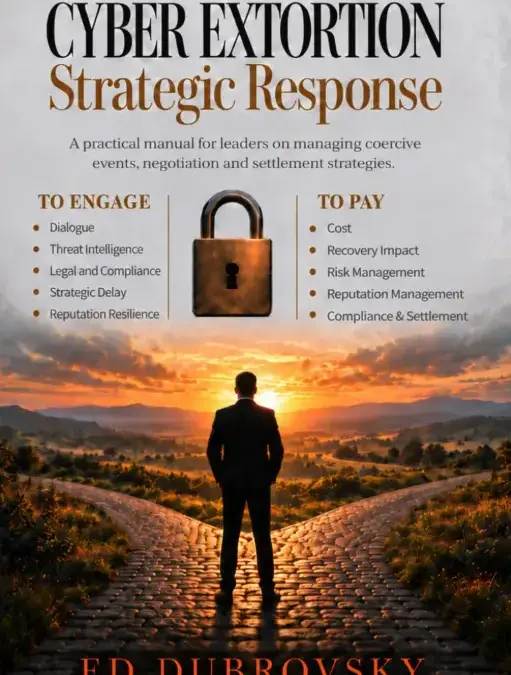
Dubrovsky’s professional background also includes authoring a 252-page book titled Cyber Extortion Strategic Response. The publication’s promotional materials describe it as a guide designed to take readers beyond the initial ransom note and into the strategic decision-making processes that dictate how an organization responds, recovers, and protects its vital assets during a cyber crisis.
An excerpt from the book’s online listing emphasizes a core operational philosophy regarding threat actors, noting that communicating with a criminal is fundamentally distinct from negotiating a payment, and that entering into dialogue does not constitute an agreement to pay. The text suggests that strategic engagement can serve alternative objectives, such as testing threat actor claims, gathering actionable intelligence, buying time, and preserving institutional options while leadership evaluates its next steps.
At the time of his initial court appearances, available judicial records indicated that Dubrovsky had not yet retained private legal counsel, nor had the court formally appointed a public defender to represent him. Representatives for his current firm could not be immediately reached for comment regarding the arrest.
The ShinyHunters syndicate has established a notorious reputation within the cybersecurity landscape through its systematic use of targeted phishing campaigns and compromised credentials. The group typically focuses on siphoning proprietary data from corporate accounts housed within software-as-a-service providers, subsequently threatening to leak the stolen information publicly unless heavy financial demands are met. According to federal estimates, the hacking collective has successfully extorted more than $70 million from corporate and institutional victims over the course of the year.

The arrest in Pennsylvania represents the latest development in a coordinated international crackdown on the network. Sources indicate that federal investigators have spent recent weeks meticulously analyzing electronic devices seized during a late-September operation by Dutch law enforcement. That operation resulted in the arrest of Pepijn van der Stap, a convicted cybercriminal whose detention was closely tied to the broader ShinyHunters probe. Furthermore, investigators suggest that additional charges against principals at other firms specializing in ransomware negotiation and incident response could be forthcoming as the inquiry widens.
The pressure on the hacking group has intensified alongside internal shifts within the syndicate. Immediately following the arrest of Van der Stap, another prominent member of ShinyHunters operating under the alias "Rey" assumed control over the group’s operations. In the wake of this leadership transition, the actor began taunting federal authorities over a major breach that compromised sensitive data from the FBI’s online recruitment portal. The stolen material included detailed professional records containing agents’ units and specializations, as well as confidential medical and psychiatric documentation.
Law enforcement efforts soon closed in on the individual behind the moniker. Media reports revealed that the person operating as Rey had been identified as a teenager named Saif Al-din Khader, who was subsequently detained and began cooperating with federal investigators. Court documents and investigative reporting highlighted that Khader was apprehended as the cybercrime group attempted to execute an extortion plot targeting a navigation and digital aviation unit that had been divested by Boeing.
As federal authorities continue to examine seized evidence, interrogate cooperating witnesses, and unravel the network of facilitators and negotiators tied to the syndicate, the investigation remains fluid, with additional developments anticipated as the legal proceedings unfold in Texas.



Leave a Reply