
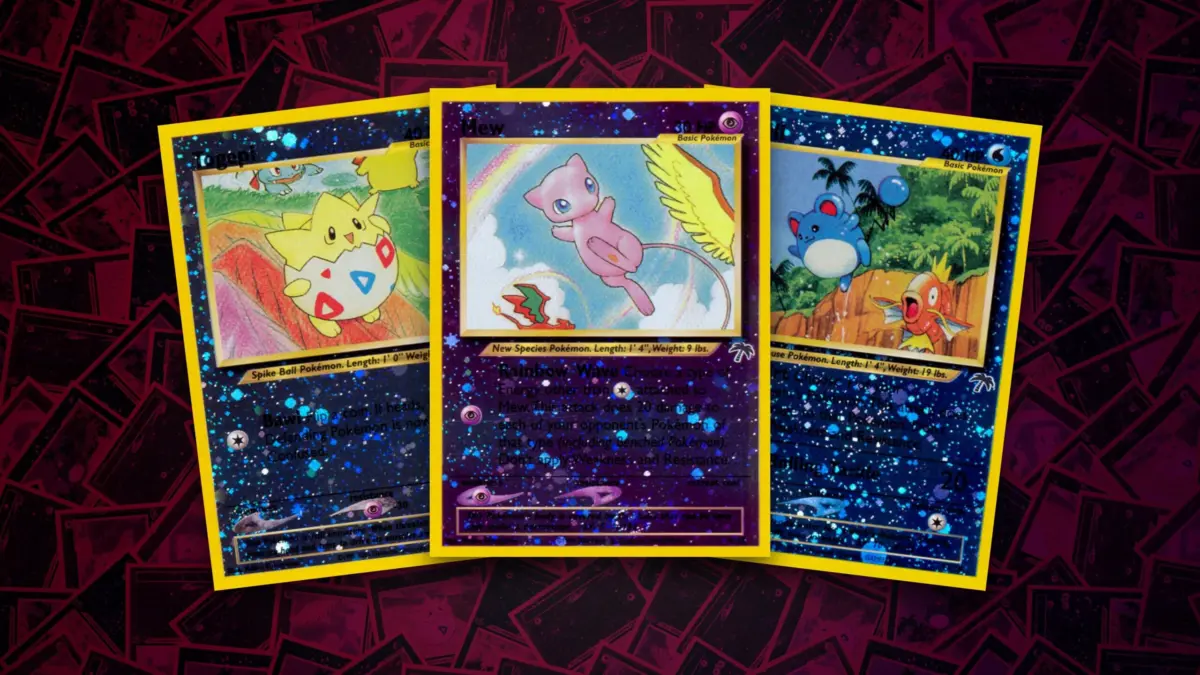
Paradise does not come cheap, particularly when it is measured in vintage, pristine cardboard. While the high-end secondary market for the Pokémon Trading Card Game routinely witnesses stunning records set by rare, graded cards, certain releases achieve legendary status due to a rare convergence of historical significance, tight scarcity, and exquisite aesthetic beauty. The English Southern Islands promotional collection, originally released in 2001, firmly embodies those coveted traits, a reality underscored by a recent auction event that saw three pristine graded cards from the set fetch nearly $1.2 million combined.
The Southern Islands collection has occupied an unusual and fascinating corner of Pokémon TCG history since its inception. The collection first debuted in Japan in July 1999 alongside the theatrical release of the second Pokémon movie, The Power of One. At the time, its 18 cards were neatly divided between themed Tropical Island and Rainbow Island portfolios. Additionally, smaller three-card promotional sets were distributed, each focusing on a specific geographic area within one of the islands. When placed side by side, these cards formed a larger, cohesive panoramic scene, a design philosophy that remains a massive part of the set’s enduring charm.
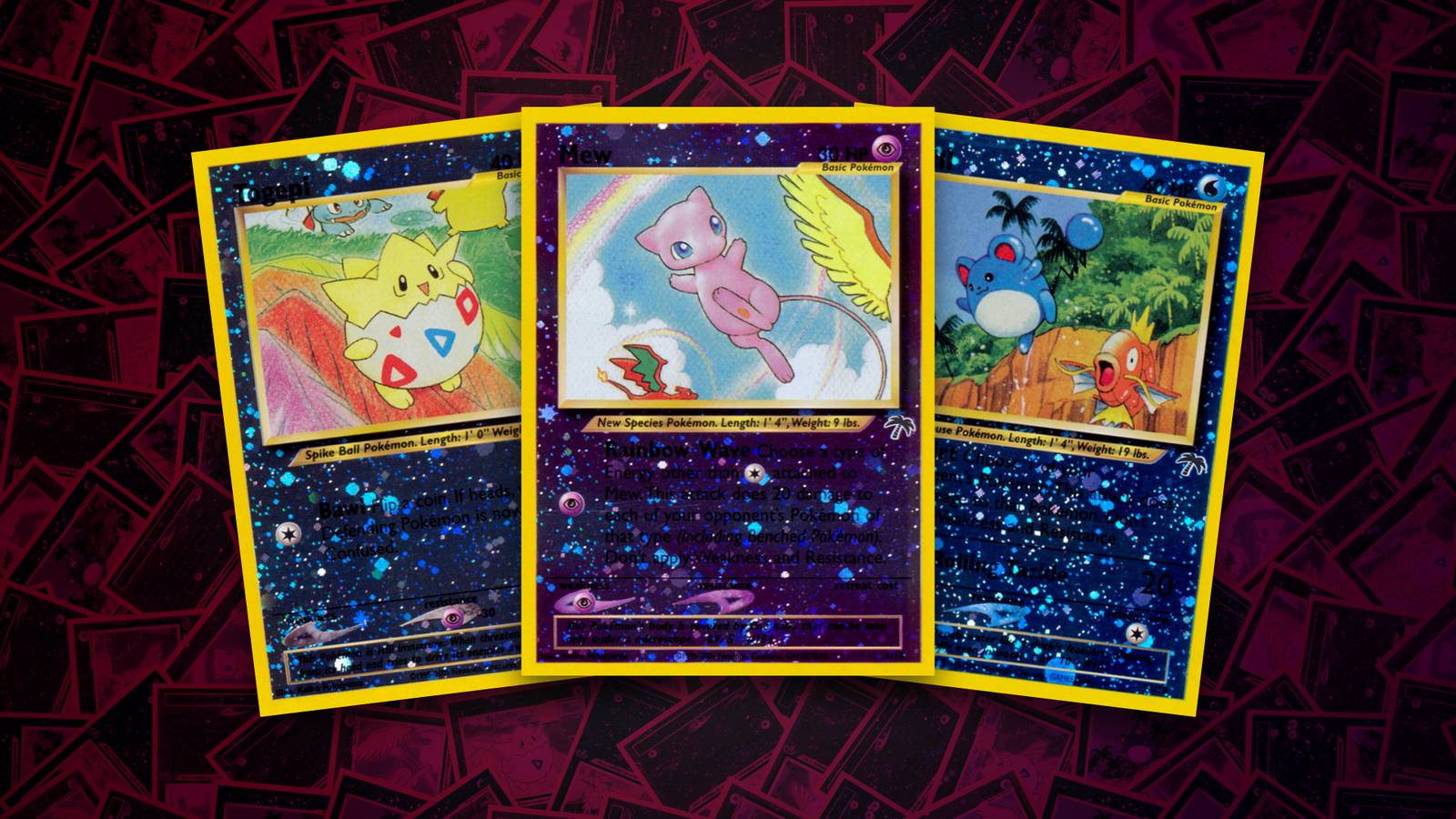
This interconnected artwork was brought to life by legendary illustrators within the Pokémon TCG ecosystem. Prolific artist Naoyo Kimura handled the idyllic Tropical Island scenes, while Keiko Fukuyama contributed the whimsical designs for Rainbow Island. Each individual card functioned as a standalone piece of art while simultaneously contributing to a grander visual landscape.
When Wizards of the Coast eventually brought the collection to Western audiences in 2001, the English release maintained much of the unique presentation that made the Japanese debut so special. All 18 cards were packaged together inside a uniquely decorated presentation folder accompanied by postcards and three booster packs. Crucially, the holographic treatment applied to these cards remains exceptionally distinct. Unlike standard sets of the era where the sparkling holo pattern was strictly confined within the borders of the artwork box, the Southern Islands holos featured shimmering swirls and sparkling patterns dotting nearly the entire surface of the card, giving the illustrations a remarkable level of visual depth and impact.
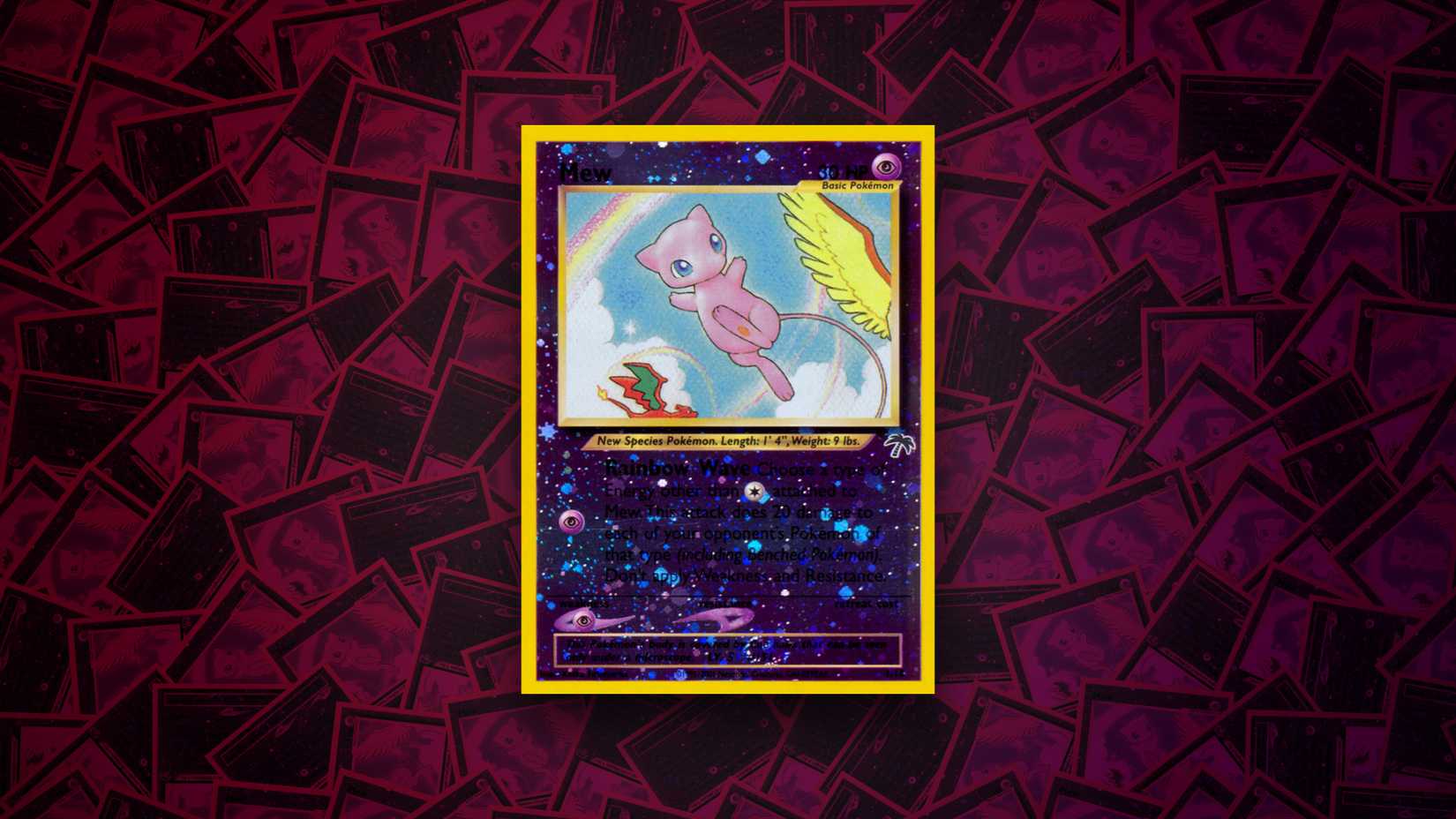
The enduring legacy of these promotional cards was recently put on full display when three specific graded grails from the set went under the hammer, collectively generating close to $1.2 million. Leading the charge was a PSA 10 Gem Mint copy of the Southern Islands Holo Mew #1, which commanded a staggering $840,000 price tag.

Showcasing its immense collectability and the ferocious devotion of modern collectors, the Holo Mew sits comfortably at the absolute apex of the Southern Islands set. While Naoyo Kimura boasts the far longer and more prolific career within the Pokémon TCG, Keiko Fukuyama’s artistic contributions to the Southern Islands cards often leave a more striking impression. Fukuyama’s deeply saturated colors and rounded, soft-featured artistic approach give characters an unmistakable charm, perfectly suited for a Mew grail that also notably features a cameo by Charizard in the bottom-left corner of the artwork. With only 20 PSA 10 copies of the Southern Islands Holo Mew known to exist worldwide, the card’s astronomical valuation aligns with a broader 2026 market trend where vintage grails and major anniversary sets continue to command serious capital from high-net-worth enthusiasts.
Hot on the heels of the headline-grabbing Mew were two additional graded gems that each pulled in equal six-figure sums. A PSA 10 Southern Islands Holo Togepi #4 realized a remarkable $168,000 at auction. While it may not reach the astronomical heights commanded by the rarest cards in the entire franchise, securing $168,000 for a Baby Pokémon from a niche promotional release demonstrates the incredible depth of the vintage market. Fukuyama’s distinct aesthetic shines brightly on the Togepi card. Across a career that spanned just 20 illustrated cards for the Pokémon TCG, Fukuyama left an indelible mark, contributing several pieces to Rainbow Island as well as highly sought-after cards from the classic e-Reader era, including sets like Expedition, Aquapolis, and Skyridge.
Matching the Togepi sale dollar-for-dollar was a PSA 10 Southern Islands Holo Marill #11, which also fetched $168,000. Before legions of fans knew the official name of the cute Water-type species introduced in Generation 2, it was famously and unofficially dubbed "Pikablu" due to its physical resemblance to Pikachu. Over the years, the concept of the electric-adjacent mascot rodent became a codified staple of the franchise, cementing Marill’s place in fan culture.
This particular PSA 10 Marill slab retains the brilliant reverse cosmos holo foiling that defines the Southern Islands holographic treatment. Notably, Marill represents the only card among this high-flying trio illustrated by Naoyo Kimura, whose exceptional artistic footprint was further highlighted during the same auction event when his iconic Aquapolis Lugia illustration drove that card to a massive $360,000 result.
The Southern Islands collection has always stood apart from standard expansions. Eschewing the traditional booster-pack nostalgia tied to Base Set or the Neo-era sets, the collection carved out its identity through a small, predetermined roster, panoramic artwork, and a presentation style that differed sharply from everything else Wizards of the Coast produced during its foundational tenure with the game. More than two decades later, those distinct attributes have aged gracefully, transforming a piece of historical ephemera into elite collector material.
While the $840,000 windfall for the Mew card naturally captures the majority of the spotlight, the concurrent $168,000 results for Togepi and Marill speak volumes about the health and aggression of the high-end vintage market. When striking artwork, an intriguing distribution history, and a passionate community of deep-pocketed collectors intersect, it explains precisely how three obscure promotional cards from 25 years ago can dominate an auction block to the tune of nearly $1.2 million.


Leave a Reply