
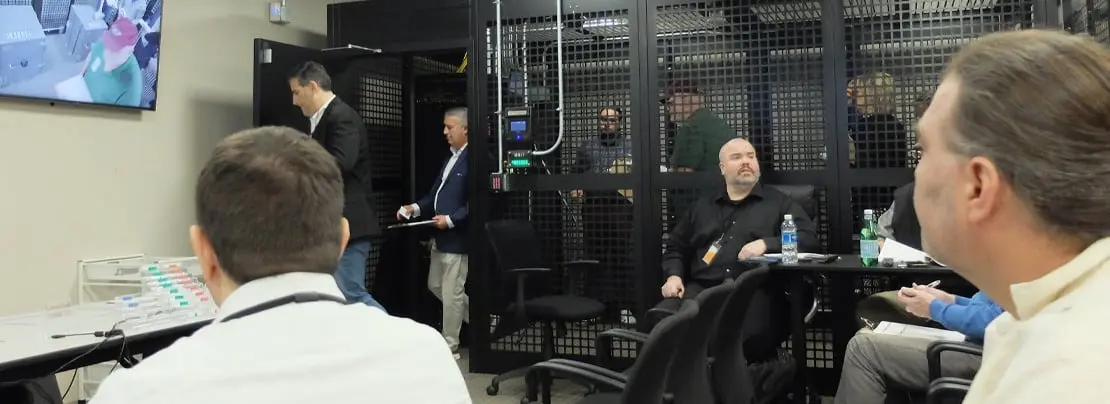
CULPEPER, Virginia — Deep inside a high-security, restricted-access facility in Culpeper, Virginia, operations personnel manage the nerve center of the global domain name system. It is here, under strict protocols and tightly controlled conditions, that ICANN staff oversee the foundational elements that keep the internet’s addressing system secure and trustworthy.
This critical infrastructure is once again drawing intense focus from the network engineering community as the internet approaches a major operational milestone. On October 11, 2026, the global domain name system will complete a pivotal transition in its security architecture with the deployment of its third Key Signing Key (KSK) as part of the second-ever root zone KSK rollover.
The upcoming transition marks the culmination of a meticulously managed, multi-year process designed to update the cryptographic keys that underpin all Domain Name System Security Extensions (DNSSEC) data across the worldwide web. Duane Wessels, a researcher and fellow at Verisign who has closely tracked the evolution of the Domain Name System, recently discussed the history and mechanics of these rollovers during an episode of the technology and networking podcast PING.
The management of the private keys associated with the public-private key pair forms the bedrock of trust for the global internet. This operational framework is overseen by the Internet Assigned Numbers Authority (IANA), with Verisign playing critical, multi-faceted roles in the generation, maintenance, distribution, and operational use of the resulting key material. Wessels participates directly in these sensitive operations through ICANN and IANA key ceremonies while also maintaining a unique vantage point into global internet behavior via the anycast infrastructure of the J root server.
According to the historical timeline detailed by researchers, the very first root zone KSK was originally deployed in 2011, establishing the initial cryptographic anchor for global domain name validation. The first full rollover of this key successfully took place in 2017. However, subsequent plans to execute regular rollovers faced unexpected operational headwinds, with unforeseen circumstances causing delays in 2020 and 2023 that pushed the timeline for the second rollover further out.
The current transition sequence began unfolding more than a year and a half ahead of the final cutover. The new KSK was published in the root zone in January 2025, laying the groundwork for automated system updates. By February 2025, the key became eligible for automatic installation by validating resolvers utilizing the standard RFC 5011 Trust Anchor update process. This mechanism gave system administrators and network operators a substantial window of many months to update their infrastructure and smoothly adopt the new Trust Anchor ahead of the impending signing transition.
![[Podcast] The October 2026 root KSK roll | APNIC Blog](https://blog.apnic.net/wp-content/uploads/2025/06/KSK_FT.jpg)
When October 11 arrives, the new cryptographic key pair will officially enter active service for the very first time. On this date, the new KSK will begin the critical task of signing the root zone, while the previous key pair will be retired from active signing operations. Although the old key will cease signing duties, it will remain visible in the root zone for a transitional period until early 2027 to ensure legacy systems and delayed resolvers encounter minimal disruption.
Beyond the logistical coordination of the key ceremony itself, the current rollover has provided researchers with unprecedented visibility into how validating resolvers across the global internet respond to major security transitions. Wessels, working alongside Roy Arends from ICANN, has conducted extensive research examining resolver behavior throughout the 2024 to 2026 rollover window.
Their findings have been documented across a pair of comprehensive technical publications. The first installment, titled The 2024-2026 Root Zone KSK Rollover: Initial Observations and Early Trends, was published in March 2025. This was followed by a subsequent analysis in July 2026 titled The 2024-2026 Root Zone KSK Rollover: Updates and Observations. Together, these documents trace how the researchers’ understanding evolved as the rollover progressed, demonstrating how empirical lessons gathered from early network observations directly informed their later analytical work.
A key factor enabling this heightened level of insight during the current rollover—compared to the pioneering effort in 2017—is the widespread adoption of modern signaling standards. Over the intervening years, a significantly larger proportion of resolvers have implemented the signaling mechanism defined in RFC 8145. This protocol allows validating resolvers to actively signal which Trust Anchors they currently have installed and are utilizing.
By leveraging this standards-based telemetry, researchers have been able to construct detailed time-series datasets that illustrate the gradual deployment and adoption of the new key material across diverse network environments worldwide. This data offers a remarkably clear picture of global Trust Anchor adoption, providing the internet community with invaluable empirical data regarding the resilience and adaptability of critical infrastructure.
As the October 2026 milestone approaches, network operators and infrastructure providers continue to monitor their systems to ensure compliance and readiness. The upcoming transition serves as a prominent reminder that maintaining the security and integrity of the global domain name system requires ongoing vigilance, careful multi-year planning, and close collaboration among the technical organizations that steward the internet’s core protocols.
Leave a Reply