
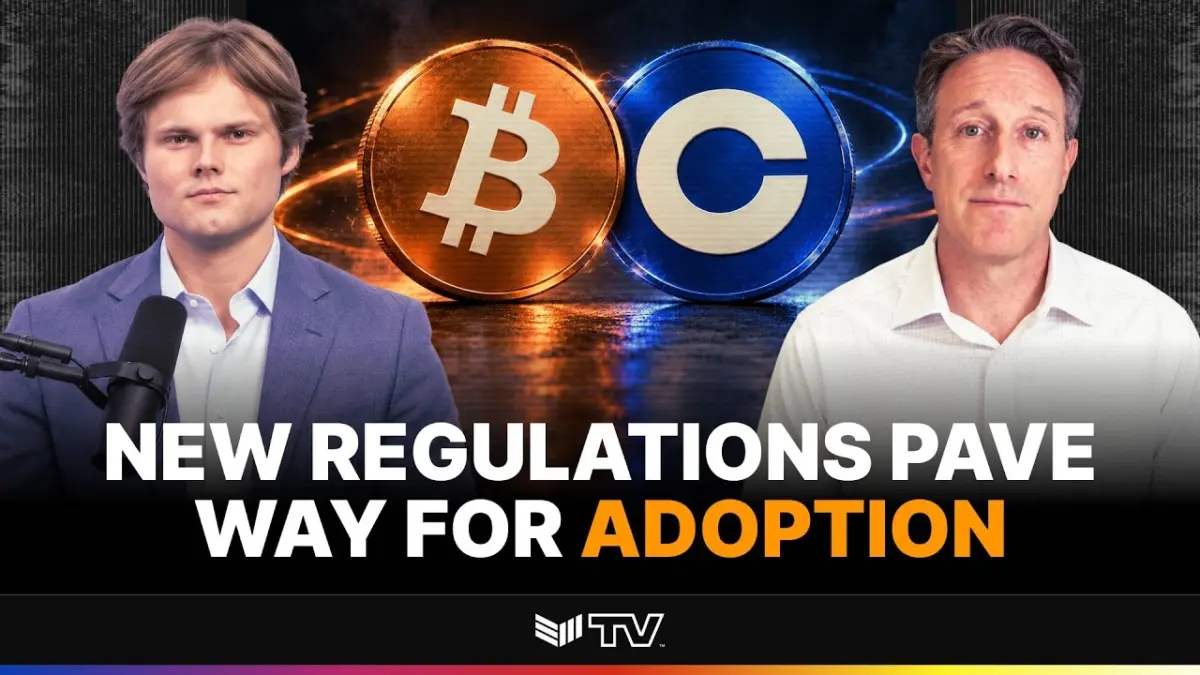
As the regulatory landscape surrounding digital assets continues to shift, traditional finance is accelerating its push into Bitcoin and broader blockchain infrastructure. Ryan VanGrack of Coinbase recently joined a detailed discussion to unpack these evolving dynamics, highlighting how proposed regulatory changes could fundamentally reshape how institutional capital interacts with digital property. From the Securities and Exchange Commission’s (SEC) custody proposals to the transformative potential of tokenization, the conversation offered a comprehensive look at the intersection of traditional finance, regulation, and cryptocurrency.
Central to the discussion is the observation that institutional capital naturally gravitates toward environments with clear, predictable rules. As regulatory frameworks slowly take shape in major financial jurisdictions, institutional players are finding more pathways to participate in the digital asset economy. Rather than viewing different investment vehicles as mutually exclusive, industry leaders increasingly see them as complementary tools designed to meet diverse client needs.
Navigating Regulatory Shifts: From CFTC Approvals to SEC Custody Rules
A significant milestone highlighted in the discussions involves Coinbase securing approval from the Commodity Futures Trading Commission (CFTC) for its own clearinghouse. This development marks another step forward in bridging the gap between traditional regulatory oversight and cryptocurrency market infrastructure, giving institutional participants additional tools to manage risk and execute trades within a compliant framework.
However, questions remain regarding how long existing regulatory guidance can persist without legislative backing, such as comprehensive market structure laws. The interplay between federal agencies, legislative proposals, and ongoing SEC oversight creates a complex patchwork for market participants attempting to plan for the long term.
Among the most anticipated regulatory developments is the SEC’s proposed custody rules. According to VanGrack, these proposed rules could make it significantly easier for registered investment advisors to help their clients own Bitcoin directly. For years, the lack of clear custodial pathways has kept many traditional wealth managers from offering direct digital asset holdings to their clientele. By establishing clearer compliance parameters for custodians, the SEC’s proposals could unlock a new wave of capital deployment from traditional advisory practices.
At the same time, the relationship between direct ownership and exchange-traded funds (ETFs) is evolving. Rather than competing against one another, direct ownership and ETFs are viewed by industry advocates as an "both and, not either or" proposition. While ETFs provide a familiar wrapper for equity-focused portfolios and retirement accounts, direct ownership appeals to investors seeking sovereign control over their assets. Both avenues cater to different preferences within the broader institutional and retail markets, driving overall adoption higher.
The Tokenization Wave and Wall Street’s Middlemen
Beyond basic asset holding and trading vehicles, the conversation turned toward tokenization—the process of representing traditional financial instruments or real-world assets on a blockchain. VanGrack characterized tokenization as potentially the biggest upgrade to financial market infrastructure since the advent of electronic trading.
By leveraging blockchain networks, financial institutions can issue, settle, and track assets with unprecedented efficiency. This technological leap has profound implications for the traditional financial architecture. In particular, tokenization possesses the inherent capability to cut out various middlemen that have historically populated Wall Street operations. Traditional clearing, settlement, and reconciliation processes often involve multiple intermediaries, each adding time and cost to transactions. Decentralized infrastructure streamlines these workflows, allowing for near-instantaneous settlement and reduced counterparty risk.
Despite these technological promises, market participants emphasize that significant work remains for lawmakers and regulators in Washington. Clearer definitions, sensible tax treatments, and robust legal protections are still needed to give institutional holders and businesses complete confidence as they integrate Bitcoin and digital assets into their core operations. Without these legislative fixes, certain segments of traditional finance may remain hesitant to commit capital at scale.
Expanding Infrastructure and Addressing Misconceptions
As institutional adoption accelerates—particularly following legislative milestones and policy debates such as those surrounding the Clarity Act—market infrastructure providers are working to bring these capabilities to a broader array of financial institutions. Initiatives are underway to introduce digital asset infrastructure to community banks, ensuring that smaller financial institutions are not left behind as the broader banking sector modernizes its technology stack. By providing secure, compliant gateways for community banks to offer digital asset services, infrastructure providers are helping democratize access to blockchain technology across different tiers of the banking system.
The conversation also addressed persistent public policy debates, including the ongoing narrative surrounding the use of cryptocurrencies in illicit finance. As regulatory scrutiny tightens and compliance technology matures, industry advocates continue to emphasize the transparency inherent in public blockchains. Law enforcement and regulatory agencies increasingly utilize blockchain analytics to track illicit transactions, demonstrating that public ledgers often provide greater traceability than traditional cash systems.
As these trends converge, the path forward for digital assets will likely be defined by the ongoing dialogue between regulators, lawmakers, and market participants. With institutional interest deepening and regulatory frameworks gradually adapting to the realities of blockchain technology, the foundation for the next phase of digital asset integration is actively being laid.
Disclaimer: The views and opinions expressed in this show are those of the participants and do not necessarily reflect the official policy or position of BTC Inc., Bitcoin Magazine, or any affiliated entities. This content is provided for informational and educational purposes only and should not be construed as investment, legal, tax, or accounting advice. Nothing contained in this show constitutes a solicitation, recommendation, endorsement, or offer to buy or sell any securities or financial instruments. Viewers should consult their own advisors before making financial or business decisions.



Leave a Reply