
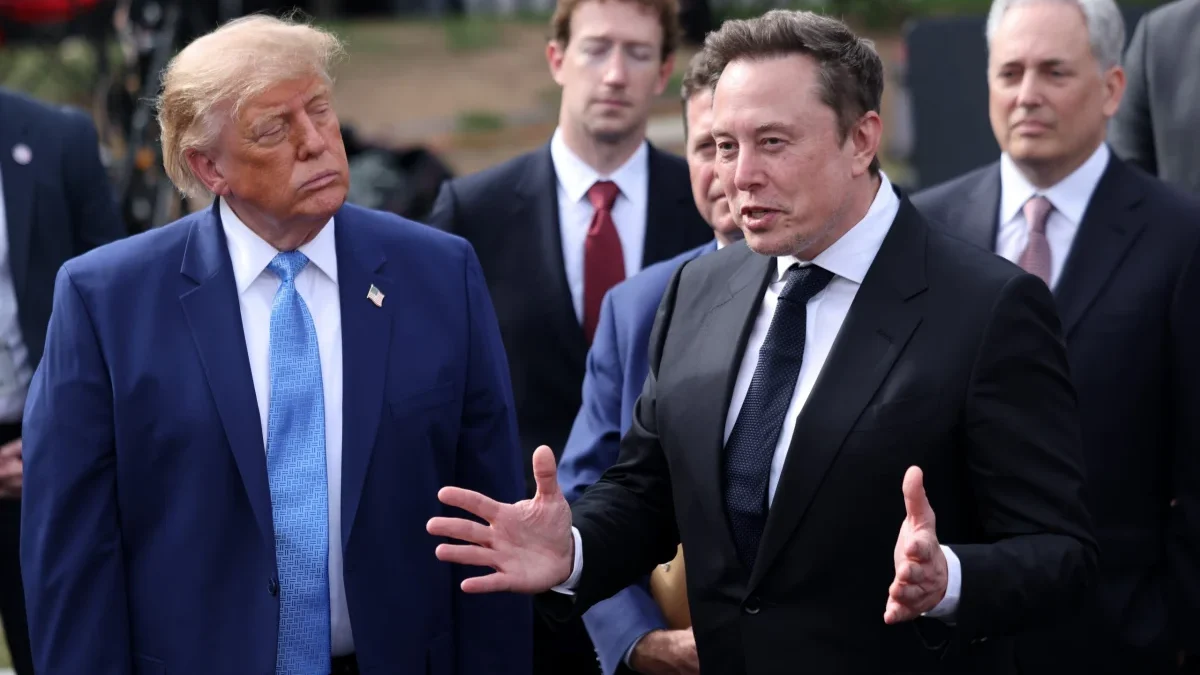
President Donald Trump has hosted many of the biggest names in artificial intelligence this week, a high-profile gathering that served in part to announce a striking semantic shift for the U.S. government: Washington is no longer calling the technology artificial intelligence. Instead, by executive order, it is now officially designated as "super intelligence."
The sweeping development was dissected on a recent episode of TechCrunch’s Equity podcast, where journalists Kirsten Korosec, Sean O’Kane, and Anthony Ha sat down to discuss the underlying motivations behind the White House meeting and the potential ramifications for the broader tech industry. The panel expressed widespread skepticism regarding the "Joint Commitment on Frontier Responsibilities" signed by the attending executives, noting that the document carries virtually no legal weight. As O’Kane pointed out during the discussion, the agreement is deeply non-binding from a legal perspective, though President Trump reportedly described it as "morally binding."
The summit brought together an elite group of tech power brokers, including Meta CEO Mark Zuckerberg, Amazon founder Jeff Bezos, Tesla and xAI head Elon Musk, and Anthropic CEO Dario Amodei. The convergence of these industry titans at a single White House luncheon followed a whirlwind of behind-the-scenes political maneuvering, particularly involving Anthropic, which had previously found itself at odds with elements of the administration.
According to Korosec, the true significance of the meeting may extend far beyond policy changes, functioning primarily as a sophisticated rebranding effort orchestrated by the administration. In Korosec’s view, the subtext of the narrative being pushed is clear: traditional artificial intelligence carries anxieties regarding job displacement and existential risk, whereas the newly minted "super intelligence" is framed differently. The underlying message, Korosec suggested, is that while older conceptions of AI might be perceived as scary or threatening, super intelligence is presented under a completely different light.
Discussing the official mandate, Anthony Ha highlighted the speed and directness with which the policy was enacted. Officially, by order of the president of the United States, federal representatives are now expected to use the term super intelligence rather than artificial intelligence. Ha noted that this shift aligns with hints the president had previously dropped, which have now been formalized into an executive order.
This terminology shift accompanied a broader announcement regarding AI safety and a hastily assembled pact. The rapid rollout of the agreement contrasted sharply with rhetoric from just a week prior, when President Trump downplayed the need for stringent oversight, asserting that the United States must lead in the sector without constraints and dismissing safety concerns. Yet, despite past friction, major AI chief executives gathered at the White House to sign the pledge.
The road to the summit involved notable diplomatic shifts within the tech sector, particularly concerning Anthropic. Leading up to the event, Anthropic had experienced friction with the administration. However, the dynamic shifted dramatically when CEO Dario Amodei was invited to a late-night dinner with President Trump. Just days after that sit-down, Amodei joined the rest of the industry heavyweights at the presidential luncheon.
The subsequent press conference generated significant public attention and internet memes, highlighting the distinct dynamics that emerge when prominent tech leaders are brought together in a political setting. Despite the outward display of unity, the panel questioned the long-term meaning and practical impact of the summit.
Sean O’Kane expressed deep skepticism regarding the perceived reconciliation between the administration and Anthropic, pointing out ongoing fractures within federal agencies. While certain factions within the White House appear eager to collaborate with Anthropic, the Department of Defense maintains a starkly critical stance, frequently characterizing the company as a national security risk. O’Kane noted that administration figures continue to voice sharp criticisms of Anthropic on social media, suggesting that significant distance remains between the two entities despite Amodei’s presence at the summit.
Further complicating the narrative surrounding the Joint Commitment on Frontier Responsibilities, O’Kane highlighted a glaring logistical oversight: the official agreement signed by the president and top AI leaders misspelled the United States. Coupled with its entirely voluntary nature, the document’s unusual framing by the president as "morally binding"—a term rarely utilized in formal legal or regulatory frameworks—underscored the unconventional nature of the pact.
Anthony Ha added that internal divisions within the White House regarding Anthropic have been evident for some time. While figures such as the Treasury Secretary have expressed support for the company’s technology and involvement, the Defense Department has remained intensely opposed, largely due to conditions Anthropic sought to place on the military application of its systems. From this perspective, the underlying power dynamics have not fundamentally changed, with certain White House factions eager to leverage the technology while others remain deeply resistant.
Regarding the agreement itself, Ha argued that its substance may be less important than the symbolic gesture of its creation. The apparent rush to pull the summit together—underscored by the misspelling of the country’s name—suggests that the administration placed high priority on staging the event, even if the resulting pact is unlikely to trigger immediate regulatory changes.
Korosec reiterated her core assessment that the primary achievement of the gathering was narrative rather than legislative. By shifting the vernacular from artificial intelligence to super intelligence, the administration has embarked on a calculated rebranding campaign. Whether this linguistic pivot alters public perception, industry practices, or the complex relationship between Silicon Valley and Washington remains to be seen as the new policy directives take effect.


Leave a Reply