
The morning routine often unfolds with deceptive normalcy. Lunches are packed, permission slips are hastily signed on the stairs, and a missing shoe is finally located beneath the living room couch. Between answering work messages in the drop-off line and dialing into the first conference call of the day with barely seconds to spare, the mechanics of modern parenting seem to be functioning as expected.
Yet, the part that rarely gets spoken aloud frequently surfaces later in the day. For many working parents, a critical turning point occurs quietly in the evening hours—such as 6:40 PM—when a child begins recounting the details of a routine schoolyard argument, and the parent realizes they feel an absolute blankness. It is not necessarily impatience or anger; rather, it is the absence of any emotional resonance whatsoever. The parent nods, offers the appropriate verbal responses, and simply waits for the conversation to conclude.
While a rough morning can easily be attributed to standard tiredness, that kind of emotional detachment cannot.
Experts note that the symptoms of parental burnout are frequently flattened into a single, catch-all term: exhaustion. Furthermore, exhaustion is typically the one component that can be temporarily patched over by a long weekend or a few consecutive nights of uninterrupted sleep. However, researchers studying the phenomenon emphasize that the signs carrying the most critical information are much quieter, and the majority of them have almost nothing to do with physical energy levels. Recognizing this distinction fundamentally changes how families approach relief and recovery.
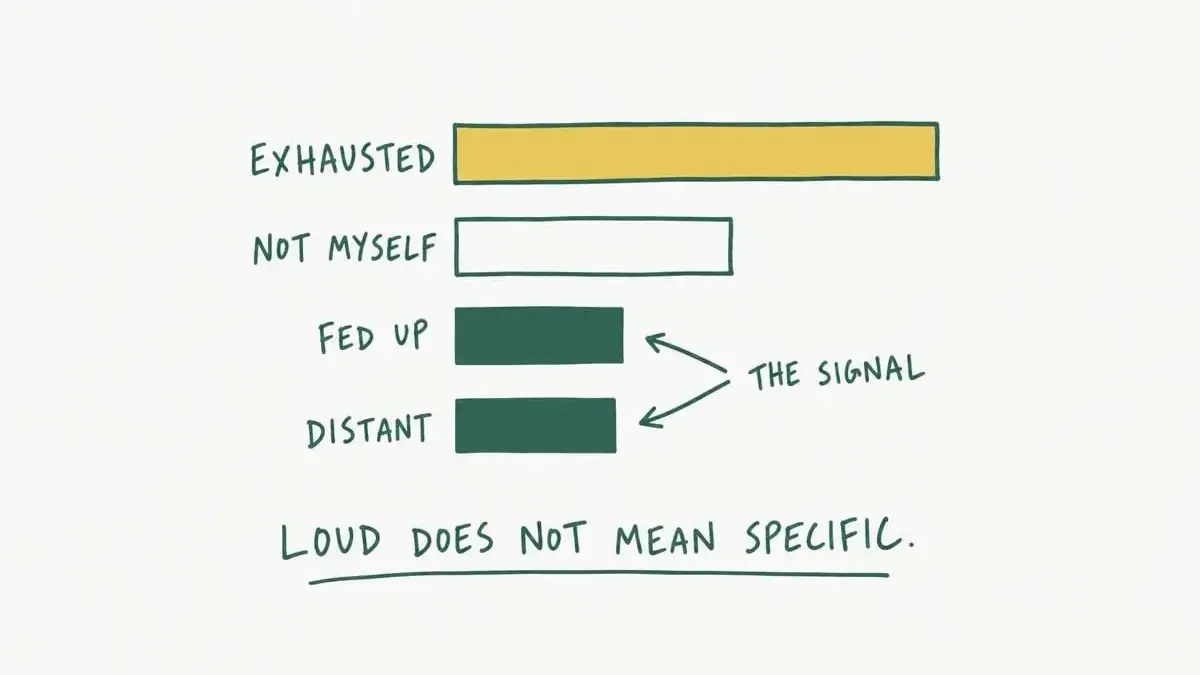
Researchers measure parental burnout across four distinct dimensions: exhaustion specifically tied to the parental role, a stark contrast with the kind of parent an individual used to be, a growing sense of being fed up with the responsibilities of the role, and emotional distancing from one’s own children. These dimensions were established by researchers who built the construct directly from the lived experiences of burned-out parents and subsequently tested it across large cohorts, including studies involving over 900 participants.
In the context of an ordinary week, these dimensions manifest in recognizable ways: a pervasive dread before school pickup, autopilot bedtime routines, a severely shortened fuse over negligible triggers, and a private, unsettling sense that the individual has somehow gone missing from their own family life. While this framework serves as a research measure rather than a clinical diagnosis—and while overlapping health issues can produce similar signs—it provides working parents with a vocabulary that goes far beyond simply stating, "I’m just tired."
Among these indicators, exhaustion remains the loudest symptom, yet it is paradoxically the least useful signal on its own. Nearly every major life stressor produces exhaustion, from caring for a newborn or enduring a month of poor sleep to fighting off a viral illness or pushing through a high-pressure quarter at work. Because exhaustion sits alongside three other dimensions rather than standing in for the entire condition, a tired week and true parental burnout can look identical from an external perspective.
Consequently, trying to diagnose the root problem through exhaustion alone is ineffective. Instead, researchers and mental health professionals point to three more telling questions: How long has the feeling persisted? Does it lift when external demands drop? And is the feeling specific to parenting, or is it present across all areas of life? While a rough couple of weeks following a major life event like a house move is normal, months of persistent flatness indicate an underlying pattern. Similarly, ordinary depletion typically responds to a quiet weekend, whereas a persistent Sunday night dread regardless of a restful Saturday suggests that the structural load has fundamentally shifted.
Perhaps the most sensitive and critical dimension of parental burnout is emotional distancing. This occurs when the logistical caretaking of children continues while genuine emotional interest and engagement thin out. A parent may still meticulously pack school bags and sign administrative forms, but they catch themselves passively waiting for their child to finish a story simply so the room can remain quiet.

Parents almost never volunteer this information because articulating it feels distressingly close to admitting a failure of affection toward their child. Yet, researchers note that emotional distancing is the least likely dimension to be explained by an ordinary rough week. The silence surrounding this symptom poses a significant risk, as studies examining large cohorts of parents have identified parental burnout as one of the strongest correlates of child maltreatment, alongside other psychological risk factors. Researchers have also documented high rates of escape ideation—the persistent wish to get away from one’s own family—among parents scoring high on burnout scales.
Experts emphasize that these findings should be viewed as a signal to seek early intervention rather than as a permanent verdict on one’s character or capability as a parent. Shame keeps emotional distancing hidden, and it is precisely in that secrecy that the condition tends to worsen.
The distinction between parental burnout and other forms of psychological strain is also critical. Data gathered across extensive combined samples demonstrate that parental burnout, job burnout, and depressive symptoms load onto separate psychological factors, supporting the conclusion that they are distinct conditions. While they frequently overlap and share certain consequences, they are not interchangeable. For a working parent, understanding this distinction dictates the appropriate course of action; if the overwhelming load is primarily rooted in parenting responsibilities, taking a week off from professional duties will not resolve the underlying issue.
Working parents often misdiagnose their distress in both directions. Some treat a parenting collapse as a professional problem, negotiating a lighter workload only to find that the late-afternoon dread remains completely unchanged. Others treat a work-related collapse as a parenting failure, unfairly piling guilt onto what is fundamentally a scheduling or career problem. Conversely, when low mood, hopelessness, or a loss of interest pervades an individual’s entire life rather than remaining confined to the parental role, clinical evaluation is necessary. Burnout frameworks are not a substitute for professional medical or psychological assessment.
To understand why this tipping point occurs, researchers frequently utilize a framework comparing parenting risks—the stress-enhancing factors—against personal resources—the stress-alleviating factors. When the imbalance persists over a prolonged period, the classic signs of burnout emerge. For working parents, evaluating this ratio offers a practical path forward because both columns consist of countable elements that can be actively managed and adjusted.
Risks often accumulate quietly and imperceptibly. A child’s newly scheduled educational planning meetings, a partner transitioning to an earlier work shift, a commute lengthened by fifteen minutes each way, or self-imposed standards such as preparing completely homemade dinners every night can all contribute to the breaking point without individually announcing themselves as the primary culprit.
Conversely, resources are far more concrete than the term implies, typically boiling down to available hours and supportive people. These include covered hours where another adult takes responsibility, paid help even if limited to a couple of hours, uninterrupted sleep, a flexible professional environment, or maintaining a reliable friendship. Many perceived work-life balance issues are, at their core, resource-counting problems wearing a more ambiguous label.
Global data underscores that this pressure is heavily environmental rather than simply a failure of personal resilience. Estimates across dozens of countries indicate that parental burnout prevalence varies widely, with higher rates frequently reported in Western societies where individualism is more pronounced. These findings suggest that the intense pressure felt by modern parents is structurally reinforced, making the common advice to simply "try harder at home" largely ineffective.
For families navigating these pressures, addressing parental burnout requires moving away from the elusive promise of a quick recovery timeline and focusing instead on tangible adjustments. Researchers note that while the diagnostic criteria for parental burnout are well-established, evidence for standardized recovery protocols remains limited. Consequently, effective management relies on reducing unsustainable parenting risks and actively securing real, reliable resources through negotiation with other adults in the household or community.
Experts suggest that rather than attempting a total family redesign, parents can begin by identifying a single parenting risk that can be transferred or eliminated, while strictly protecting a dedicated block of time for recovery covered by another person. By monitoring metrics such as emotional warmth and engagement rather than merely tracking physical energy levels, parents can better gauge whether their load is genuinely lightening. When symptoms persist despite structural changes, seeking professional clinical support remains a vital step in navigating the complexities of chronic parental stress.



Leave a Reply