
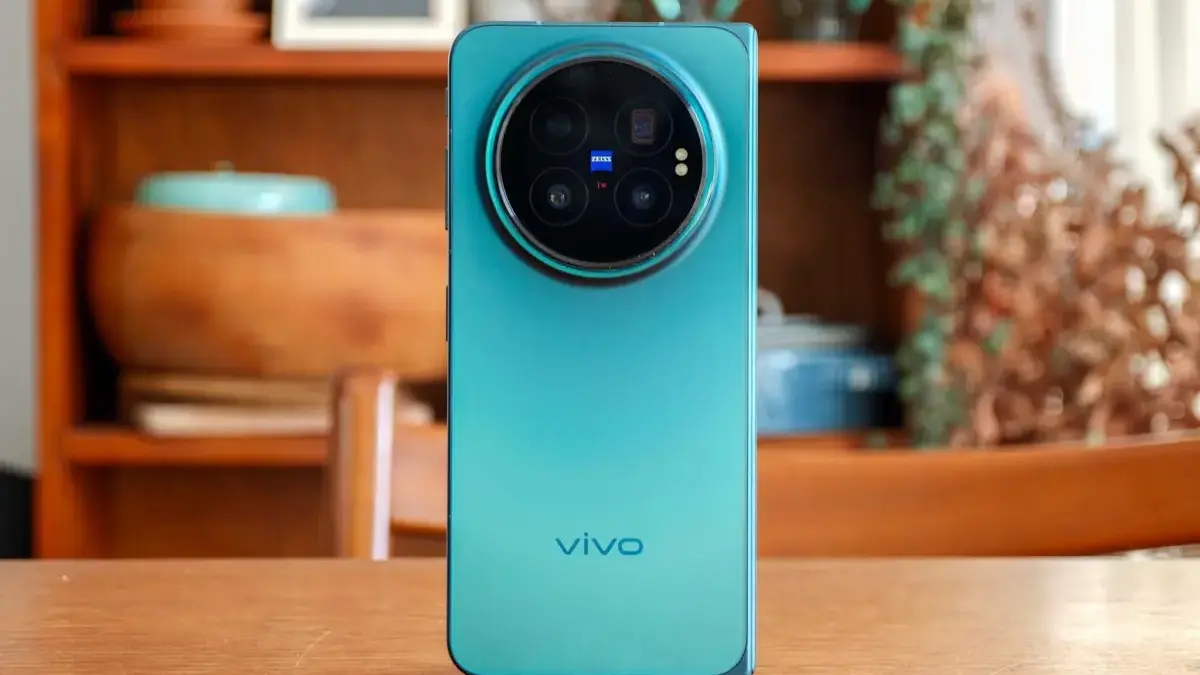
The shifting expectations of the global market are largely driven by major industry movements. Both Apple and Samsung have recently pivoted away from the taller, narrower outer screens that once dominated the foldable category, opting instead for a shorter and wider form factor with devices like the Samsung Galaxy Z Fold 8 and the iPhone Duo. By comparison, the Vivo X Fold 6 retains a physical footprint that mirrors its predecessors and aligns closely with the older generation of foldables that preceded this recent ergonomic evolution.
This traditional approach is immediately apparent upon handling the device. The X Fold 6 features a 6.51-inch cover display that adheres to the standard smartphone 20:9 aspect ratio, avoiding the broader canvas seen on some of its newest Western competitors. When unfolded, the device reveals an almost square 8.02-inch internal panel. Durability and refinement are areas where the X Fold 6 shows both its strengths and its limitations against current benchmarks. Its IP59 rating provides a solid degree of protection against dust and water ingress, which is good for a foldable device, though it stops short of the absolute cutting edge of ruggedness seen on select rivals. Furthermore, the hinge and display technology leave the central crease slightly behind the curve, remaining somewhat more visible during daily use than the nearly imperceptible creases achieved by some contemporary competitors.
Yet, where the Vivo X Fold 6 truly distinguishes itself—and where it aims to outclass almost everything else currently on the market—is in its formidable camera system. Rather than leaning solely on its foldable novelty, Vivo has equipped the device with imaging hardware that rivals the best conventional slab-style flagship phones. At the heart of this array is a massive 1/1.4-inch-type, 200-megapixel main camera sensor. This stands as one of the largest physical sensors ever embedded within a foldable smartphone chassis, with only Huawei venturing into larger territory for its foldable main lenses.

This primary powerhouse is backed up by a robust secondary setup consisting of a 50-megapixel telephoto camera and a 50-megapixel ultrawide camera. On paper and in practical expectation, this trio promises a level of photographic versatility and image fidelity that towers above nearly any other foldable phone currently available to consumers. For mobile photography enthusiasts who have historically had to compromise on sensor size and low-light performance when choosing a folding device, Vivo’s hardware choice represents a significant statement of intent.
Powering this extensive hardware loadout is an equally impressive internal battery and processing package. The device houses a substantial 6,900mAh battery, a capacity that sits comfortably above the industry average for foldables and aims to alleviate the traditional battery anxiety associated with powering two large displays. Keeping the operations running smoothly is a custom "Super Edition" of the MediaTek Dimensity 9500 processor, tailored specifically to handle the high demands of multitasking, dual-screen rendering, and heavy image processing tasks.
As the device launches outside of China, exact regional pricing and specific availability details remain under wraps, with Vivo having withheld the finer commercial details ahead of the rollout. As these market-specific prices and availability roll in, the global consumer base will soon find out how much Vivo plans to charge for this unique blend of conservative physical design and uncompromising internal hardware. With review units beginning to make their way onto desks—sitting amid the usual clutter of working journalist hardware—the primary draw remains a rigorous test of that massive 200-megapixel camera system. If the optics deliver on the promise of the spec sheet, the X Fold 6 may well prove that classic proportions can still house some of the most advanced technology the mobile industry has to offer.



Leave a Reply