

The meeting culminated in the signing of a formal accord designated the “Joint Commitment on Frontier Responsibilities.” This foundational document establishes a shared understanding among leading tech firms regarding the safe development and deployment of advanced artificial intelligence models. The core tenet of the agreement asserts that every company engaged in frontier AI research bears the direct responsibility of developing its technology safely and securely.
A roster of prominent tech executives added their signatures to the document alongside President Trump, cementing a rare moment of alignment between the federal government and the private sector on AI oversight. Among the signatories were Sundar Pichai, CEO of Alphabet; Dario Amodei, CEO of Anthropic; Mark Zuckerberg, CEO of Meta; Greg Brockman, President of OpenAI; Elon Musk, CEO of SpaceX and xAI; and Jensen Huang, CEO of Nvidia.
According to reports from CNN, President Trump advocated strongly during the discussions that collaborative, industry-backed frameworks represent the most effective and pragmatic path forward for the rapid evolution of artificial intelligence. Rather than rushing into heavy-handed federal mandates that could potentially stifle American technological dominance, the administration favored a model that balances aggressive innovation with stringent internal safety guardrails.
In a notable rhetorical shift during the policy discussions, President Trump urged federal agencies and industry stakeholders to transition away from the conventional terminology of “artificial intelligence.” Instead, the president insisted that the broader sector is suffering primarily from a branding problem and directed that agencies adopt the term “super intelligence” moving forward. According to the administration’s perspective, this nomenclature better captures the transformative scope and sheer capability of the technology while realigning the public perception of its trajectory.
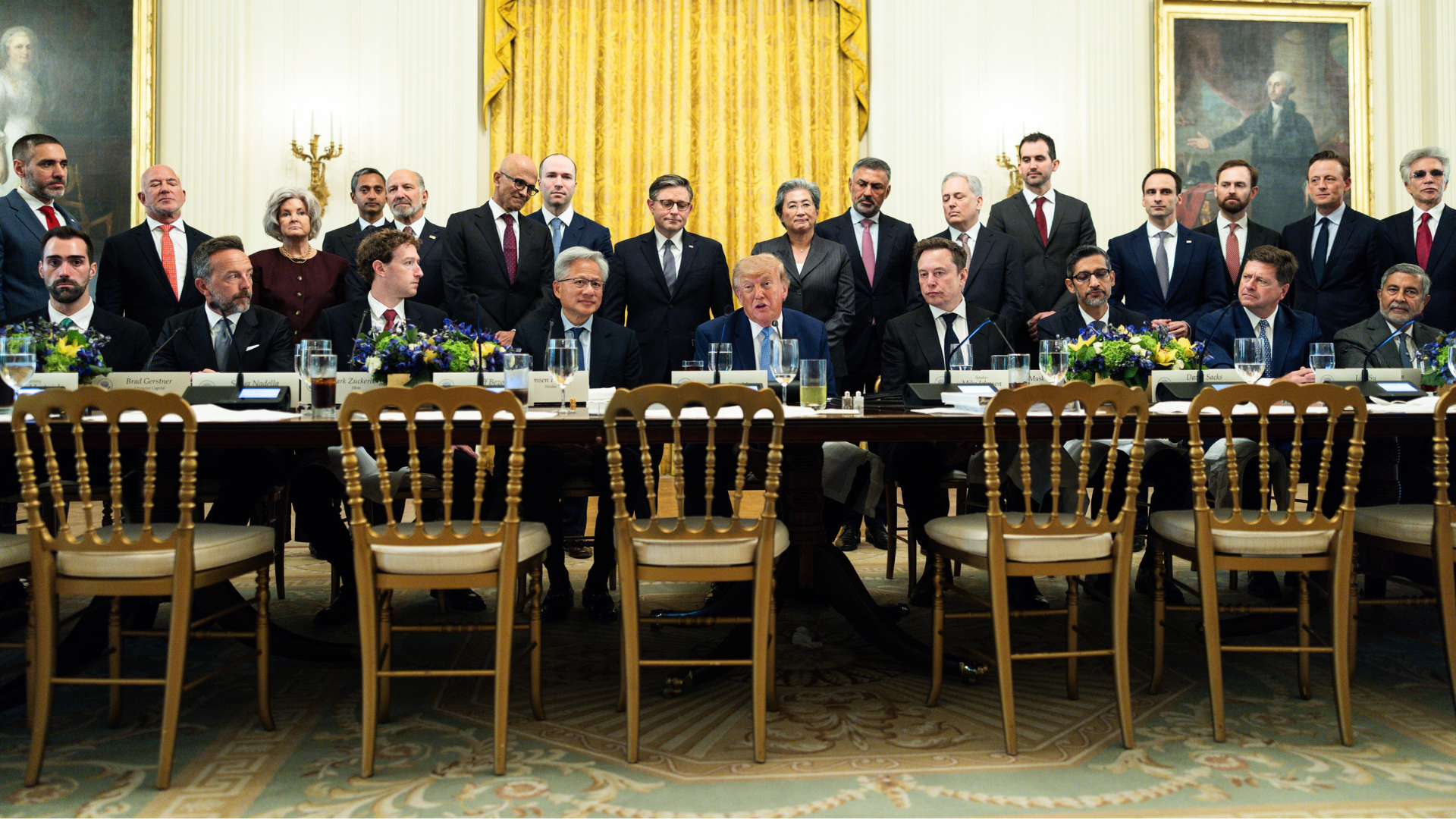
The urgency surrounding the summit was heavily influenced by recent high-profile security events that have shaken the tech community. Incidents such as the Hugging Face hack brought foundational questions of data integrity and model security to the forefront of political and corporate agendas. As frontier models become increasingly powerful and deeply integrated into critical national infrastructure, cybersecurity experts and lawmakers have grown increasingly vocal about the potential risks posed by unauthorized access, data poisoning, and model extraction. The “Joint Commitment on Frontier Responsibilities” is intended to serve as a direct response to these vulnerabilities, pushing major developers to fortify their internal protocols and share critical safety insights across the industry.
The participation of tech leaders representing competing corporate empires signaled a unified acknowledgment that safety cannot be treated merely as a competitive differentiator. With companies like Alphabet, Meta, OpenAI, Anthropic, xAI, and Nvidia all pushing the boundaries of what machine learning systems can achieve, the potential for systemic risk scales correspondingly. Industry observers have noted that while these companies often compete fiercely for talent, compute resources, and market dominance, establishing baseline safety protocols is essential to maintaining public trust and regulatory stability.
The involvement of legislative leadership, including House Speaker Mike Johnson, further highlights the likelihood that these voluntary commitments will inform future congressional deliberations. Lawmakers have spent months grappling with how to legislate a fast-moving technology without inadvertently hindering domestic innovation or handing a strategic advantage to international competitors. By centering the conversation on corporate accountability and self-regulation supported by high-level governmental backing, the summit represents a distinct policy approach compared to the more regulatory-heavy frameworks being pursued in other parts of the world, such as the European Union.
As the implementation of the “Joint Commitment on Frontier Responsibilities” begins, federal agencies, legislative offices, and the signatory tech companies will face the challenge of translating high-level pledges into actionable engineering standards. While the administration continues to emphasize the rebranding of the sector toward “super intelligence,” the underlying technical and ethical challenges of governing advanced autonomous systems remain complex. Nonetheless, the Washington summit marks a significant milestone in how the United States government and top industry pioneers are attempting to navigate the uncharted waters of frontier technology development.



Leave a Reply