
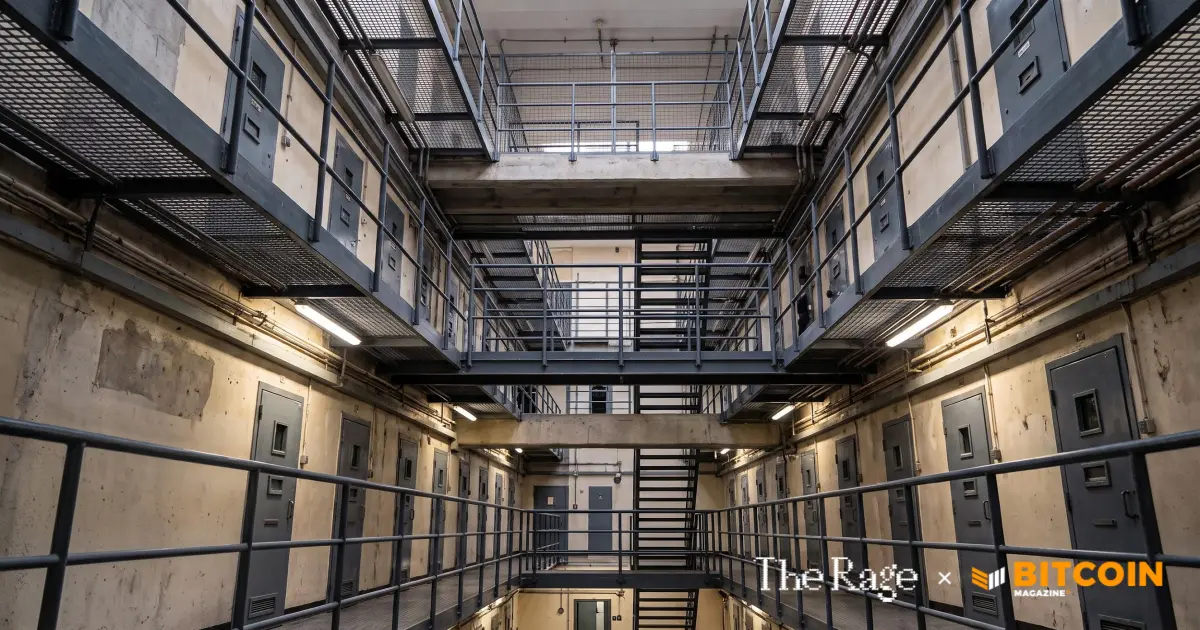
After months of silence, incarcerated Samourai Wallet co-founder Keonne Rodriguez has broken his quiet period to share the harrowing details of his month-long transfer across the United States federal prison system. What was originally projected to be a routine, four-hour drive between facilities turned into a 30-day odyssey characterized by bureaucratic inefficiencies, grueling conditions, and a stark glimpse into the harsher realities of the Federal Bureau of Prisons (BOP) transit network.
Rodriguez, who is currently serving time following his conviction alongside fellow developer William Hill for building privacy tools, had been housed at Federal Prison Camp (FPC) Morgantown in West Virginia. In early June, he was informed of a transfer to Federal Correctional Institution (FCI) McKean in Pennsylvania to participate in a drug and alcohol treatment program. Successful completion of the program offers inmates a potential reduction of up to one year off their sentence, making the logistical hurdle of a transfer seem initially worthwhile.
However, security protocols within the BOP complicate even the most straightforward administrative moves. Inmates are rarely given advance notice of their departure dates or final destinations. Standard procedure typically involves routing prisoners through the central transit hub at the Federal Transfer Center (FTC) in Oklahoma City via a specialized fleet operated by the U.S. Marshals Service, extending what should be short geographic relocations into multi-week ordeals.
The Preparation and the Shackles
Hoping to bypass the notoriously grueling federal transit network, Rodriguez requested a transfer furlough on June 5, which would have allowed him to self-transport to his new institution at his own expense. Given his minimum-security classification, two-year pre-trial release history, self-surrender, and clean disciplinary record, he felt he was a strong candidate. Just three days later, the request was denied without explanation, cementing his path into the BOP transit pipeline.
On June 10, Rodriguez was summoned to the Receiving and Discharge (R&D) unit at 6:00 a.m. The processing mirrored his initial entry into the system: strip searches, the issuance of ill-fitting clothing—including elastic-band trousers, a brown cotton shirt, threadbare boxers, mismatched socks, and slip-on blue canvas shoes—and a holding cell wait alongside fellow transferees.
Once processed, six inmates from Morgantown were lined up for physical restraints. Officers secured shackles around their ankles, handcuffs to their wrists, and threaded a heavy chain around their waists to bind the cuffs tightly in place. The resulting configuration severely restricted movement, allowing only short, painful shuffling steps and preventing inmates from raising their hands above their waists. Armed with a standard brown paper breakfast bag containing bread, peanut butter, and bologna, the group was escorted to a waiting prison bus.
The Prison Bus and the Flight to Oklahoma
The transport bus, a hybrid between a yellow school bus and a standard coach, was already populated by inmates from various regional facilities spanning multiple security levels, ranging from minimum-security camp inmates to individuals serving decades at United States Penitentiaries (USPs). While the atmosphere was relatively cordial—with higher-security inmates inquiring about camp conditions and contraband prices—the physical environment was punishing.
Separated from the passengers by a metal grate, the driver and three heavily armed officers wearing stab vests oversaw the journey. The physical toll of the bus ride quickly mounted. The constant mechanical noise of the vehicle created a deafening environment, while the metal shackles dug painfully into Rodriguez’s ankles and wrists.
After roughly five hours of travel, the convoy arrived at Greenbriar Valley Regional Airport in West Virginia. Following an extended logistical reshuffling process akin to a high-stakes game of musical chairs, the inmates were directed onto the tarmac to board a plain white aircraft bearing an American flag on its tail fin.
The aircraft itself showed significant age, featuring interior safety placards in German and Russian. Accompanied by dozens of armed U.S. Marshals who occupied the front third of the cabin, the prisoners filled the remaining rows. During the flight, inmates were provided with standard transit sack lunches containing frozen turkey slices, cold bread, and packaged snacks. As the plane approached Oklahoma City, passengers prepared for intake at the federal transfer hub.
The Ordeal at FTC Oklahoma City
Landing at the Oklahoma City airport facility initiated a new phase of the transfer process. Inmates were offloaded through the jet bridge directly into the multi-story concrete detention facility, where restraints were temporarily removed to allow for thorough strip searches, mouth inspections, and body scanner processing.
FTC Oklahoma City serves as the primary logistical bottleneck for the federal prison system, managing thousands of transfers weekly. However, the intake experience is frequently criticized by inmates for its chaotic administration and deteriorating conditions. Held for hours in crowded concrete holding cells alongside a mixed population of varying security classifications, new arrivals navigated an environment where contraband substances occasionally circulated despite repeated security screenings.
The administrative processing involved continuous assembly-line movements, including medical evaluations and redundant documentation checks. Rather than being fast-tracked to minimum-security housing units, transferees were frequently assigned to temporary general population holding ranges while staff managed overcrowding and resource shortages.
Arrival on the Range
Upon moving to the facility’s residential units, Rodriguez found himself housed on a general population range alongside individuals serving long sentences for violent offenses, gang affiliations, and career criminal histories. The range featured multi-tier cell blocks echoing with institutional gray and pink paint, crowded with inmates dealing with the psychological strain of incarceration and withdrawal.
Assigned to a two-tier cell, Rodriguez met his cellmate, an inmate serving a lengthy sentence for a violent crime, before grappling with immediate shortages of basic supplies such as mattresses and bedding. Administrative delays and supply shortages left incoming prisoners with partial bedding materials and prolonged wait times for fundamental necessities.
Reflecting on the grueling 30-day experience, Rodriguez noted the stark contrast between standard administrative expectations and the harsh operational reality of federal transit. As he settled into the initial weeks at FCI McKean, the physical and psychological toll of the journey underscored the challenges inherent in navigating the bureaucracy of the U.S. prison system.
The account of his transfer is slated to continue in a subsequent installment, detailing further developments in his adjustment to life at FCI McKean and the ongoing legal and public advocacy surrounding his case.


Leave a Reply