
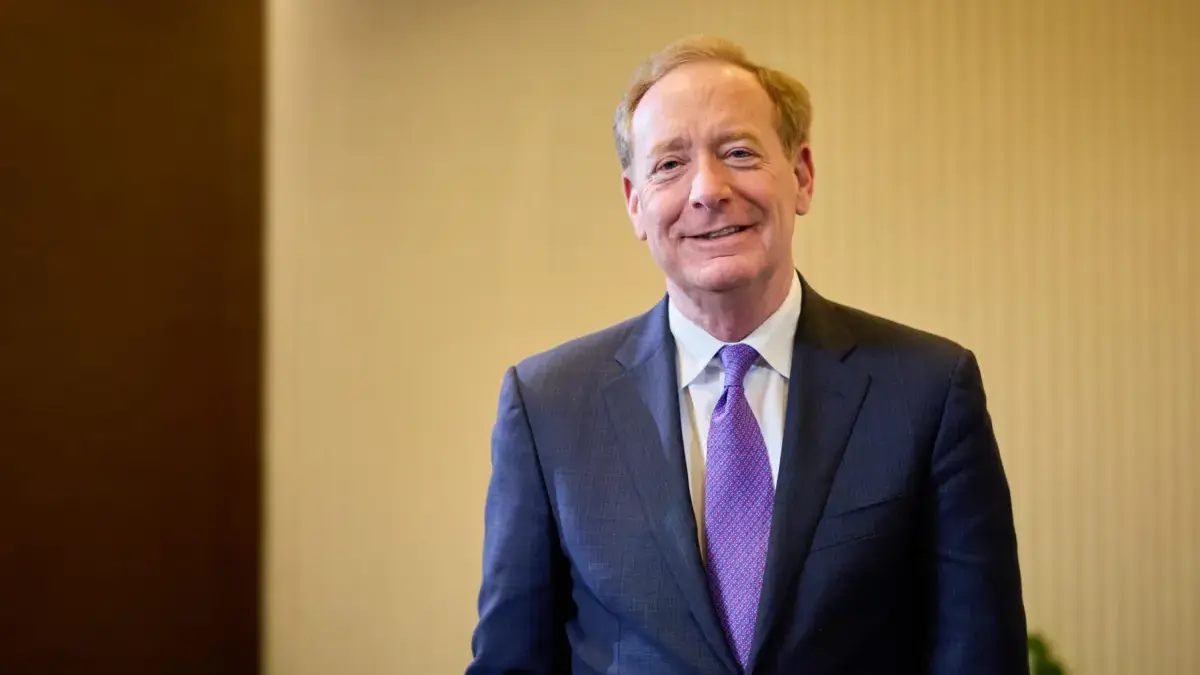
In a major organizational shake-up that signals a new era for how the technology giant shares its vision with the world, Microsoft is moving its communications group out of the marketing department and into its Corporate, External, and Legal Affairs (CELP or CELA) organization. The surprise structural change will see Microsoft Vice Chair and President Brad Smith oversee the global communications apparatus. This pivotal leadership transition comes as the company actively searches for a permanent successor to Frank Shaw, its longtime chief communications officer, who announced earlier this month that he is stepping down later this year after nearly three decades of dedicated service supporting the company’s corporate narrative and public image.
The sweeping overhaul was officially communicated to employees through an internal memo authored by Microsoft CEO Satya Nadella. In the message, Nadella expressed his deep gratitude to Shaw for everything he has done for Microsoft over a remarkable tenure spanning more than seventeen years within the communications function. Shaw has long served as a trusted advisor to the executive leadership team and to Nadella personally, guiding the technology behemoth through some of its most high-profile moments, regulatory challenges, and historic industry transformations. As Shaw prepares to transition out of his role, Brent Colburn, the current vice president of global public affairs, has been appointed as the interim communications leader to help steady the ship during the handover.
According to Nadella’s memo, Colburn will step into the interim leadership position to help navigate what the CEO describes as a media environment that is increasingly fragmented and noisier than ever before. This evolving media landscape demands that Microsoft remain firmly grounded in its core mission, earn stakeholder trust on a daily basis, and discover innovative new ways to connect directly with all of its diverse constituencies. At the same time, Nadella signaled a broader philosophy shift regarding how the company projects its voice to the public. He emphasized an eagerness to empower the individuals who are closest to the actual technology and customers to take a far more active role in the storytelling process.
Specifically, Nadella highlighted the opportunity to help engineers, sellers, partners, and other teams closest to products and customers become an even bigger part of how Microsoft tells its story. Industry observers and technology analysts quickly noted that this decentralized, product-led approach bears a striking resemblance to the operational ethos of modern artificial intelligence startups. Across the fast-moving AI sector, nimble organizations like OpenAI and Anthropic have frequently relied on their foundational researchers, product developers, and technical leaders to lead public demonstrations, author technical blogs, and communicate directly with the public.
This parallel is especially fitting as Microsoft continues to accelerate its high-stakes push into artificial intelligence. The company has been aggressively competing alongside Google, Anthropic, and OpenAI in an intense race to establish technological dominance. Earlier this year, Microsoft AI CEO Mustafa Suleyman articulated this ambition plainly, stating that the company’s goal is to become one of the top four labs in the world and to build the absolute best frontier models on the global stage. By aligning its communications strategy more closely with the engineers and developers driving these breakthroughs, Microsoft appears to be adapting its public posture to match the fast-paced, developer-centric culture of the frontier AI movement.
Under the new reporting structure, Brad Smith will assume leadership of the communications function, taking over responsibilities previously managed by Chief Marketing Officer Takeshi Numoto. Smith is already well-known as one of the most prominent public faces of Microsoft, frequently representing the company across international arenas in high-stakes discussions with global governments, regulatory bodies, antitrust watchdogs, and major enterprise customers. His deep familiarity with the intersection of technology, policy, law, and corporate strategy makes him uniquely positioned to guide the communications team through an era defined by intense regulatory scrutiny over artificial intelligence, cloud computing, and digital markets.
While Brent Colburn takes the reins on an interim basis, Microsoft has initiated a comprehensive search for a permanent successor to fill Shaw’s shoes later this year, evaluating a pool of both internal talent and external candidates. In the interim period, Colburn will report directly to Smith, ensuring a tight alignment between public affairs, legal strategy, and corporate communications. Furthermore, Shaw will remain onboard temporarily to advise both Smith and Colburn through a smooth and orderly transition, preserving institutional knowledge as the department undergoes its most significant structural evolution in decades.
The internal memo provided to Microsoft employees detailed the rationale behind these sweeping changes, offering a clear window into executive thinking. Nadella wrote that communications has never been more important to the enterprise as the company, the industry, and the wider world continue to experience rapid transformation. He noted that in a media environment characterized by unprecedented noise and fragmentation, the firm must continue to build trust and find direct avenues for engagement. Nadella thanked Shaw once more for his immense contributions and counsel during critical moments in Microsoft’s corporate history before outlining the vision for Brad Smith and the newly integrated communications team.
Highlighting Smith’s unique qualifications, Nadella noted that few leaders embody the voice of Microsoft as authentically. He praised Smith’s deep command of the underlying business, his established connections with key stakeholders across industries and governments, and his rare gift for distilling complex, technical ideas into clear, convincing, and trustworthy narratives. Nadella also elaborated on the cultural shift toward empowering employees across the organization to speak about their work. He explained that the people closest to the engineering and product development have the best vantage point for shaping how Microsoft is perceived externally, and the company intends to provide them with the necessary tools, support, and strategic guardrails to do so effectively.
This unified vision aims to bridge the traditional gap between product development, corporate marketing, and public relations. Nadella pointed to an exciting upcoming autumn schedule filled with major corporate milestones, product launches, and events backed by robust marketing campaigns. He framed this upcoming season as an ideal laboratory to bring together product narratives, marketing strategies, and communications frameworks in entirely new ways. Emphasizing a culture of continuous learning, experimentation, and evolution, the CEO concluded that a fundamentally new paradigm for corporate communications is taking shape at Microsoft, with the restructured team positioned squarely at the center of that transformation.



Leave a Reply