
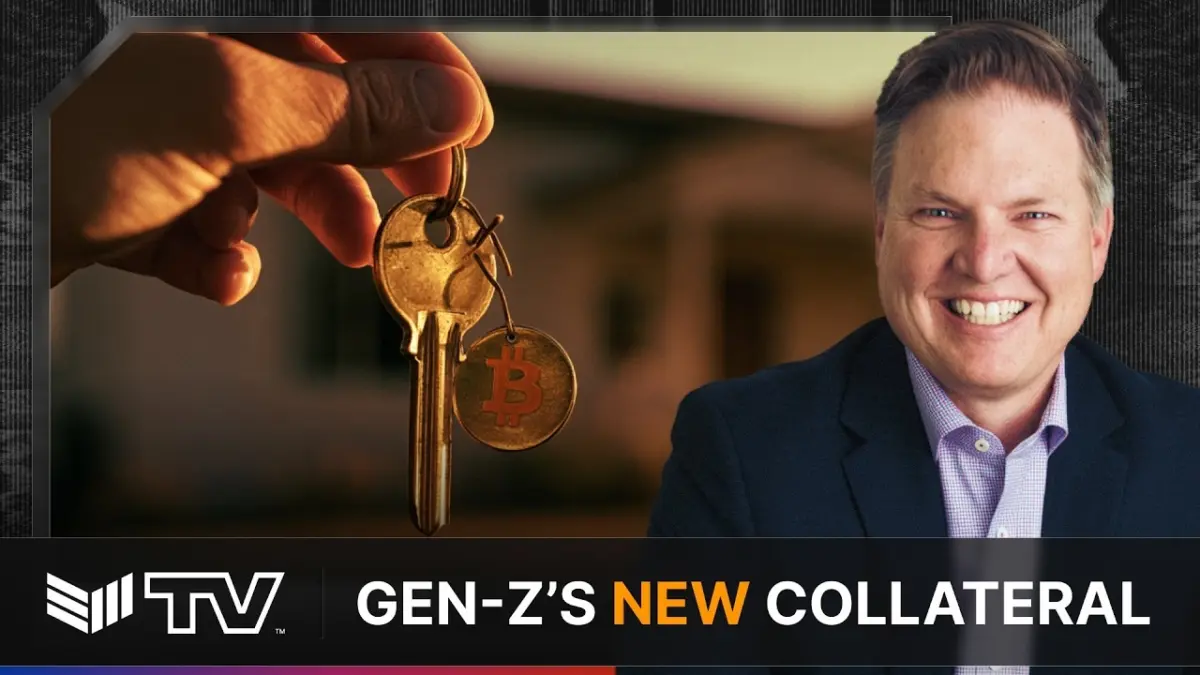
As generational wealth divides widen and traditional property ownership slips further out of reach for younger demographics, a structural shift is quietly transforming how future buyers plan for the future. With Generation Z currently accounting for less than five percent of the new home market, traditional notions of accumulating wealth through real estate are being forced to adapt. Hunter Albright of SALT Lending recently sat down to discuss this pressing economic reality, exploring how soaring housing costs are compelling an entire generation to rethink the foundational assets they use to build long-term security.
In a wide-ranging conversation, Albright connected the dots between contemporary housing affordability crises, the emergence of Bitcoin as premier collateral, and the rising trend of borrowing against digital assets for property down payments. Rather than being forced to liquidate holdings or lock up capital for conventional 30-year mortgages that consume disposable income, younger investors are finding alternative pathways. Albright examined how these evolving financial instruments are changing the calculus of wealth accumulation, touching upon institutional shifts like Fannie Mae and Freddie Mac recognizing Bitcoin, the structural mechanics of five-year loan terms offered by firms like SALT, and what a lifestyle powered by Bitcoin actually looks like in everyday practice.
The core of the challenge lies in the stark disconnect between current entry-level home prices and the purchasing power of young adults entering the workforce. For decades, the traditional American Dream prescribed a predictable sequence: finish education, secure employment, save for a conventional down payment, and lock in a 30-year fixed-rate mortgage. For Generation Z, however, that playbook has been largely upended by high interest rates, stagnant real estate inventory, and elevated property valuations. When less than five percent of the new home market belongs to an entire generation, it signals more than just a temporary delay in milestone achievements; it points to a permanent behavioral shift in how younger buyers view capital allocation and asset retention.
Albright emphasized that this demographic bottleneck is actively altering generational asset choices. While older generations leaned heavily on residential real estate as their primary vehicle for forced savings and net worth growth, Gen Z is increasingly looking toward digital-native assets. Yet, the desire for physical shelter remains universal. This creates a fascinating tension between wanting to hold a scarce, appreciating asset like Bitcoin and needing a tangible asset like a home. According to Albright, financial products that bridge this divide—allowing individuals to leverage their digital holdings without triggering taxable events or surrendering long-term exposure to the cryptocurrency—are becoming essential tools for the modern economy.
One of the central mechanisms discussed in the conversation is the practice of borrowing against Bitcoin to secure liquidity for large purchases, such as a real estate down payment. In the traditional financial system, acquiring a home requires either outright cash or the immediate conversion of existing investments into fiat currency, often triggering substantial capital gains taxes and forfeiting any future upside on the sold assets. By utilizing Bitcoin as collateral, borrowers can access the necessary liquidity to satisfy lenders and sellers without abandoning their long-term thesis on the digital asset. This approach prevents individuals from having to choose between participating in the housing market and maintaining their exposure to a decentralized monetary network.
Furthermore, the discussion explored the broader institutional landscape surrounding Bitcoin as a recognized form of collateral. As traditional mortgage giants like Fannie Mae and Freddie Mac gradually adapt to the shifting financial ecosystem, the integration of digital assets into mainstream underwriting processes becomes an increasingly relevant topic of discussion. While institutional acceptance moves at a measured pace, the mere acknowledgment of Bitcoin’s value proposition by traditional financial gatekeepers marks a significant evolution from years past. Financial technology firms and specialized lenders are stepping into the void, offering tailored products designed to accommodate the unique characteristics of cryptocurrency holdings.
Albright highlighted innovations such as SALT’s five-year loan terms, which provide a distinct alternative to the rigid, multi-decade commitments traditionally associated with property financing. These flexible terms cater to a generation that values liquidity, mobility, and adaptability over generational debt traps. By structuring loans with shorter horizons and clear parameters, lenders are offering a bridge for investors who prefer not to lock up their coins or their cash for thirty years. This flexibility aligns with the broader ethos of the digital asset community, where financial sovereignty and control over one’s private keys remain paramount.
Bringing these concepts down to earth, the conversation also explored what a genuinely Bitcoin-powered life looks like in practice. Beyond theoretical market dynamics and balance sheet optimizations, early adopters are navigating a hybrid world where decentralized capital must eventually interact with centralized, legacy systems like real estate and daily commerce. As lending structures mature and institutional barriers slowly lower, the intersection of digital assets and physical property is expected to redefine the modern milestones of adulthood.
DISCLAIMER: The views and opinions expressed in this show are those of the participants and do not necessarily reflect the official policy or position of BTC Inc., Bitcoin Magazine, or any affiliated entities. This content is provided for informational and educational purposes only and should not be construed as investment, legal, tax, or accounting advice. Nothing contained in this show constitutes a solicitation, recommendation, endorsement, or offer to buy or sell any securities or financial instruments. Viewers should consult their own advisors before making financial or business decisions.


Leave a Reply