

The morning routine often unfolds with deceptive normalcy. Lunches are packed, a stray permission slip is hurriedly signed on the stairs, and a missing shoe is finally retrieved from beneath the couch. Amid the morning scramble, a work message is answered from the carpool drop-off line, and the first official call of the day is initiated with barely thirty seconds to spare. From the outside, it looks like just another functional start to a busy family week.
The reality that many parents refuse to voice out loud frequently arrives hours later, often settling in around early evening. As a child begins excitedly recounting the details of a minor playground dispute at the end of a long day, a profound internal reaction—or rather, a complete lack of one—takes hold. Instead of irritation or impatience, there is an unsettling emptiness. The parent merely nods, supplies the expected verbal affirmations, and quietly waits for the conversation to conclude.
While chronic fatigue can easily explain the friction of the early morning hours, it fails to account for this deeper emotional numbness.
In public discourse, the symptoms of parental burnout are frequently compressed into a single, catch-all term: exhaustion. While exhaustion is a very real component of the parenting struggle, it is also the easiest symptom to temporarily patch over with a long weekend or a few consecutive nights of uninterrupted sleep. Recent psychological research highlights that the signs carrying the most critical information about a parent’s mental well-being are often much quieter, with the majority having almost nothing to do with physical energy levels at all.
This vital distinction fundamentally alters how working parents and researchers approach the problem when Monday morning rolls around again. For those experiencing severe distress, acute crises, or fears regarding personal safety and the well-being of their children, immediate support remains available through local emergency services or by contacting the 988 Suicide & Crisis Lifeline in the United States.
What Are the Symptoms of Parental Burnout?
Parental burnout is officially measured across four distinct dimensions: exhaustion specifically tied to the parental role, a stark contrast with the kind of parent an individual used to be, a deep sense of being fed up with the responsibilities of parenting, and emotional distancing from one’s own children. Researchers developed this framework by synthesizing descriptions directly provided by burned-out parents, subsequently testing and validating the model with a sample of 901 parents.
In the context of an ordinary week, these dimensions manifest in tangible ways. They appear as a profound dread before school pickup, autopilot bedtime routines where emotional engagement is entirely absent, a remarkably short fuse triggered by insignificant events, and a private, haunting sense that the individual has somehow gone missing from their own family dynamic.
While this research instrument serves as an investigative tool rather than a formal clinical diagnosis, and while these same four signs can occasionally stem from underlying health issues, it provides working parents with a much more accurate vocabulary than simply saying, "I’m just tired."
Two of these measured dimensions relate directly to physical and mental capacity. However, the other two pertain to a fundamental shift in identity within the parental role—changes that parents frequently notice only in private and almost never report to friends or colleagues.
Exhaustion Is the Loudest Symptom and the Least Useful One
Exhaustion remains the primary descriptor parents use when describing their state, yet it paradoxically serves as the weakest signal on its own. Almost every major life stressor produces exhaustion, including caring for a newborn, enduring a month of poor sleep, fighting off a viral infection, or pushing through a high-pressure quarter at work. Within the measured psychological model, exhaustion sits alongside the three other distinct dimensions rather than standing in for the entire condition. Consequently, a week characterized by simple tiredness and a state of genuine parental burnout can look virtually identical to an outside observer.
For parents attempting to determine the true nature of their struggles, focusing exclusively on exhaustion often leads to a dead end. Researchers suggest that evaluating three different questions yields much more accurate insight into the underlying problem.
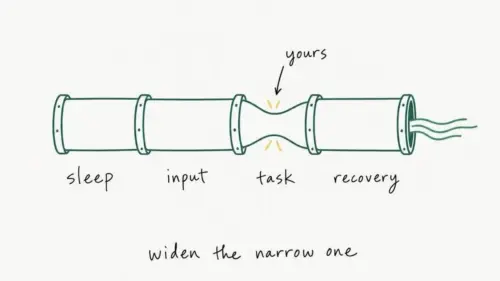
The first question examines the duration of the state. A rough couple of weeks following a major household move is entirely normal, whereas four months of persistent emotional flatness indicates an established pattern. The second question explores whether the feeling lifts when immediate demands decrease. Ordinary depletion typically responds well to a quiet weekend or a week of decent rest; if a heavy sense of dread arrives on Sunday night regardless of how relaxing Saturday was, the environmental load is no longer the only variable at play. The third question considers whether the flatness is specific to parenting or permeates every area of life.
Emotional Distancing Is the Symptom Parents Do Not Say Out Loud
Emotional distancing occurs when the practical duties of caretaking continue unabated, but internal interest and emotional engagement steadily thin out. A parent may still diligently pack school bags and sign permission slips while simultaneously catching themselves silently urging a child to finish a story simply so the room can return to quiet. Parents almost never volunteer this information during casual conversations because describing it aloud feels dangerously close to admitting a failure of love. Yet, within the empirical models, emotional distancing stands out as one of the four core dimensions and the one least likely to be explained by an ordinary rough week.
This pervasive silence surrounding emotional distancing constitutes a significant part of the problem, particularly because this specific sign carries the highest stakes. In a study involving 1,003 parents, researchers identified parental burnout as one of the strongest statistical correlates associated with child maltreatment, ranking alongside borderline personality features. Experts emphasize that this association represents a correlation measured at a single point in time rather than definitive proof that burnout directly causes harm. Additionally, the academic literature highlights "escape ideation"—the distinct wish to get away from one’s own family—among parents scoring high on these measures.
Mental health advocates stress that this reality should be interpreted as an urgent signal to seek support early rather than as an indictment of a parent’s character or morality. Emotional distancing serves as a vital load signal. Because shame keeps it hidden in the shadows, it is precisely in that hidden space where the condition tends to worsen. Parents concerned about their interactions with their children can access confidential support through resources such as the Childhelp National Child Abuse Hotline.

Parental Burnout Is Not Work Burnout and It Is Not Depression
Data drawn from a combined sample of 3,482 participants demonstrates that survey items measuring parental burnout, job burnout, and depressive symptoms load onto completely separate statistical factors. This empirical separation supports treating them as three distinct phenomena. However, distinct does not mean mutually exclusive; these conditions frequently overlap, share certain downstream consequences, and can be experienced simultaneously by a single individual.
For working parents, understanding this distinction is crucial for directing recovery efforts effectively. If the crushing load is primarily rooted in the parenting domain, taking a week off from professional duties will not alleviate the underlying pressure.
Working parents frequently misdiagnose the root cause in both directions. Some treat a profound parenting collapse as a professional problem, negotiating a lighter workload for the quarter only to find that the 5:30 p.m. dread remains entirely unchanged. Conversely, others misinterpret a work-related collapse as a personal parenting failure, unjustly piling guilt onto an already strained schedule. If feelings of flatness vanish the moment an individual is interacting with their children but return with full force on Monday morning, work-related overwhelm is likely the primary driver. If the pattern runs in the opposite direction, parenting dynamics demand closer examination.
Clinicians also emphasize the importance of recognizing broader mental health indicators. When low mood, persistent hopelessness, or a general loss of interest manifests across all areas of life rather than remaining confined to the parental role, a professional clinical evaluation is warranted. Burnout terminology should never serve as a substitute for proper medical assessment, as symptom lists alone cannot definitively distinguish between these overlapping conditions. Similar challenges often arise in the context of eldercare, which carries its own unique burdens and specialized vocabulary.
Why the Load Tips: Risks Against Resources
Researchers frequently frame parental burnout not as a personal character flaw, but as a chronic imbalance between demands and support. In this model, parenting risks—the stress-enhancing factors of daily life—outweigh available resources—the stress-alleviating factors—for a prolonged period until the four primary signs emerge. While this framework is explanatory rather than diagnostic, it offers working parents a practical advantage: both risks and resources can be actively counted, meaning the underlying ratio can be intentionally modified.
Risks tend to accumulate quietly over time. They include navigating a child’s new individualized education program meetings, a partner transitioning to an earlier work shift, a daily commute lengthening by fifteen minutes each way, or attempting to maintain self-imposed standards, such as preparing elaborate homemade dinners every night of the week. Individually, none of these elements announce themselves as the breaking point.
Resources, by contrast, are far more concrete than the term implies, typically consisting of dedicated hours and supportive people. These include covered hours where another adult assumes full responsibility for children, paid assistance even for brief windows, uninterrupted sleep, a workplace manager who accommodates flexibility, or a friendship capable of surviving occasional cancellations. Frequently, what is framed as a work-life balance dilemma is fundamentally a resource-allocation problem wearing a more ambiguous label.
Global research underscores the environmental component of this pressure. Data from a 42-country study involving 17,409 parents revealed significant variations in prevalence across different nations, landing at an overall average of approximately 5% and rising to roughly 9% in Western samples. Higher levels of national individualism correlated with higher reported rates of parental burnout, suggesting that societal expectations play a major role in shaping parental distress.
A Structured Check for Working Parents
To address these compounding pressures, some families utilize structured self-assessments to evaluate their current standing. Such processes typically involve taking twenty uninterrupted minutes with a notebook to inventory present parental burnout symptoms, tracking how long each sign has persisted, and cataloging the current week’s parenting risks and resources in two separate columns. From there, families can attempt to intentionally delete or hand off a single risk while protecting a designated recovery block covered by another adult, followed by a re-evaluation weeks later.
Consider a common household scenario: Tessa works a four-day schedule and manages the intricate school and family calendar entirely on her own, while her partner, Greg, departs for work early and remains disengaged from administrative planning. While Tessa’s exhaustion is loud and obvious, the critical sign with a distinct timeline is her emotional distancing, which began months prior. An inventory of her risks might reveal an extensive list of daily stressors, while her resource column remains nearly empty, featuring only an unused babysitting contact from earlier in the year.
A practical adjustment in such cases goes beyond routine schedule overhauls. It might involve a partner officially taking over specific responsibilities—such as designated evening bedtimes and grocery runs—in writing, alongside securing outside childcare for a brief weekly window. The primary metric of success in these interventions is not how well energy levels rebound after a restful weekend, but whether genuine emotional warmth and engagement return to the parent-child relationship.
What Helps and What the Research Does Not Promise
Current academic findings indicate that the evidence supporting the accurate description and measurement of parental burnout is significantly stronger than the evidence for standardized clinical cures. While cognitive-behavioral stress-management programs for parents have been evaluated and published, researchers note that study allocations are often non-randomized, meaning such interventions should be viewed as promising rather than definitively proven. Furthermore, validated stage models for parental burnout remain limited, and no automated online questionnaire can officially establish a diagnosis.
Experts suggest a pragmatic, unglamorous approach to recovery: modifying the balance of daily demands where possible within a given month, seeking clinical assessments if depression is a suspected factor, and maintaining skepticism toward any protocol promising rapid recovery on a fixed schedule. While general burnout recovery literature offers valuable strategies for managing physical fatigue, researchers emphasize that no generalized guide can transfer a single hour of active parenting responsibilities. That vital adjustment requires direct negotiation with other adults within the family and community.
Rather than attempting an immediate, comprehensive redesign of family life, specialists recommend identifying a single parenting risk that can be successfully transitioned to another adult or eliminated entirely. By establishing clear ownership for designated blocks of time, parents can monitor the metric that truly matters: the gradual return of genuine engagement and interest in their children, rather than a temporary surge in physical energy.
If these adjustments yield no noticeable shift over a period of weeks, that lack of progress provides valuable clinical information rather than signaling personal failure. Parental burnout symptoms function primarily as a signal of an unsustainable load, and loads inherently grow lighter when other individuals actively share the weight.

Leave a Reply