

For many years, Vietnamese football enthusiasts seeking a free, accessible way to watch Premier League matches complete with native language commentary faced a simple choice. They knew precisely where to navigate on the web to bypass paywalls. Platforms operating under the banner of "Xoi Lac TV" and its extensive network of sister sites provided unauthorized, pirated streams covering all major football leagues from around the globe. Whenever internet service providers and local authorities implemented a blocking order to cut off access, the administrators simply shifted their operations to a fresh set of domain names, keeping the streams alive for millions of viewers.
What began as a popular underground workaround for cash-strapped sports fans eventually evolved into a remarkably sophisticated and highly profitable enterprise for the operators involved. Because the streams attracted massive daily traffic, betting banners and promotional advertisements for offshore gambling platforms were prominently displayed alongside every match. These lucrative sponsorships generated substantial revenue, transforming a loose network of pirate sites into a major commercial operation. That high-flying financial success inevitably drew the attention of Vietnam’s cybercrime police, who initiated a series of high-profile raids against the network in February, formally charging 30 individuals shortly thereafter.
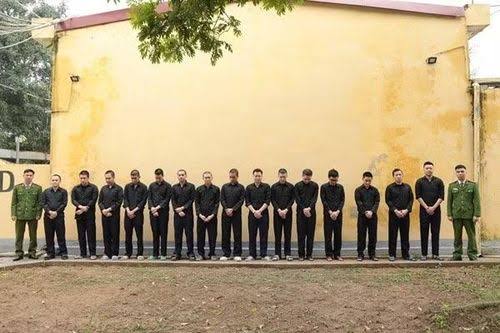
However, that initial enforcement action proved to be merely the opening chapter in a massive legal saga that has now assumed significant international weight. Law enforcement authorities in Hung Yen province have officially concluded their extensive criminal investigation into the network. Police have formally requested that regional prosecutors move forward with criminal charges against a staggering 74 individuals connected to the enterprise, marking one of the largest digital piracy crackdowns in the nation’s history.
Massive Piracy Operation with its Own Commentators
The final conclusions of the police investigation, as detailed by prominent domestic media outlets including Dan Tri and VnExpress, paint a picture of a sprawling digital empire composed of two deeply intertwined piracy operations. According to the findings, the primary pirate network, known as "90 Phut," was originally founded in late 2018. Investigators allege that Hanoi-based technology entrepreneur Pham Nguyen Dung provided the initial financial backing and capital needed to launch the project, while programmer Nguyen Cong Dinh wrote the underlying code and infrastructure. The two men reportedly agreed to split the substantial profits generated by the venture.

By the time law enforcement authorities swooped in to dismantle the infrastructure in February, the network had expanded dramatically. It operated a stable of heavily trafficked domains, including XoilacTV, 90PhutTV, VeboTV, ThapcamTV, BanhkhucTV, and CakeoTV. Concurrently, programmer Nguyen Cong Dinh also managed the rival "Cakhia" network in partnership with another defendant, creating a near-monopoly on illegal sports streaming in the country.
The 74 suspects named in the final police recommendations are alleged to have played various vital roles within this vast operational apparatus. This group notably includes more than 30 professional Vietnamese commentators who were hired to provide live, engaging voiceovers for the matches. These commentators were typically paid a modest remuneration ranging from 200,000 to 500,000 Vietnamese dong per match, which translates to roughly $8 to $20 USD. The remaining defendants were tasked with handling the heavy technical lifting, such as managing servers, maintaining stable video streams, and overseeing the complex financial flows of the business.
The live commentary was arguably the most crucial element of the brand’s success, cultivating a loyal community of viewers who tuned in as much for the humorous analysis as for the games themselves. The most popular commentators adopted colorful online pseudonyms, including figures known as "Batman" and "Scarecrow." It was eventually revealed that "Batman" was none other than lead defendant Nguyen Cong Dinh himself. Investigators assert that Dinh personally pocketed more than 12 billion dong, equivalent to approximately $470,000 USD, directly from his involvement in the illicit operation.
Forensic analysis during the investigation revealed that the network’s web of sites had illegally streamed an astonishing 1,529 football matches without authorization. This brazen activity directly infringed upon the exclusive broadcasting rights held by the Premier League and various local licensed media companies. Simultaneously, the platforms raked in massive fortunes by selling ad space to unauthorized online betting brands, including 8XBET, LU88, Man88, and HBET.
Police financial estimates indicate that these illegal gambling advertisements brought in more than 130 billion dong—roughly $5 million USD—between April 2025 and January 2026 alone. Meanwhile, legitimate rightsholders have reported staggering financial damages that far exceed the illicit advertising revenues. Vietnam’s domestic pay-TV service K+ has preliminarily estimated its own commercial losses at more than $83 million USD. The Premier League, which licenses its valuable broadcast rights to K+ for the Vietnamese market, estimates its direct losses at more than $4.6 million USD. These financial claims have yet to be formally verified and finalized through an eventual court trial.

Gambling Charges Carry the Weight
The 74 defendants targeted by the police recommendation face a diverse array of criminal charges, reflecting the multifaceted nature of their enterprise. The allegations span copyright infringement, organizing gambling, direct participation in gambling, and the distribution of obscene material. Out of the total group, 51 individuals—including primary masterminds Dung and Dinh—have been officially recommended for prosecution on both copyright infringement and organizing gambling counts.
While the network gained widespread notoriety for sports piracy, legal experts note that the gambling-related charges carry far more severe penal consequences under Vietnamese law. Under the current provisions of Vietnam’s Penal Code, copyright infringement is strictly capped at a maximum sentence of three years in prison, regardless of how commercially profitable the enterprise ultimately became. In stark contrast, organizing gambling as a professional, large-scale operation can carry a prison sentence of up to ten years.
This legal distinction means that the illegal betting advertisements plastered across the streaming portals will likely form the foundation of the most severe prison sentences handed down in the case. Nevertheless, no final legal outcomes have been determined yet. In the judicial framework of Vietnam, police conclude an investigative phase by drafting a comprehensive written conclusion and a formal proposal to prosecute, which is precisely where the case stands at present. The local prosecution office now holds a window of up to 30 days to review the file, formally issue an indictment, return the case to investigators for supplementary work, or choose to drop the charges entirely.
Thanks From London, Pressure From Washington
The sweeping crackdown on the "Xoi Lac" network has generated significant reverberations far beyond the borders of Southeast Asia. In May, Vietnam’s Ministry of Public Security proudly announced that the British Embassy in Hanoi had dispatched an official letter expressing deep gratitude for the high-profile takedown. According to the ministry’s public statements, the diplomatic letter warmly praised the aggressive law enforcement efforts undertaken to protect international intellectual property and copyright holders.
At the same time, diplomatic relations and trade pressures involving Western capitals remained complex. Toward the end of April, the United States Trade Representative (USTR) officially designated Vietnam as a "Priority Foreign Country" due to mounting concerns over widespread online piracy. This marked the first time in thirteen years that any nation had been slapped with this particular designation.
Just one month later, the USTR escalated the pressure by opening a formal Section 301 investigation into Vietnam’s intellectual property enforcement practices. This rigorous trade process carries the persistent threat of punitive economic tariffs. The USTR acknowledged that Vietnam had initiated some positive enforcement actions, but maintained that ongoing domestic infringement "continues to impair the competitive position of U.S. innovators and creators."
Although the initial raids against Xoi Lac occurred just weeks before the USTR’s landmark decision, Hanoi has increasingly utilized these law enforcement actions as a strategic defense. The government referenced the operation alongside separate crackdowns on other major pirate platforms, such as Rophim and Y2Mate, in its formal July response submitted to Washington, explicitly petitioning to be removed from the priority watch list.
In that same official rebuttal, Vietnam’s Ministry of Public Security also highlighted the high-profile HiAnime case, announcing criminal proceedings against seven additional suspects on July 2—the exact same day the nation filed its formal defense documents in Washington. Whether the newly announced recommendation to prosecute 74 defendants in the Xoi Lac case was influenced by ongoing international diplomatic pressure remains unconfirmed. For now, the ultimate decision rests entirely in the hands of prosecutors. Meanwhile, a standard online search for "xoi lac" and its numerous legacy brands continues to return a persistent list of copycat domains, leaving the identities of their current operators shrouded in anonymity.


Leave a Reply