

When looking back at the groundbreaking run of The X-Files, television critics and dedicated fans alike generally divide the iconic science fiction series into two distinct categories of storytelling. On one side are the heavily serialized "Mythology" episodes, which delve into the sprawling, complex narrative surrounding extraterrestrial life, government conspiracies, and the shadowy Syndicate. These mythology chapters typically claimed the spotlight at the beginning and end of each television season, interspersed with a handful of crucial installments to keep the overarching plot moving forward. On the other side are the standalone, procedural "Monster of the Week" episodes. In these gripping hours, special agents Fox Mulder, played by David Duchovny, and Dana Scully, portrayed by Gillian Anderson, investigate bizarre, localized anomalies completely unrelated to the grand alien conspiracy. While the mythology episodes often carried an inflated sense of importance for the show’s mythology-obsessed fandom, the vast majority of The X-Files—easily accounting for 75 percent or more of the entire series—consisted of these monster-of-the-week narratives.
The term "monster" is used in its broadest possible sense within the universe of the series, encompassing everything from strange mutated creatures and inexplicable supernatural occurrences to superpowered individuals. Over the course of nine original seasons and subsequent revivals, the show introduced a staggering array of antagonists, mutants, and biological oddities. Yet, despite the sheer volume of terrifying entities dreamed up by the writers’ room, virtually all of them ultimately fall short of the cultural impact and sheer memorability of a single creature introduced early in the show’s run: the Flukeman, who debuted during a season 2 episode titled "The Host."

The Host
"The Host" served as the second episode of The X-Files’ sophomore season, dropping viewers into a tumultuous period when the X-Files division of the Federal Bureau of Investigation had been officially shut down by their superiors. Dispatched on what he correctly suspects is a punitive assignment meant to sideline him, Agent Mulder travels to Newark, New Jersey, to investigate a gruesome discovery: a waterlogged, mutilated human body pulled straight from the municipal sewer system. Although initially led to believe the case is a routine homicide, Mulder quickly uncovers unmistakable signs that point directly toward an unexplainable X-File.
During the subsequent autopsy performed at the medical examiner’s office, Agent Scully makes a horrifying discovery inside the victim’s liver—a large, parasitic flukeworm. Shortly after this gruesome revelation, a local city sanitation worker is brutally attacked deep within the labyrinthine Newark sewers. The victim initially survives long enough to report what he believes to be an attack by a giant python, but the immense, distinctive bite mark left across his back matches the anatomy of a flukeworm mouth, albeit on a terrifying, human-sized scale. Following the tragic death of the sanitation worker, Mulder visits the local sewage treatment facility, where workers have accidentally captured an anomaly: a creature boasting the general size and shape of an adult human, but bearing the nightmarish, specialized face and mouth of a parasitic worm. Soon dubbed the Flukeman, the creature begins relentlessly attacking plant workers in a desperate bid to escape confinement and return to the dark, watery depths of the sewer network.

The enduring legacy of the Flukeman among The X-Files fandom is built upon several distinct factors, beginning with its brilliantly original visual design. While the creature clearly draws inspiration from classic cinematic monster archetypes, echoing the man-like, amphibious traits of the legendary Creature from the Black Lagoon, its pale, albino-like skin and massive, circular flukeworm jaw rendered it instantly iconic and deeply unsettling. Furthermore, the episode was brought to life utilizing cinematic-level practical creature effects, a high level of physical craftsmanship that was remarkably rare for weekly television production during that era.
Written with meticulous tension by series creator Chris Carter, "The Host" succeeded as a tightly crafted sci-fi thriller. It also incorporated a timely, real-world geopolitical element that grounded the supernatural horror: the script suggests that the Flukeman’s grotesque mutation is a direct biological consequence of the 1986 Chernobyl nuclear disaster in Ukraine, an event that had occurred less than a decade prior to the episode’s broadcast. Airing during a window when the television series was rapidly exploding into a cultural phenomenon, the standalone nature of the story meant it was accessible. Because it required no prior knowledge of the dense alien mythology, viewers could easily dive straight into the terror without needing to catch up on preceding narrative arcs.
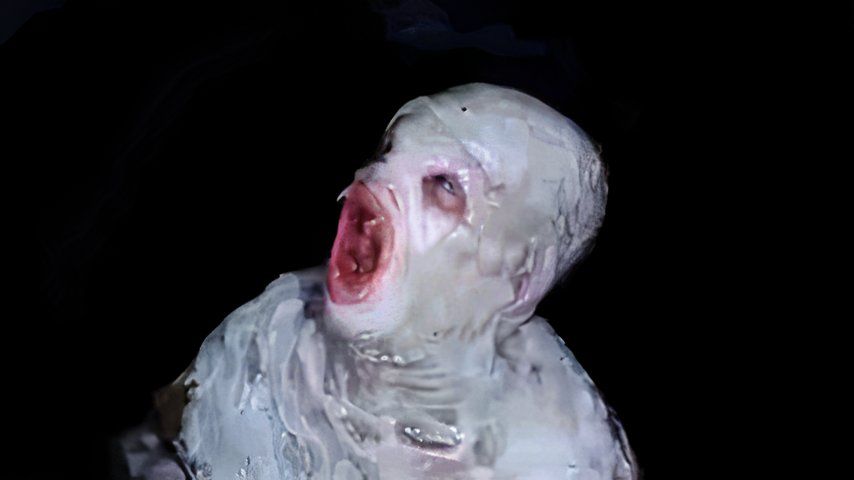
In the decades since its original airdate, the Flukeman has transcended its origins as a one-off antagonist to become the unofficial mascot for the monster-of-the-week formula that defined the backbone of The X-Files. When examining official merchandise produced for the franchise, fans are far more likely to encounter the Flukeman than almost any other creature from the show’s extensive rogues’ gallery. This remains somewhat remarkable given that the character appeared in a mere single episode of the television series. Highlighting this enduring status, when toymaker Lego released an official The X-Files building set, the collection included the core human investigators, a standard extraterrestrial figure, and just one specific television monster: the Flukeman.
While the sprawling series would go on to introduce a multitude of fascinating, grotesque, and memorable threats throughout its lifetime—ranging from the liver-eating mutant Eugene Victor Tooms to the deeply disturbing, isolated Peacock family—none managed to cement themselves quite so deeply into the collective nightmares and lasting affection of fans quite like the Flukeman.


Leave a Reply