
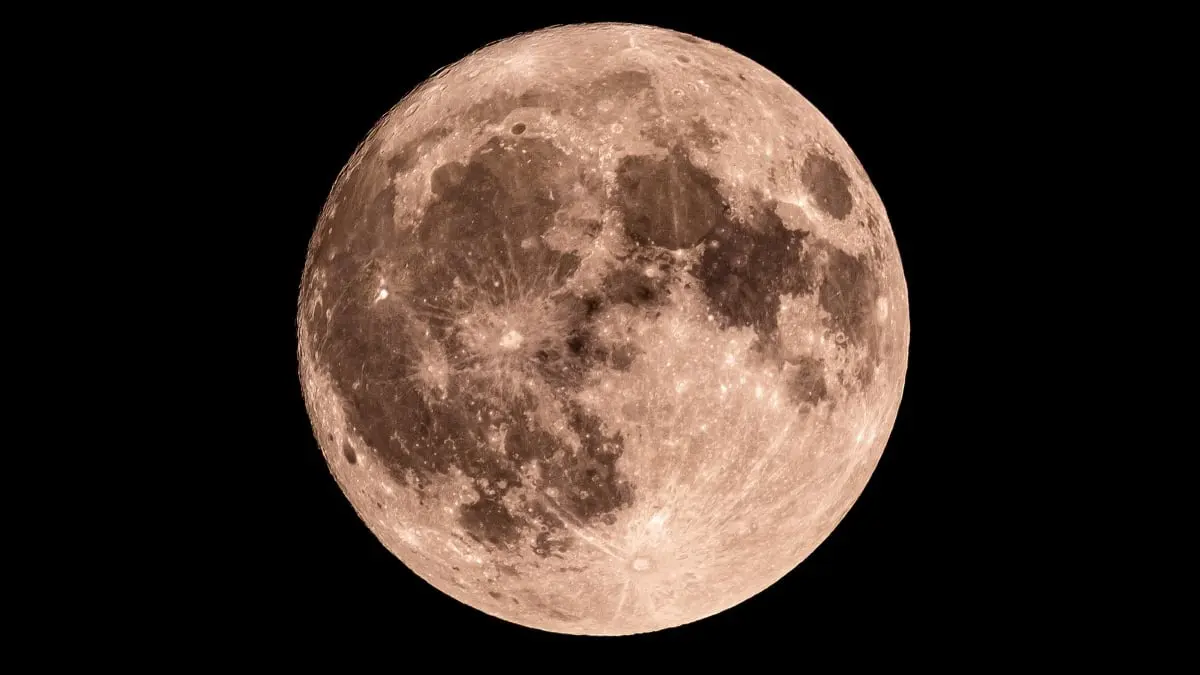
The peak of the recent Full Moon has officially passed, but Earth’s celestial companion has not yet disappeared from view. Stargazers stepping outside tonight will find a lunar landscape that still appears almost completely illuminated. As the Moon begins its slow and steady transition into a waning phase, casual observers will notice only the most subtle difference in brightness compared to the brilliant full illumination seen just twenty-four hours prior.
For astronomy enthusiasts and casual sky-watchers alike, the coming nights provide an exceptional window for observation, offering plenty of visual splendor even as the peak illumination recedes into the cosmic background.
What is Today’s Moon Phase?
According to NASA’s Daily Moon Guide tracker, the Moon has settled into the Waning Gibbous phase. With approximately 99 percent of its lunar surface still visible from Earth, the glowing orb maintains much of its majestic presence in the night sky.
Despite the slight decrease in direct sunlight reflection, there remains an abundance of prominent lunar features to observe this evening. Without the aid of any visual enhancements, sharp-eyed observers can easily spot several of the Moon’s most famous dark volcanic plains and impact structures. Prominent formations such as Mare Imbrium, Mare Vaporum, and the striking Kepler Crater stand out clearly against the brighter highlands.
For those equipped with a simple pair of binoculars, the observational experience deepens significantly. Binoculars allow backyard astronomers to pick out intricate details within the southern highlands, including the vast Clavius Crater, the prominent Alphonsus Crater, and the sweeping walls of the Archimedes Crater.
Observers fortunate enough to have access to a backyard telescope can push their view even further, uncovering historical landmarks inscribed across the lunar surface. Through telescopic magnification, stargazers can pinpoint the historic landing sites of the Apollo 14 and Apollo 15 lunar modules, as well as the fascinating linear geological trough known as Rima Ariadaeus. These features remind modern observers of humanity’s enduring connection to the celestial body hovering just a quarter of a million miles above.
When is the Next Full Moon?
While tonight’s Waning Gibbous Moon continues to dominate the nocturnal landscape, the eternal cycle of the cosmos keeps moving forward. The next official Full Moon will grace the night sky on either October 25 or October 26, depending entirely on the observer’s specific geographical timezone. Until then, the visible illuminated portion of the lunar surface will gradually shrink night by night, altering the shadows cast across craters and mountain ranges and changing the dramatic appearance of the Moon from Earth’s perspective.
What Are Moon Phases?
The changing appearance of the Moon is governed by a reliable, repeating cycle as our natural satellite orbits our home planet. This celestial journey takes roughly 29.5 days to complete from start to finish. During this continuous orbital transit, the fraction of the Moon’s sunlit hemisphere that is visible from Earth shifts daily, giving rise to the distinct lunar phases that have captivated humanity for millennia.
The cycle begins with a slim crescent, gradually swells through a half-moon appearance, and eventually culminates in the brilliant spectacle of a Full Moon before beginning the entire process over again. According to data and educational resources provided by NASA, the specific phase visible on any given night depends entirely on the geometric positioning of the Moon in relation to both Earth and the Sun. As the Moon circles our planet, the angle of sunlight hitting its surface—and the perspective from which we view it—shifts constantly.
Astronomers categorize this continuous progression into eight distinct phases. The journey begins with the New Moon, a period during which the Moon positions itself directly between Earth and the Sun. Because the illuminated side faces entirely away from us during this alignment, the near side of the Moon remains cast in shadow and is virtually invisible to the naked eye.
As the Moon continues along its orbital path, a small sliver of sunlight begins to creep onto the right side of the lunar disc for observers in the Northern Hemisphere, marking the Waxing Crescent phase. Within a week of the New Moon, the satellite reaches its First Quarter phase. At this juncture, exactly half of the Moon is illuminated on the right side, creating a classic half-moon shape in the evening sky.
Following the First Quarter, the illuminated area expands during the Waxing Gibbous phase, where more than half of the surface is lit up, though it has not yet reached maximum fullness. This leads directly into the Full Moon, when the entire face of the lunar disc turns toward Earth fully illuminated by direct sunlight.
Once the peak of the Full Moon passes, the cycle reverses its visual trajectory. The Waning Gibbous phase begins, characterized by the Moon slowly losing light along its right side from the perspective of the Northern Hemisphere. As the days tick by, the illumination shrinks further until the Third Quarter—often referred to as the Last Quarter—is reached. During this phase, another half-moon appears, but the light is now concentrated on the left side rather than the right.
Finally, the cycle concludes with the Waning Crescent phase. In this final chapter before the slate is wiped clean for the next New Moon, only a thin sliver of light remains clinging to the left side of the lunar disc. Once this faint arc fades, the Moon plunges back into darkness, ready to begin its timeless journey anew.



Leave a Reply