
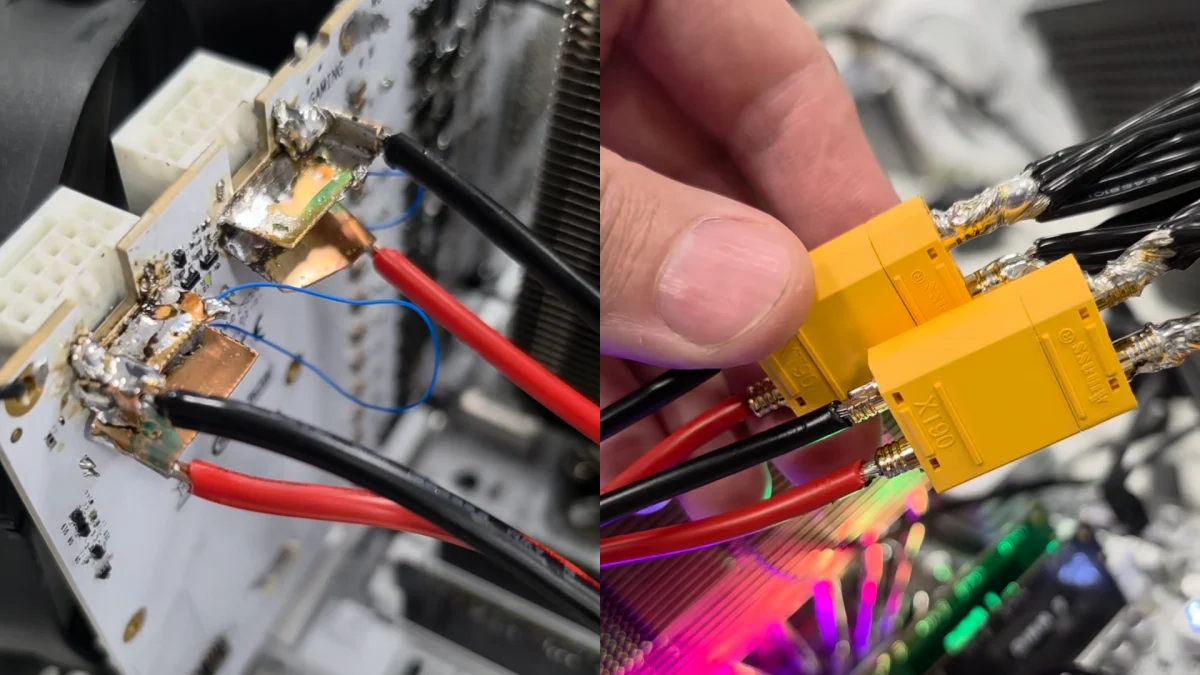
The ongoing discourse surrounding high-wattage graphics card power delivery took an intriguing turn this week when a prominent Reddit user stepped forward with a hardware-level modification designed to tackle the notorious thermal hurdles plaguing high-end GPUs. Sharing his fix within the bustling online community of PC enthusiasts, user u/DallasGrave published a detailed look at a custom power distribution module bolted directly onto the back of an Nvidia GeForce RTX 5090. As one of the most powerful and demanding graphics cards on the market, the RTX 5090 pushes power standards to their absolute limits, making innovations in thermal and electrical management a central focus for builders looking to safeguard their expensive investments.
The core of the modification centers on a custom-made power distribution board, visible in the shared images as an additional module securely fastened to the rear of the graphics card. According to the details provided by the creator, this auxiliary hardware functions by splitting the heavy electrical current load across a larger number of individual wires and circuit pathways. By distributing the sheer volume of current over a wider area rather than concentrating it through standard, singular connection points, the module successfully lowers operating temperatures at the vulnerable connector interface. Thermal management has remained a persistent challenge for modern high-performance hardware, and this localized intervention aims to mitigate the heat buildup that has historically threatened high-draw components.
Behind this clever engineering solution is u/DallasGrave, an individual linked to GRAVEPC.com, an outfit primarily recognized within the enthusiast community for crafting specialized cooling solutions tailored for small form-factor PCs. Small form-factor builds inherently struggle with thermal dissipation due to cramped interior volumes and restricted airflow, giving developers in this space unique expertise in routing power and managing heat in confined quarters. Translating that problem-solving philosophy to Nvidia’s flagship silicon demonstrates the cascading challenges engineers face as modern graphics cards continue to demand unprecedented amounts of electrical power to achieve top-tier performance levels.
Naturally, major modifications to high-end hardware immediately raise questions regarding manufacturer support and warranty compliance, particularly given the sensitive history of power connector controversies in recent hardware generations. When prompted by a curious community member in the comments section regarding whether this custom hardware solution would jeopardize factory protections—specifically under PNY’s official warranty terms—u/DallasGrave offered a reassuring clarification. He noted that his enterprise operates as an official PNY partner, indicating that consumers will eventually be able to purchase a PNY-specific graphics card featuring a similar integrated modification directly from their storefront, complete with full warranty backing.
Despite these assurances from the creator, prospective buyers are advised to approach claims of comprehensive warranty coverage with a healthy degree of skepticism. As of writing, the specific modification shared on the platform is not yet publicly available for purchase on the GRAVEPC website, leaving details regarding its commercial rollout still unfolding. Furthermore, consumer trust in manufacturer warranty policies concerning high-current power connectors has faced severe tests lately. Recent industry reporting has highlighted troubling incidents, such as cases where expensive prebuilt systems featuring high-end hardware suffered catastrophic connector melting while still sitting boxed in warehouses. In those instances, major industry players and system integrators denied warranty claims by citing technicalities like expired coverage windows or the use of third-party cables, underscoring the complex landscape of hardware liability and consumer rights when power delivery failures occur.


Leave a Reply