
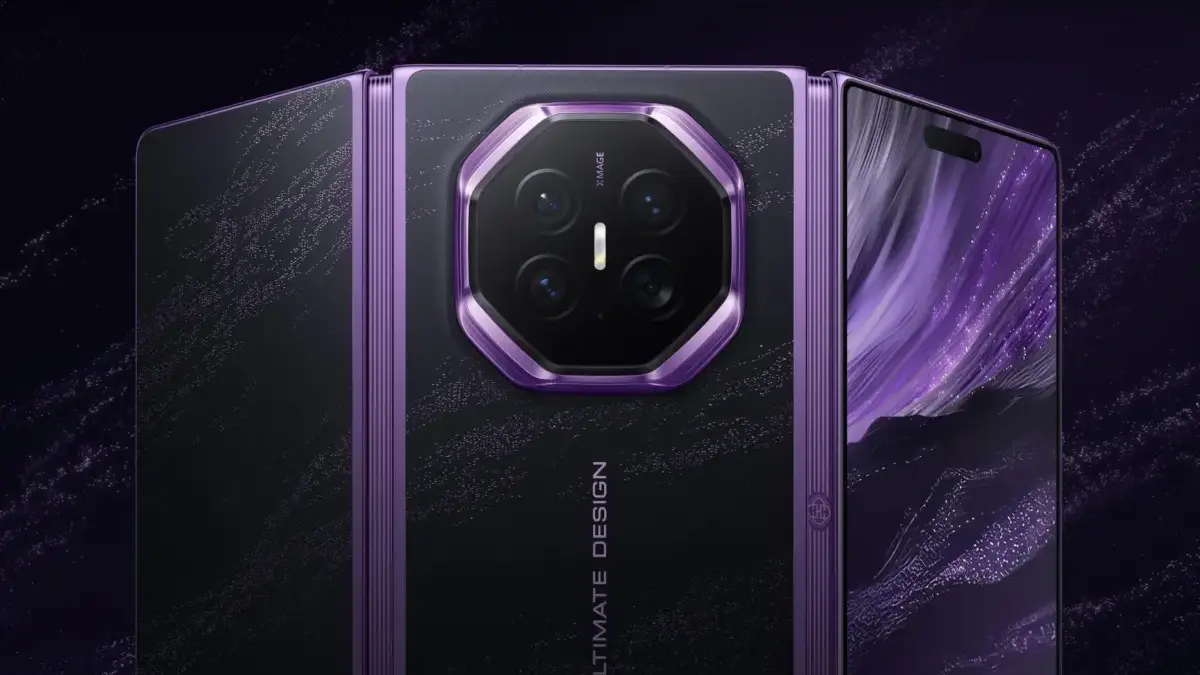
Huawei has officially released its third trifold smartphone in the Chinese market, introducing a device that heavily incorporates design cues and display innovations from its primary rival, Samsung. The newly announced Mate XT 2 adopts an inward-folding form factor reminiscent of Samsung’s Galaxy Z TriFold, while also becoming the first foldable device to integrate a specialized privacy-enhancing display, a feature recently popularized by Samsung’s Galaxy S26 Ultra.
The launch marks another major milestone in the high-stakes evolution of foldable smartphone engineering, as manufacturers continue to grapple with the delicate balance between maximum screen real estate, structural durability, and user privacy in public spaces.
The journey to the Mate XT 2 highlights the rapid iteration cycle within the foldable device sector. The original Mate XT, which initially debuted in China in late 2024 before rolling out to international markets a few months later, introduced consumers to a pioneering accordion-style folding mechanism. That initial design successfully eliminated the need for a separate, traditional cover screen by utilizing a multi-hinge structure. However, the accordion approach left portions of the fragile, flexible display permanently exposed to the elements, pockets, and potential drops, drawing scrutiny from critics and consumers concerned about long-term durability.

Subsequent iterations released by Huawei retained that characteristic accordion layout while introducing incremental upgrades, such as stylus support and new colorways like purple pleather.
The Mate XT 2, however, represents a fundamental pivot in engineering philosophy. Abandoning the outward-exposed accordion layout, Huawei has taken direct inspiration from Samsung’s trifold design methodology. The new device folds both sides of its expansive 10.2-inch flexible display completely inwards. This inward-folding architecture ensures that the primary screen is safely tucked away and protected when the phone is closed, significantly mitigating the risk of scratches, dust accumulation, and surface damage during daily transport.
Beyond the major overhaul of its folding mechanism, the Mate XT 2 introduces a surprisingly advanced feature for a foldable device: an optional privacy OLED display. This technology closely mirrors the privacy display functionality introduced by Samsung earlier this year on the Galaxy S26 Ultra. When activated by the user, the display switches on specialized pixels engineered to emit light at much narrower angles. As a result, anyone attempting to view the screen from an adjacent angle sees a nearly blacked-out surface, while the primary user looking directly at the device enjoys a clear, unobstructed view.
This capability addresses one of the most persistent privacy challenges associated with large-screen mobile devices, particularly for professionals handling sensitive documents, emails, or financial information in crowded public environments like airplanes, trains, or cafes.

Acquiring this cutting-edge privacy screen, however, comes with specific hardware requirements and an additional financial commitment. The privacy display is offered exclusively as an optional extra tied to the highest-tier configuration of the device, requiring buyers to select the model equipped with 16GB of RAM and 1TB of internal storage. Furthermore, customers must pay an additional fee of 1,000 yuan, equivalent to approximately $150, to enable the privacy display feature on top of the base price.
Beneath the folding screen and privacy enhancements, the Mate XT 2 packs high-end internal hardware. The smartphone is powered by Huawei’s proprietary Kirin 9050 Pro chipset, representing the company’s ongoing efforts to push its semiconductor capabilities forward despite severe international trade restrictions and supply chain limitations. Huawei has also improved the device’s physical resilience, outfitting the Mate XT 2 with an upgraded IP59 rating for enhanced water and dust resistance, a notable achievement for a complex multi-hinge foldable device. For photography, the phone features a versatile triple rear camera system housed within its newly proportioned chassis.
The Mate XT 2 officially launched today in the Chinese domestic market, carrying a starting price of 19,999 yuan, which translates to roughly $3,000 USD. Despite the high-profile launch, Huawei has not yet disclosed any official plans regarding an international release, leaving global consumers waiting to see if the device will eventually cross borders.
The launch also arrives amidst a shifting landscape for trifold devices globally. Samsung’s own pioneering entry into the category, the Galaxy Z TriFold, faced a turbulent market lifecycle and was quietly discontinued shortly after its release last year due to limited stock availability and supply chain constraints. Nevertheless, industry leaks and supply chain reports suggest that Samsung is actively developing a successor, indicating that competition in the ultra-premium multi-foldable category is far from over as both tech giants race to define the next generation of mobile computing.

Leave a Reply