
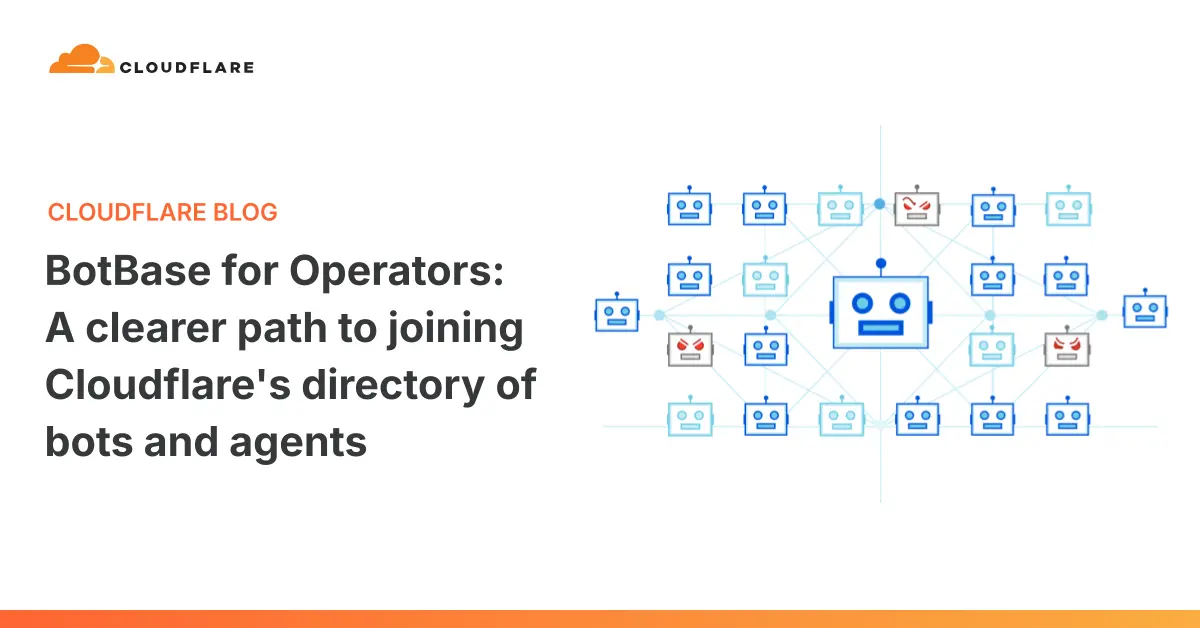
Cloudflare has introduced a major expansion to its automated traffic management ecosystem with the rollout of BotBase for Operators, a new suite of self-service tools designed to give bot creators and operators unprecedented visibility, control, and transparency over their submissions. The launch marks a significant evolution in how website owners and bot operators interact across the internet, transforming what was once a rigid, opaque submission process into a dynamic, manageable relationship.
The announcement follows last month’s introduction of Cloudflare’s second Content Independence Day, a milestone that brought forth advanced features aimed at giving website owners deeper visibility and granular control over automated traffic. Among those tools were BotBase, which introduced a searchable directory of known bots directly to the Cloudflare dashboard, and Business Insights, which helped web property owners monitor how automated crawlers interact with their content. Recognizing that the modern bot ecosystem is vast and continually expanding, Cloudflare noted that managing automated traffic sustainably requires active participation from both sides of the digital equation.
While website owners must make informed decisions regarding which automated traffic they choose to allow on their properties, bot operators simultaneously require a reliable, transparent mechanism to identify themselves, explain the exact functions of their bots, and keep that crucial information current. Platform developers emphasized that BotBase operates at its highest efficiency when both website administrators and bot creators can seamlessly participate in the ecosystem.
When BotBase was initially launched, Cloudflare committed to developing infrastructure that would actively integrate bot operators into the broader web ecosystem. Historically, however, the operator experience essentially terminated the moment a submission form was filed. Once an operator clicked submit, they faced a complete informational vacuum, lacking any straightforward way to check the status of their application, understand why a submission might have been rejected, or update an existing directory entry. BotBase for Operators directly targets this friction point, focusing first on the most critical demand expressed by creators: absolute transparency.
A New Home for Bot Subscriptions
For bot operators looking to register their automated systems with the public directory, finding the submission interface previously required navigating through complex account management menus. The form was previously housed under the account configuration settings, which successfully tied the bot to a specific user profile but failed to acknowledge its broader connection to the wider internet bot ecosystem.
Under the new deployment, the bot submission experience has been relocated to a prominent position alongside other core bot and trust tools within the Cloudflare dashboard. All platform customers can now access the updated interface directly, placing submission and management capabilities alongside complementary application security features. By streamlining this architecture, Cloudflare has effectively solved the initial discovery problem for operators, allowing them to locate management tools effortlessly.
The more complex hurdle, however, has always been understanding what happens after a submission is sent. Through extensive outreach and direct conversations with numerous bot operators, Cloudflare learned that the overriding sentiment regarding the submission process was that it operated entirely like a black box. Operators would carefully fill out the required documentation, press submit, and enter a prolonged period of uncertainty with no indication of whether their request was being processed, evaluated, or ignored.
To eliminate this ambiguity, the newly introduced submission history interface now provides operators with a comprehensive ledger of every bot submitted from their account. Each entry is clearly marked with a distinct status indicator, allowing creators to monitor progress at a glance. Furthermore, opening any individual submission reveals granular details regarding its review. If a submission was declined, the system transparently displays the exact reasoning behind the rejection. If the application was accepted but Cloudflare’s internal classification systems adjusted how the bot is categorized, the interface explicitly highlights those modifications.
Previously, operators had to resort to emailing support teams simply to inquire whether their bot had undergone review or to check on the progress of their application. The new dashboard tab bridges this operational gap, ensuring that every submission made is permanently trackable. Operators can also utilize filtering options within the bots directory screen to view all automated systems submitted under their currently active user account.
Keeping Bot Information Accurate and Up to Date
The operational lifecycle of an automated web crawler rarely remains static. Identification details inevitably shift over time as organizations modernize their digital infrastructure. A bot operator might redesign their corporate website, resulting in their IP address lists being migrated to an entirely new endpoint. Alternatively, an operator might transition away from traditional IP allowlisting and begin cryptographically signing their traffic using advanced authentication protocols like Web Bot Auth, necessitating an immediate update to their directory entry.
Prior to the introduction of these new management tools, reflecting these routine infrastructural changes required operators to restart the entire process from scratch, filling out lengthy documentation all over again to submit a brand-new entry. The updated platform now allows operators to directly edit existing submissions rather than duplicating them. Additionally, operators retain the administrative capability to cancel submissions that are still pending review.

Cloudflare strongly encourages all bot operators to maintain the accuracy of their technical information. Precise, up-to-date details serve as the foundational component for a bot to earn and retain verified status. This verified classification increasingly dictates whether web properties across Cloudflare’s extensive global network can easily permit automated traffic based on its demonstrated behavior. The company reiterates, however, that the ultimate authority regarding traffic permissions remains firmly in the hands of individual website owners.
A Pragmatic Taxonomy Based on Real Behavior
Evaluating the function of a modern bot requires looking far beyond a simplistic label. An automated system might exist solely to index pages for a public search engine, or it might act dynamically on an individual user’s command, or compile specialized data sets for external applications. Recognizing that how a bot utilizes the data it reads is just as important as the act of reading itself, Cloudflare has overhauled its intake taxonomy.
The redesigned submission form prompts operators to describe their bots based on actual operational behavior, aligning directly with the behavior and content use model introduced earlier in the year. Instead of forcing an automated system into a single, restrictive category, the intake process requires creators to define three distinct characteristics.
First, operators specify the primary operational function of the bot. Whether an automated tool performs a single task such as page indexing, acts as an agent fulfilling user requests, collects general data, supports search engine optimization tools, or engages in model training, creators can select every behavior that genuinely applies to their system.
Second, the form captures how the bot utilizes the content it reads. A crawler that briefly scans a webpage to extract a brief search snippet operates under entirely different parameters than one that archives the full page text for machine learning ingestion. Operators declare their required level of content use utilizing the same model that website owners already leverage to establish their own access rules through standard exclusion protocols. When a website owner outlines specific content preferences, such as permitting search indexing while restricting model training, the declared content-use profile of the visiting bot is cross-referenced directly against those published preferences.
Third, the framework identifies the entity responsible for running the infrastructure. Operators distinguish between direct operations—where an organization runs its own crawlers straight from its native infrastructure to build a proprietary index—and intermediary platforms. Intermediary architectures carry traffic on behalf of other companies without independently deciding to dispatch the requests. A prominent example includes general-purpose AI assistants that fetch a webpage because an end user submitted a query into a separate company’s application built on the assistant’s underlying application programming interface. In such scenarios, the assistant provider operates the physical servers, but an external product triggered the transmission.
By capturing this comprehensive picture—detailing precisely what a bot does, how it treats ingested content, and who ultimately stands behind its operation—website owners are equipped with the clarity necessary to make informed decisions regarding automated access.
Faster, More Consistent Review Processes
As the sheer volume of automated web traffic has scaled dramatically, the infrastructure required to review submissions has had to adapt. The number of newly submitted bots has surged significantly over the past couple of years, multiplying approximately sevenfold in volume since 2023. Relying entirely on manual reviews conducted by human analysts simply could not scale to meet this unprecedented demand.
Historically, every submission followed a fully manual verification path, where internal team members checked incoming data against an internal rubric to make individualized judgment calls. While thorough, this methodology created inevitable bottlenecks. Cloudflare has consequently engineered an automated review pipeline designed to execute initial evaluations instantaneously.
Under the updated system, incoming bot submissions pass through a series of automated validation checks. The platform automatically verifies whether a submission duplicates an existing entry, confirms whether the specified user-agent pattern is sufficiently distinct to avoid overlapping with previously registered systems, and rigorously tests the validity of the claimed verification method. Rather than relying on manual intervention, the platform automatically queries IP lists, confirms reverse DNS records, and validates cryptographic signatures.
If all parameters pass inspection, the bot can be tracked within the directory immediately. Instances requiring specialized attention are automatically routed to human evaluation teams accompanied by specific, pre-flagged analytical notes rather than entering an unorganized queue as a blank submission. For operators, this architectural overhaul translates directly into significantly faster turnaround times for review decisions.
The introduction of BotBase for Operators represents a significant step forward in establishing a sustainable digital environment where website owners and bot creators can coexist with mutual visibility. By combining transparent submission tracking, flexible self-service editing tools, and a pragmatic behavioral taxonomy, Cloudflare continues to lay the groundwork for an increasingly structured and cooperative internet ecosystem.

Leave a Reply