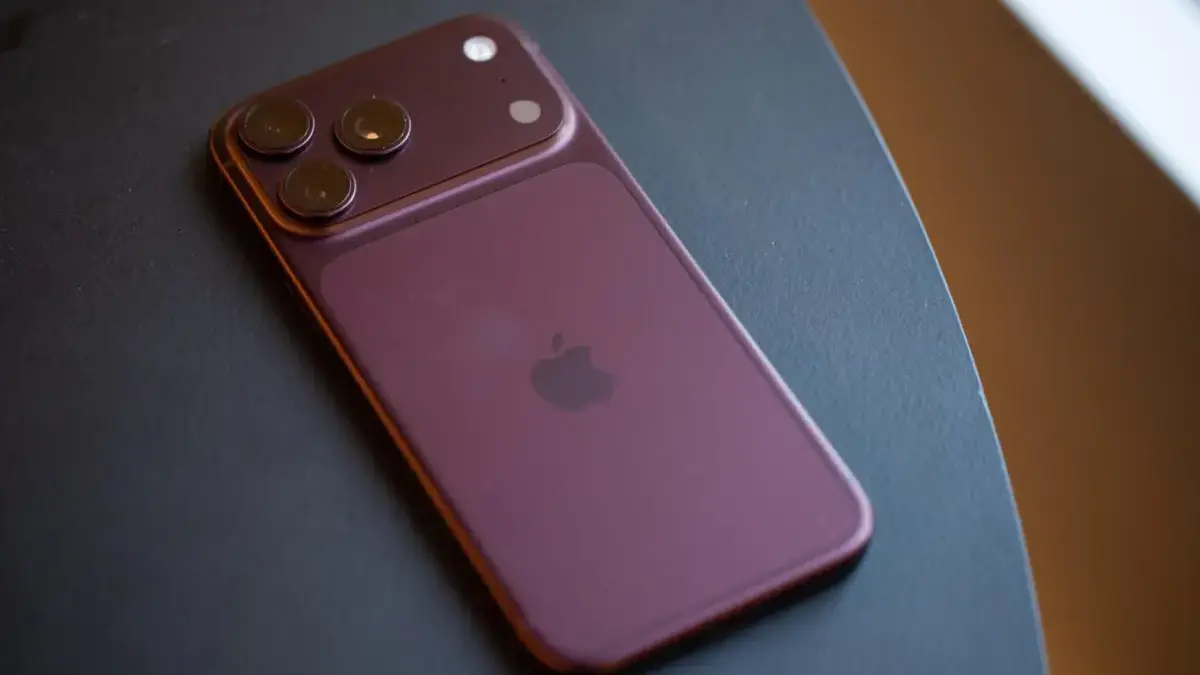
Apple has delivered a record-breaking fourth-quarter earnings report, driven by an exceptional surge in iPhone sales even as the company skipped launching a traditional standard model during its annual product refresh. According to financial figures released by the tech giant on Monday, Apple generated $57.58 billion in iPhone revenue alone, marking a striking 17 percent increase compared to the same period last year.
The dramatic climb in mobile revenue directly follows the September introduction of the iPhone 18 lineup, a refresh that notably departed from past release strategies by featuring exclusively pricier iPhone 18 Pro and Pro Max models. Alongside the rollout of these high-end devices, Apple instituted broad price increases across its older, legacy phone models. While the company also unveiled its highly anticipated first folding phone, the iPhone Duo, during the autumn product cycle, executives confirmed that preorder sales for the foldable device were not factored into this specific earnings report due to timing and launch logistics.
The financial milestone comes at a complex time for the consumer electronics industry. Like many of its competitors, Apple has found itself navigating persistent supply chain constraints and escalating memory component costs. These economic pressures previously prompted the company to implement price hikes across a wide swath of its ecosystem, affecting Mac computers, iPads, home accessories, and the Vision Pro headset.
Addressing analysts and media during a post-earnings interview, Apple CEO John Ternus touched on the hardware cost challenges the company has faced over the past several months. "We saw higher memory costs as compared to the June quarter, and that was partly offset by the benefit of carrying inventory and lower costs on non-memory components," Ternus explained.
These cost-management strategies, combined with consumer demand shifting toward premium tiers, helped bolster the company’s broader financial health. Overall, Apple reported a 12 percent year-over-year increase in total revenue, pushing the company’s earnings for the quarter to an impressive $114.5 billion.

Performance varied across Apple’s diverse hardware and service segments. The Mac division experienced a standout quarter, with revenue surging 24 percent to reach $10.79 billion. Meanwhile, Apple’s massive services division—which encompasses App Store commissions alongside digital subscriptions for platforms like Apple TV and Apple Music—continued its steady expansion, growing to $31.57 billion. Conversely, iPad revenue saw a downturn, declining 10 percent year over year to register $6.23 billion in sales for the quarter.
The strong financial results cap off a remarkably busy several weeks for Apple, during which the company upended product traditions across multiple categories. In addition to its mobile and computer updates, Apple made a aggressive push into the smart home market. The company introduced its very first dedicated smart home display, dubbed HomeView, alongside a comprehensive series of smart home security devices including video doorbells, smart locks, and connected security cameras. These smart home accessories were developed in strategic collaboration with established industrial partners LG and Schneider Electric.
Furthermore, Apple made waves in personal computing by revealing a newly redesigned MacBook Pro featuring an integrated touchscreen—a major design philosophy shift for a company whose executive leadership had famously and publicly resisted touch-enabled laptop displays for over a decade.
Despite the enthusiasm surrounding these new product categories, logistical challenges have accompanied some of the company’s most high-profile launches. In the case of the newly debuted iPhone Duo, Apple faced immediate supply bottlenecks, admitting that it had only a limited number of units available for in-store purchases on launch day. Consequently, high demand and constrained stock pushed estimated shipment dates for online orders deep into the following year.
As Apple looks toward the upcoming holiday shopping season, the exceptional performance of its Pro-only iPhone strategy demonstrates that a significant segment of consumers remains willing to pay a premium for top-tier mobile technology, even amid broader economic headwinds and climbing component costs.