
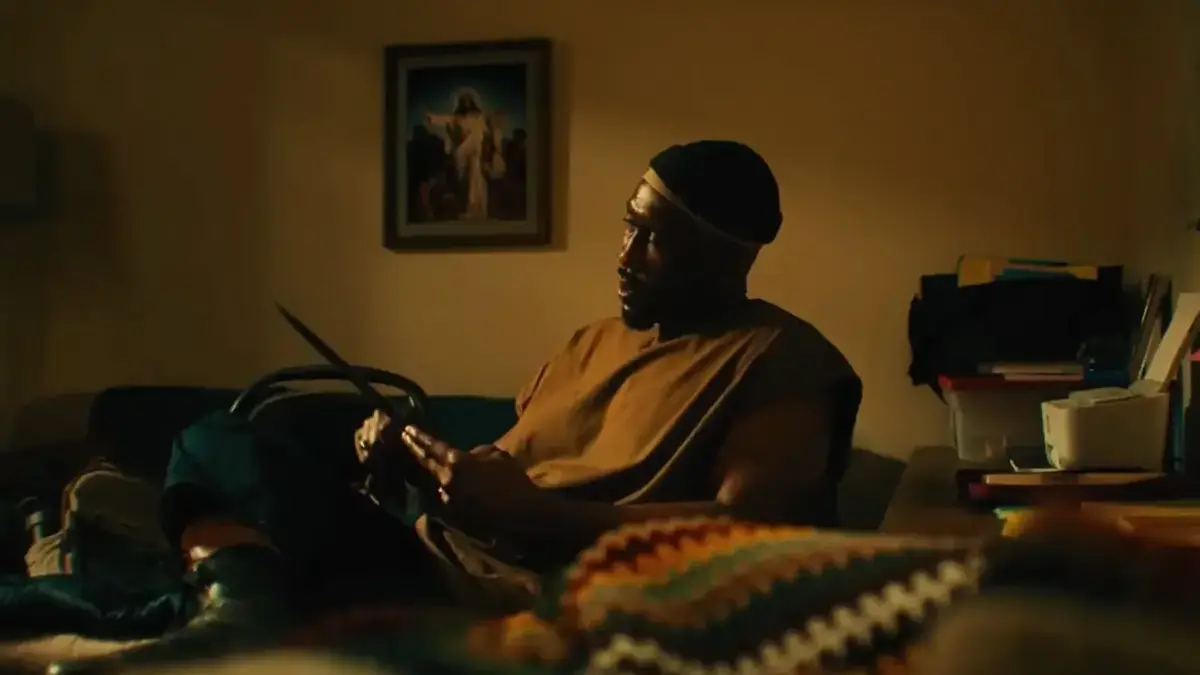
Ahead of its highly anticipated debut at the Toronto International Film Festival, director Bassam Tariq is taking time to reflect on the turbulent, challenging, yet ultimately serendipitous journey that led to his latest cinematic achievement, Your Mother Your Mother Your Mother. Following a high-profile exit from Marvel Studios’ troubled Blade reboot, Tariq and star Mahershala Ali have channeled their shared creative energy into an intensely personal, author-driven project that feels like the film they were always destined to make.
Set against the sprawling backdrop of Texas and deeply immersed in the cultural textures of Islam, Your Mother Your Mother Your Mother follows a Muslim contract killer desperately fighting to protect his children and provide for his newborn baby. The film fluidly oscillates between intimate, grounded family drama and visceral, high-octane action sequences reminiscent of modern masterworks like the John Wick franchise. For both Tariq and Ali, the picture represents far more than a simple redemption arc; it stands as a testament to creative independence following the immense pressure and ultimate dissolution of their collaboration within the Marvel Cinematic Universe.
As the film prepares for its world premiere at TIFF ahead of its September 25 theatrical release, Tariq opened up about the deeply personal process of crafting a movie that functions simultaneously as a domestic family portrait and an adrenaline-fueled thriller. Ranging from artistic inspirations like Lynne Ramsay to unexpected video game influences such as Shenmue and Chrono Trigger, the filmmaker discussed how stepping away from a major studio franchise opened the door to a richer, more authentic artistic voice.
Finding the Muse: A Creative Synergy With Mahershala Ali
The connection between a director and a leading actor is often the foundational bedrock of any successful film, but in the case of Your Mother Your Mother Your Mother, that bond proved uniquely potent. Tariq explains that having a specific muse in mind during the writing phase fundamentally shaped the DNA of the project, drawing a parallel to acclaimed filmmaker Lynne Ramsay.
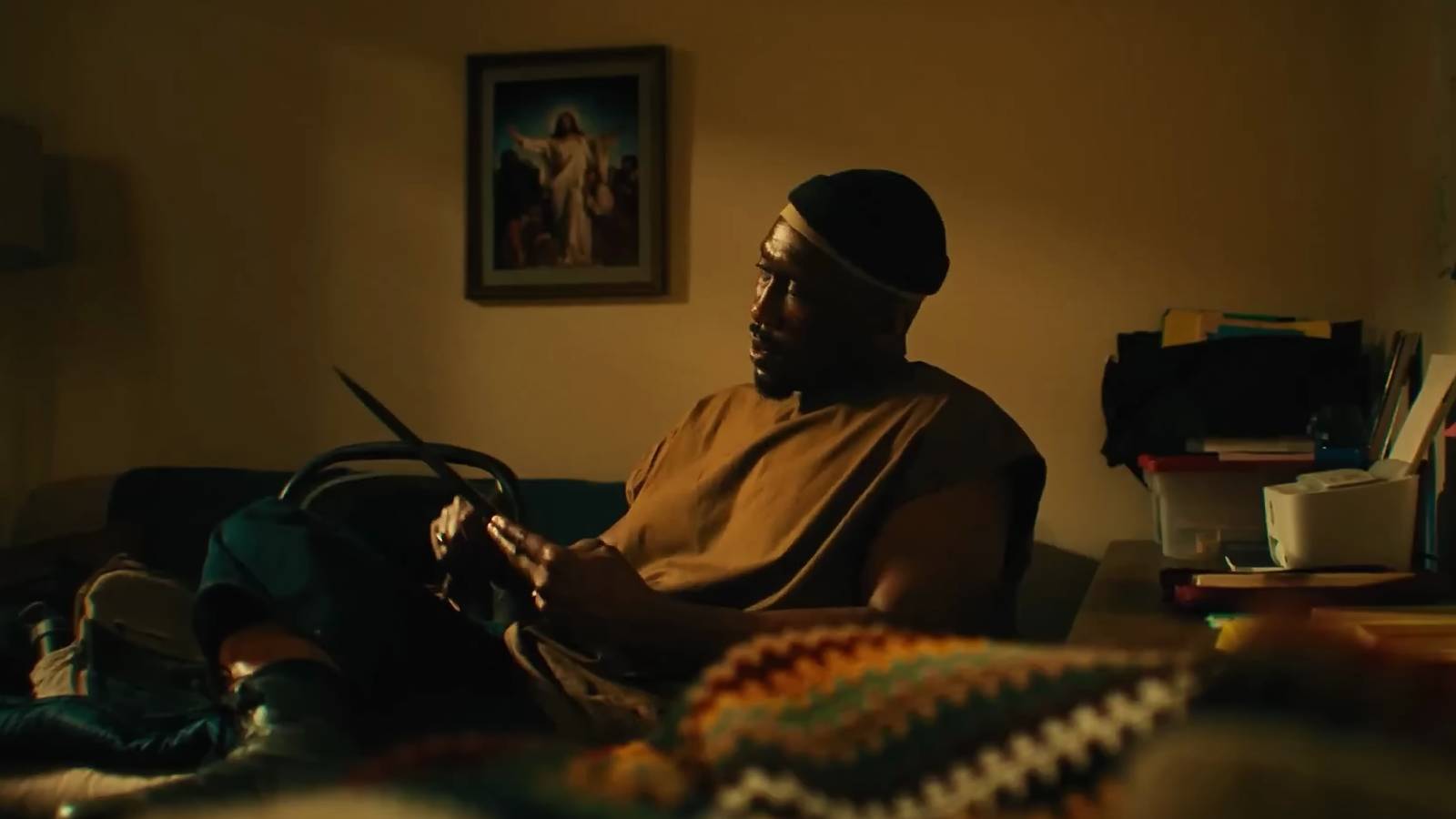
"Film is so collaborative, dude. It’s so incredibly collaborative, and I think you need a muse," Tariq says, recalling how Ramsay famously kept a desktop photograph of Joaquin Phoenix on her screen while writing You Were Never Really Here. "Only he could have been in that movie, and you could tell."
Similarly, Tariq found himself writing his script with Mahershala Ali firmly in mind from the earliest drafts, going so far as to omit the character’s name entirely and simply type "Mahershala" on the page—long before the two men had even met in person. The writing process began during the pandemic shutdown, well before Tariq was attached to direct Marvel’s Blade.
The two eventually met face-to-face at a vegan restaurant in Los Angeles while still navigating the early stages of development on Blade. According to Tariq, the meeting served as a vital vibe check to evaluate whether they shared the same wavelength and creative ambitions. The mutual realization was instantaneous: they had to make something together.
The Pivot From Marvel to Independent Author-Driven Cinema
When the planned Blade project ultimately fell apart, the industry speculated heavily on the fallout. However, Tariq views the pivot not as a setback, but as a miraculous turning point that forced him to look inward.

"The big learning in this for me was… I’m a writer and I love to write," Tariq reflects. Writing the screenplay for Your Mother Your Mother Your Mother became a therapeutic and clarifying exercise, helping him work through personal challenges as a parent, a husband, and a creator trying to navigate the demands of professional filmmaking. When the studio machinery ground to a halt, the sudden stillness provided the space needed to find emotional clarity and creative confidence.
Rather than engaging in public discourse or online speculation following his departure from Marvel, Tariq chose to heed the wisdom of artist Kara Walker, who famously noted that she puts her outrage into her art. Rather than wasting energy arguing online, Tariq focused entirely on the work, trusting that it would ultimately speak for itself.
Reflecting on the structural differences between studio filmmaking and independent auteur projects, Tariq acknowledges the brilliance of Marvel Studios head Kevin Feige and the overarching machine he has built. However, he also highlights the fundamental distinction in creative ownership.
"When you’re in [Marvel’s] system, and it’s a really good system, they even tell you: ‘You’re doing a film for Marvel.’ It’s not a film by Bassam Tariq. It’s a Marvel film that Bassam Tariq is directing. It’s Kevin’s show — and that’s amazing," Tariq notes. In contrast, having total control over a deeply personal script allows a filmmaker to establish a distinct voice, a clear perspective, and a precise visual language.

Crafting Latif: Grounded Authenticity and Cultural Immersion
When Mahershala Ali officially boarded the project, the character of Latif began to evolve organically through collaborative script readings, dialect discussions, and physical character work. Ali adopted a very specific physical gait and a deliberate southern drawl, allowing his words to casually fall into one another. Drawing from Tariq’s upbringing between New York and Houston, alongside Ali’s own familial ties to the American South, the two creators pulled inspiration directly from the people and communities they knew best.
Furthermore, Ali’s identity as a Muslim filmmaker brought an invaluable layer of shorthand to the production. As Tariq points out, much of his career as a Muslim director has involved explaining cultural practices, religious gestures, and specific spatial orientations to collaborators. Working alongside Ali eliminated the need for exhaustive exposition. On set, a simple glance between the director and star was often all it took to signal mutual understanding.
This commitment to authenticity extends seamlessly into the film’s narrative structure. Eschewing heavy-handed anthropology or overly explanatory exposition, the movie immerses viewers directly into Latif’s world—transitioning fluidly from a mosque to a family home, from a strip club back to school among daily prayers.
Tariq credits Orion studio head Alana Mayo with supporting this blunt, effortless approach to storytelling. Moreover, Tariq expresses profound faith in the intelligence of contemporary audiences, drawing an unexpected parallel to modern gaming culture. Referencing the lore-heavy, fragmented storytelling found in video games like Five Nights at Freddy’s, Tariq notes that viewers do not need to be spoon-fed every detail of a universe. When audiences are treated as intelligent participants, they are encouraged to engage actively, learn independently, and piece together the narrative themselves rather than sitting through a cinematic equivalent of an after-school special.

The Surprising Influence of Video Game Open-World Storytelling
The film’s unique rhythm—elegantly sliding from quiet, mundane domestic moments into explosive, high-stakes combat—shares a surprising kinship with open-world video game design. Tariq openly acknowledges his deep-seated love for gaming, citing classic titles like Chrono Trigger and Sega’s cult-classic Dreamcast release, Shenmue.
"My favorite game is Chrono Trigger. I also loved that game on the Dreamcast that everyone really hated… Shenmue? I loved the first Shenmue," Tariq shares. He found himself deeply moved by the emotional journey of a character learning how to fight while simultaneously navigating the banality of everyday life, such as working mundane jobs on a forklift.
By grounding the character in the quiet routines of daily existence, the eventual combat sequences carry significantly more emotional weight, making the action feel alive and ensuring that viewers remain deeply invested in the character’s survival.
Your Mother Your Mother Your Mother opens in theaters on September 25.


Leave a Reply