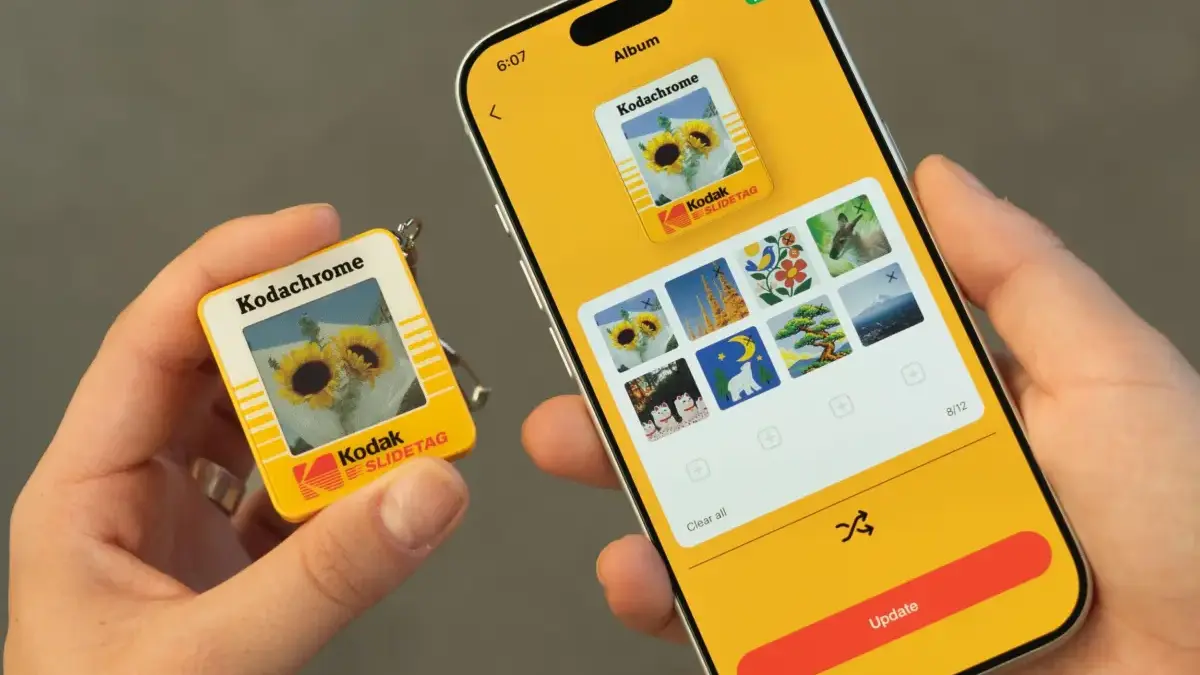
Reto, the company known for bringing whimsical, nostalgic hardware back into the modern hands of photography enthusiasts, is expanding its product ecosystem once again. Following the success of its ultra-compact Kodak Charmera digital cameras—including a Millennium Edition featuring Y2K-inspired designs released earlier this year—the manufacturer is introducing a brand-new gadget that bridges the gap between retro aesthetic memorabilia and modern utility. The new Kodak SlideTag functions primarily as a miniature digital photo frame styled after vintage film slides, but with a clever twist: it doubles as a fully functional Bluetooth item tracker compatible with major device-finding ecosystems.
While the original Charmera lineup was limited strictly to snapping grainy, low-resolution photographs and brief, low-quality video clips, the SlideTag pushes the hardware category a step further. By combining a personal display with location-tracking technology, Reto is targeting consumers who appreciate novelty tech that still offers a practical everyday purpose. Priced at $34.99 individually, the SlideTag is positioned as an accessible, playful gadget, though it retains the collectible blind-box distribution model that has defined Reto’s previous camera releases.

For buyers who prefer not to gamble on mystery packaging, Kodak is also offering a complete collection set containing all eight standard vintage designs for $279.92. However, hunting through the individual mystery boxes holds its own allure for collectors, as each single box carries a chance of uncovering a rare ninth "secret edition" featuring an exclusive, sleek metallic finish. This strategy mirrors the collectible culture surrounding modern art toys and blind-bag merchandise, successfully merging consumer electronics with trend-driven hobbyist collecting.
The visual design of the SlideTag is a deliberate homage to the analog photography era. For those who grew up before the era of smartphones—when handheld projectors and physical transparencies were standard tools for sharing vacation photos—the SlideTag is engineered to look like a modernized physical film slide. Instead of utilizing traditional transparent celluloid film, however, the device incorporates a contemporary 1.54-inch color E Ink screen. This specialized display mixes six distinct colored inks to render images at a crisp resolution of 240 by 240 pixels.
While the color reproduction achieved by the six-ink E Ink panel cannot match the vibrant luminance or deep contrast levels of a modern smartphone’s LCD or OLED screen, it offers its own distinct visual charm. The matte, paper-like aesthetic of the E Ink technology lends the displayed images a soft, authentic texture that aligns well with the retro branding of the Kodak name. Furthermore, the E Ink screen is remarkably power-efficient, retaining its image even when the device’s internal power is cut.

Users can easily transfer and manage images on the SlideTag using a mobile device running Kodak’s dedicated Memory Link application. Through a Bluetooth connection, the device can hold and cycle through a playlist of up to 12 personal photographs. Beyond displaying cherished snapshots, the versatile little screen can also be programmed to showcase practical information. Owners can use the SlideTag to display a brief to-do list, essential contact details for emergencies, a running countdown timer, or even a customized QR code that directs anyone who scans it to a website, social media profile, or digital contact card of the owner’s choosing.
As a utility tracker, the SlideTag occupies a slightly different tier than industry-standard dedicated item locators like the Apple AirTag or Google’s Pixel Tag. Advanced tracking devices often incorporate sophisticated hardware features such as ultra-wideband (UWB) technology and Channel Sounding to provide precise, directional guidance down to the exact inch. The SlideTag, by contrast, relies on more standard, reliable Bluetooth connectivity. It offers an open-air range of up to 30 meters, allowing users to locate misplaced keys, bags, or items within a home or office environment. To assist when searching at close range, the device is equipped with a 75-decibel internal buzzer that can emit an audible alert when triggered from a smartphone.
Compatibility is a strong suit for the new tracker. The SlideTag integrates seamlessly with either Apple’s expansive Find My network or Google’s Find Hub tracking network, ensuring that users across both major mobile ecosystems can leverage crowd-sourced location tracking if an item is lost further away. Powering the device is a standard CR2032 coin cell battery, a ubiquitous and inexpensive power source that makes user maintenance straightforward. Because battery longevity will naturally fluctuate depending on how frequently the tracking network pings the device or how often the user refreshes the images on the E Ink screen, the ease of replacing a coin cell battery ensures the SlideTag can remain in active service for a long time without requiring specialized charging cables or downtime.