
For years, Xiaomi has made waves across the consumer technology landscape through smart home appliances, connected vehicles, and Leica-powered smartphone cameras. Yet, for consumers outside of mainland China, folding phones have largely remained absent from that equation. Despite quietly releasing foldables since 2021—experimenting with both flip and book-style form factors to determine precisely what users demand—the company’s latest iteration follows a familiar regional pattern.
Much like Samsung’s Galaxy Z Fold 8 and Apple’s newly introduced iPhone Duo, the search for the ideal foldable footprint has led Xiaomi to the passport-style Xiaomi 18 Fold. Launched mere days after Apple unveiled its own wide foldable, the 18 Fold is uniquely Xiaomi in both brilliant and frustrating ways. It feels immediately familiar due to its geometric symmetry with competitors, yet it successfully resolves several major design and hardware complaints traditionally associated with both Apple and Samsung’s folding lineups.
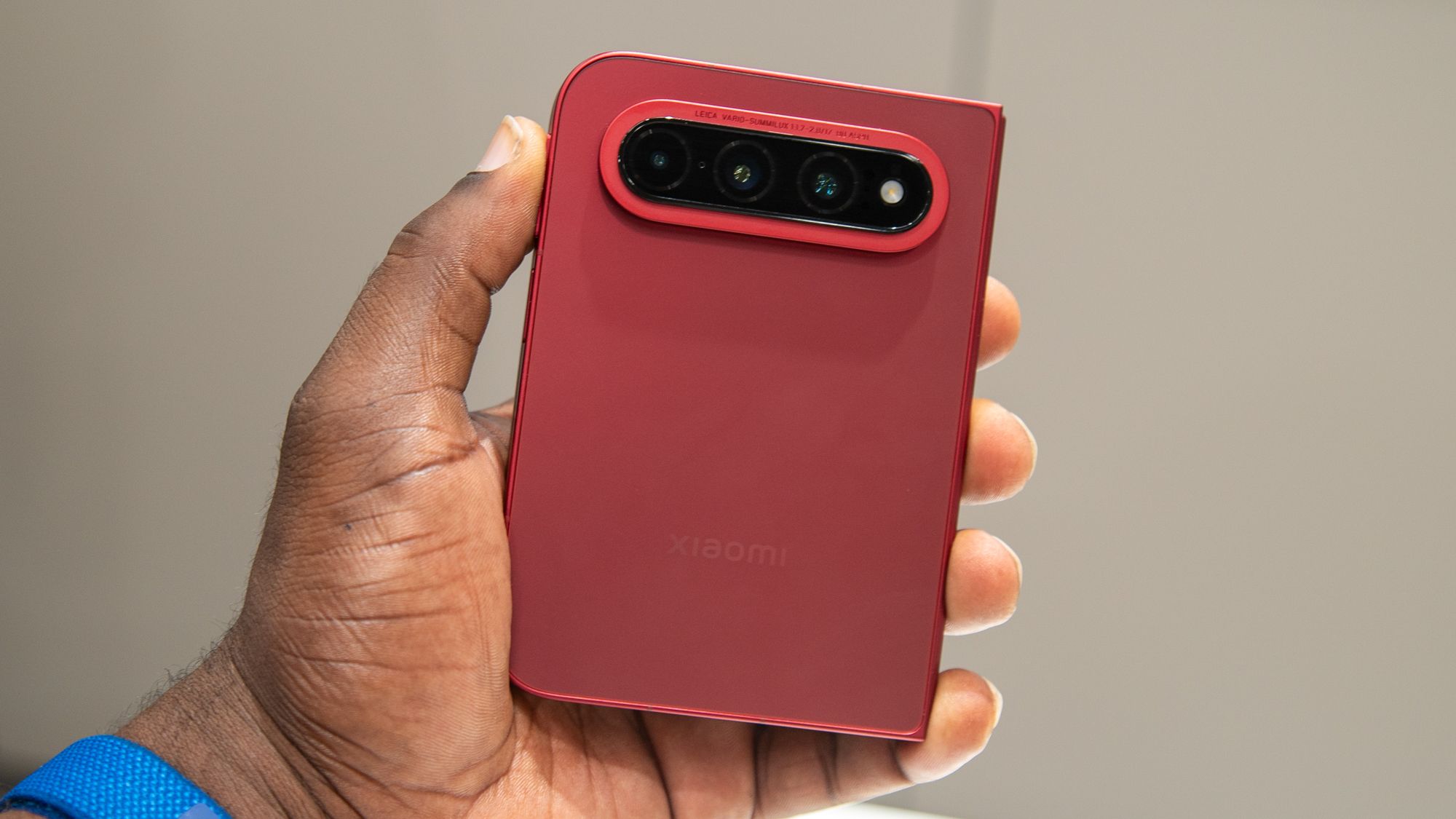
Both major rivals have long set a precedent that passport-style foldables require consumers to accept compromises compared to traditional slab flagships. While Xiaomi had to make strategic choices of its own, it focused its engineering efforts in the right places: battery capacity and camera technology. Instead of settling for a smaller power cell to maintain a slim profile, the 18 Fold features a massive 6,000mAh silicon-carbon battery, representing the largest capacity currently available in this specific form factor. Furthermore, rather than utilizing a restricted dual-lens setup that omits dedicated optical zoom, Xiaomi managed to squeeze a flagship Leica triple-camera array into the chassis, complete with a 200-megapixel main sensor and a 3.5x optical periscope telephoto lens.
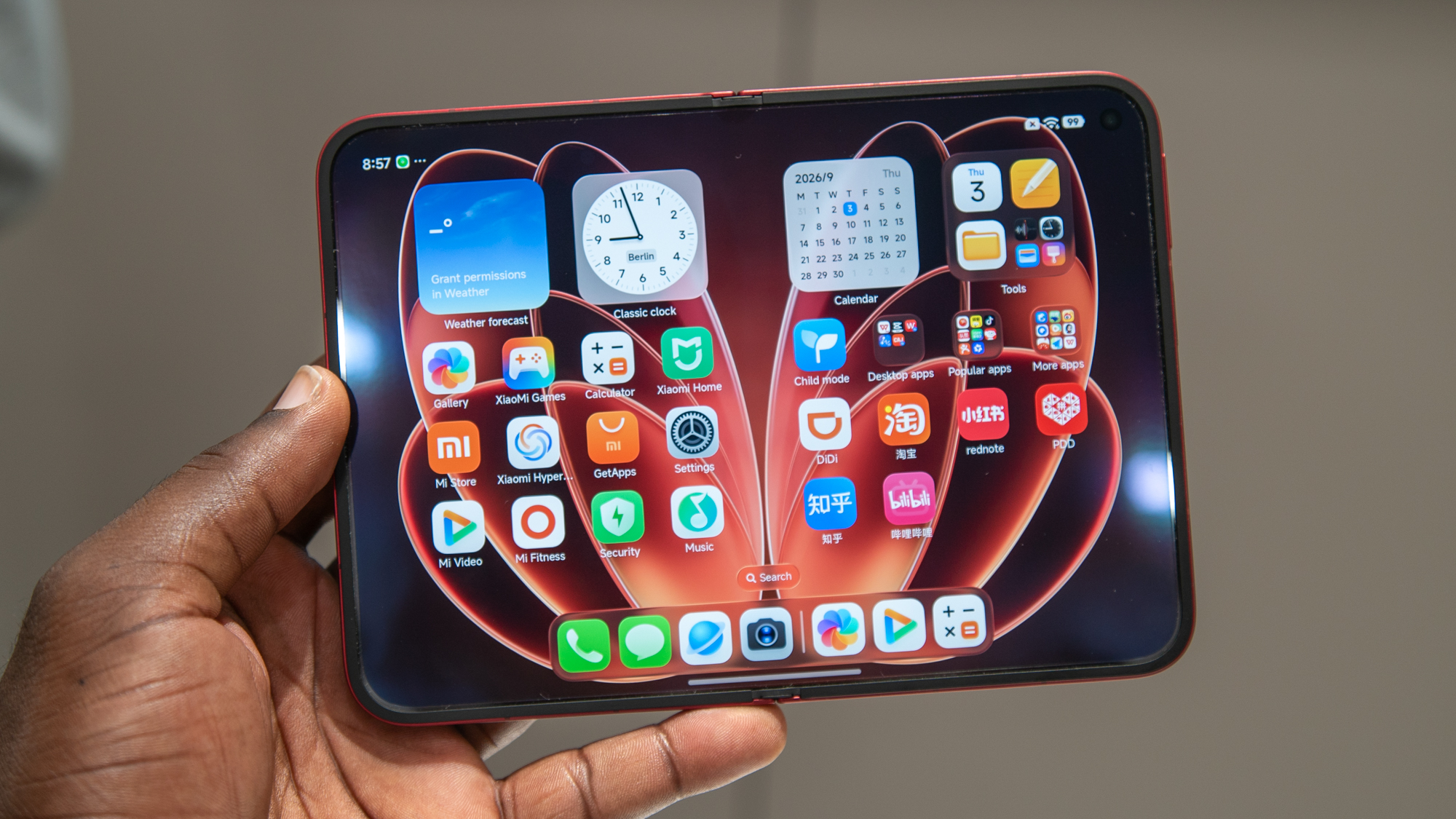
However, the reverse side of this engineering coin also holds true. Xiaomi’s hardware-first research and development focus—combined with its current lack of a global release schedule—means that HyperOS 4 lacks the user experience refinement and Western localization that competing brands prioritize. To its credit, Xiaomi has made it relatively straightforward to install essential Google services and the Google Play Store, and its approach to split-screen multitasking is genuinely innovative. Still, several daily essentials fail to function as intended, and power-user staples such as a dedicated desktop mode are missing despite hardware support for wired display output.
In essence, the Xiaomi 18 Fold pairs arguably the best physical hardware found in any passport-style foldable with a software ecosystem that falls short in familiar, region-locked ways. It presents tech enthusiasts with a classic dilemma: do you demand the absolute best hardware available on the market, or are you willing to accept slightly lesser hardware in exchange for a significantly more refined, globally supported software experience? For hardware enthusiasts, the appeal of Xiaomi’s engineering is undeniable, though the exceptional execution of rivals like the iPhone Duo makes the competition much closer than previously anticipated.
Xiaomi 18 Fold Price, Specs, and Availability
In mainland China, the Xiaomi 18 Fold carries a starting price of 10,999 yuan, which translates to roughly $1,640. This aggressive pricing undercuts both the $1,899 Galaxy Z Fold 8 and the $1,999 iPhone Duo on paper, though grey-market import markups quickly eat into those potential savings for international buyers.
Frustratingly, while Xiaomi hosted a major global launch event for the standard Xiaomi 18 Pro and 18 Pro Max flagships, the 18 Fold was conspicuously left behind as a China-only release. While this strategy may shift during future product cycles, the Xiaomi 18 Fold appears destined to remain restricted to its domestic market for the foreseeable future, forcing international enthusiasts to rely on third-party importers if they wish to experience the hardware firsthand.
Design, Hinge, and Ergonomics
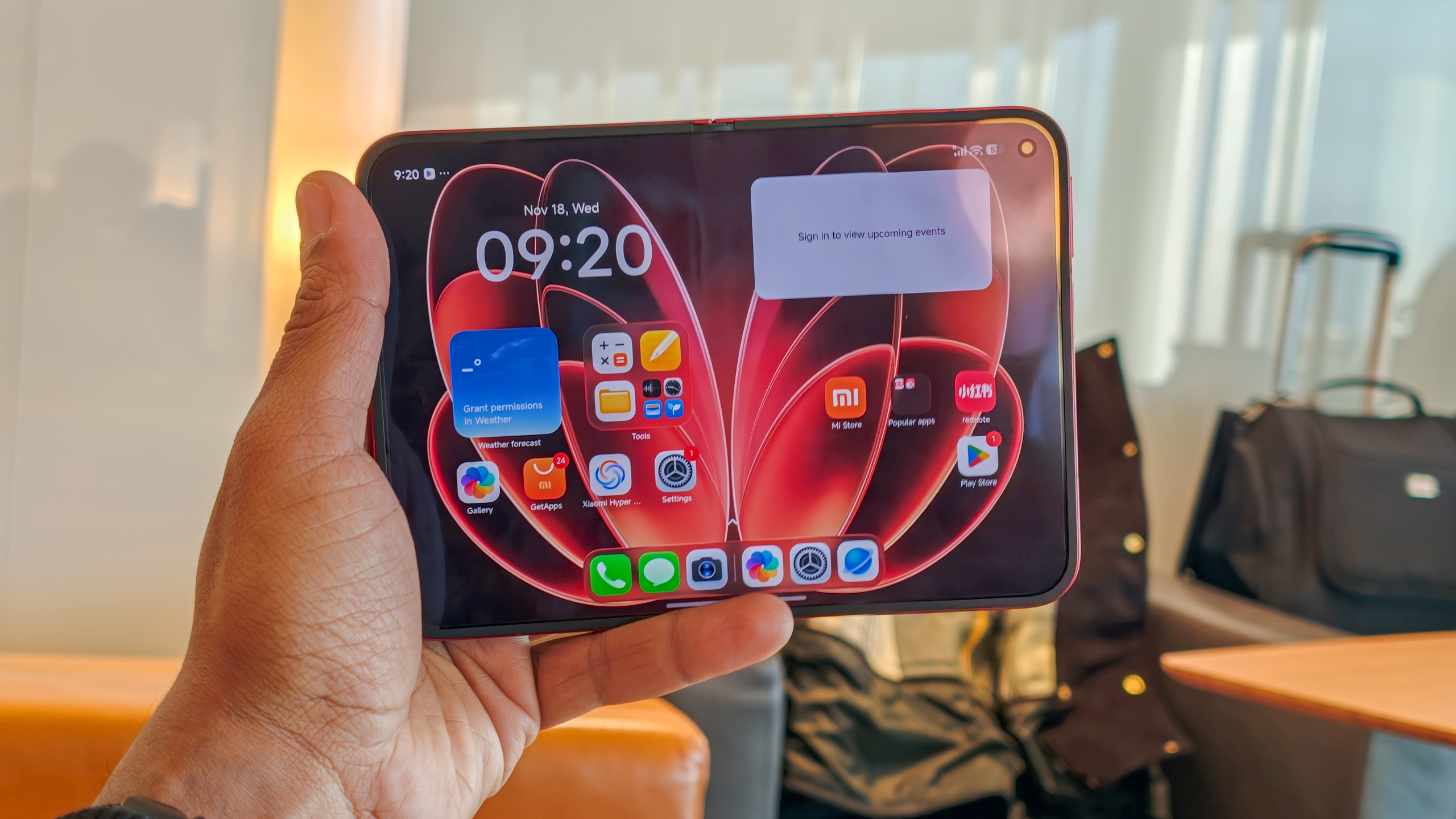
Picking up the Xiaomi 18 Fold immediately followed by the iPhone Duo highlights a striking difference in weight. At 219 grams, Xiaomi’s foldable is a full 35 grams lighter than Apple’s first folding device and only 18 grams heavier than the Galaxy Z Fold 8, an impressive feat considering it houses a massive battery and complex periscope optics. Finished in a striking matte Nishino Red glass set against a dark metal frame, the device looks and feels every bit like a premium flagship smartphone.
Evaluating raw thickness alone sells Xiaomi’s engineering short. When calculating total folded volume, the Xiaomi 18 Fold occupies roughly 6 percent less physical space than the iPhone Duo and even edges out the razor-thin, tall-bodied Oppo Find N6. Only the Galaxy Z Fold 8 and Honor Magic V6 feature smaller overall footprints, and neither of those competitors offers the combination of a 6,000mAh battery and a periscope telephoto lens inside a pocket-friendly, passport-style chassis.
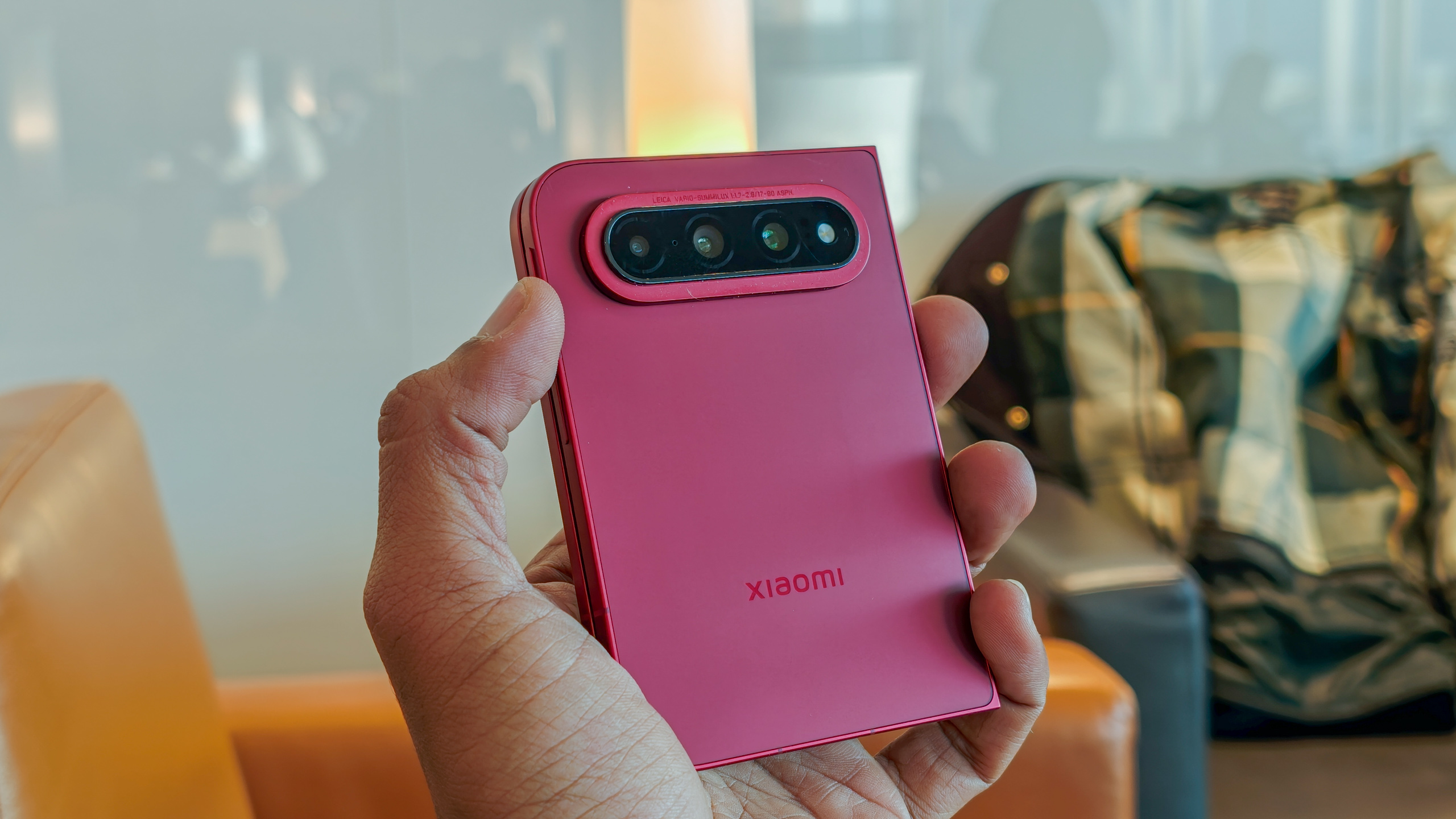
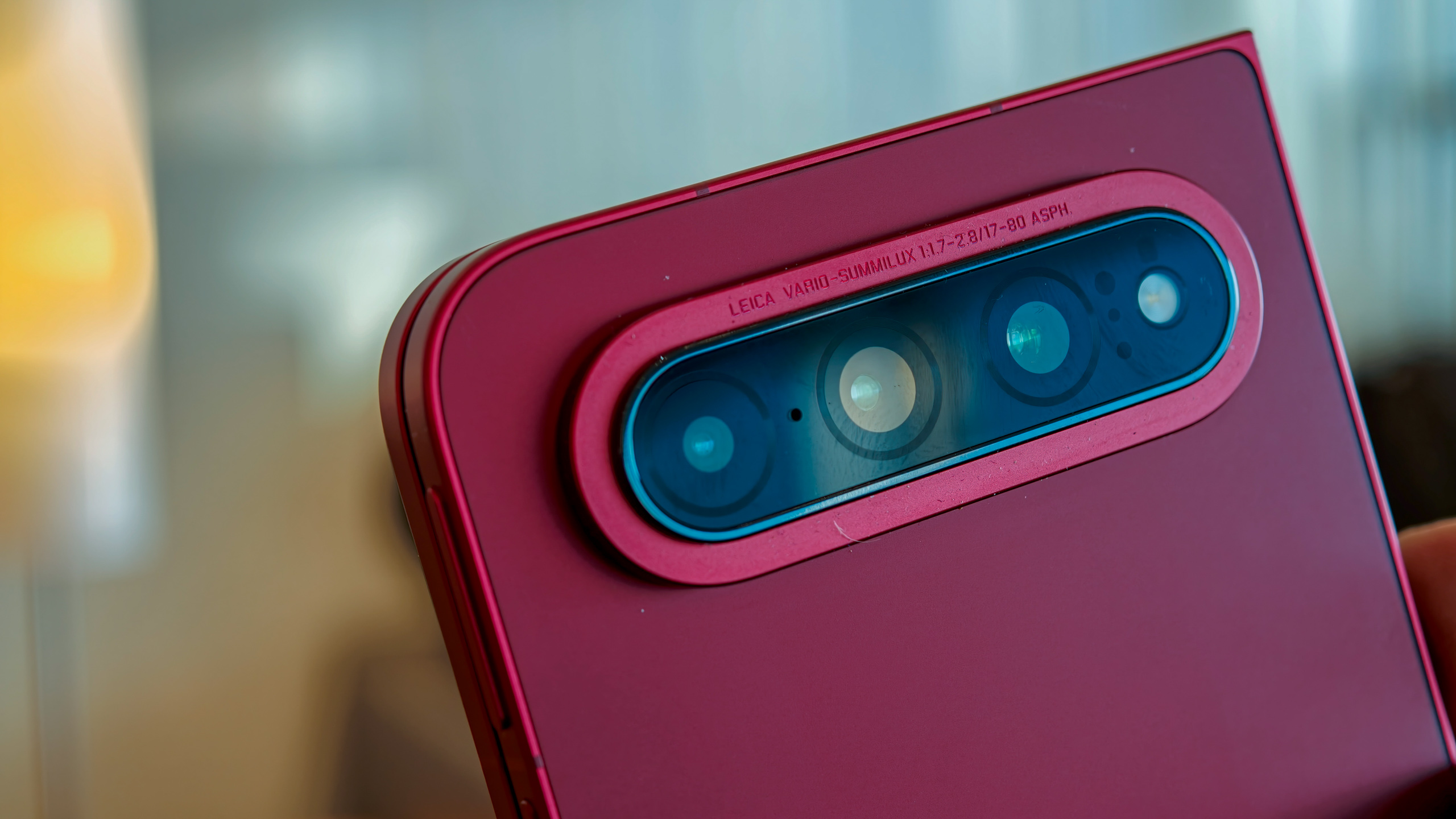
Even the wide horizontal camera bar works to the device’s ergonomic advantage. Rather than acting as an obstruction, that prominent housing doubles as a natural finger rest and grip mount, providing the index finger with a solid ledge to anchor against when holding the phone unfolded in portrait mode.
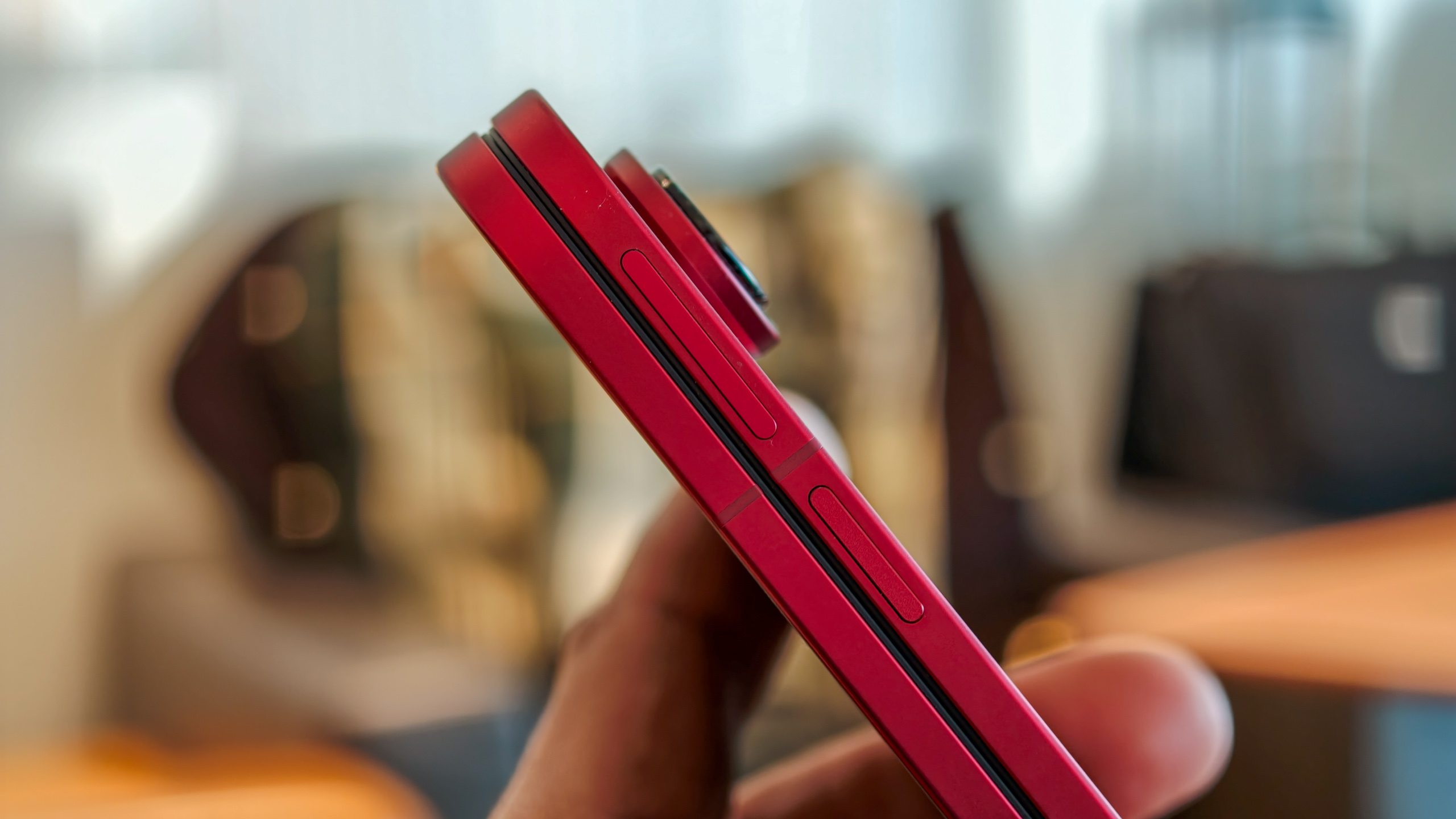
The keel hinge feels sturdy and reassuring, though it lacks the crisp magnetic snap of the iPhone Duo and retains fewer intermediate flex angles. Unlocking the device is fast and reliable using either the side-mounted capacitive fingerprint reader or basic 2D face unlock—a convenient biometric option that Apple notably omitted from the Duo.
Naturally, trade-offs exist within a body that measures a mere 5.02mm thin when unfolded. The stereo speakers get remarkably loud, but they lack low-end warmth and sound noticeably tinny and treble-heavy compared to the acoustic output of Samsung and Apple devices. Furthermore, unlike the iPhone Duo, the 18 Fold lacks active stylus support, and its IP58 water-resistance rating means it handles accidental splashes and water submersion well, but it does not offer the complete dust ingress protection found on the iPhone Duo.
Displays
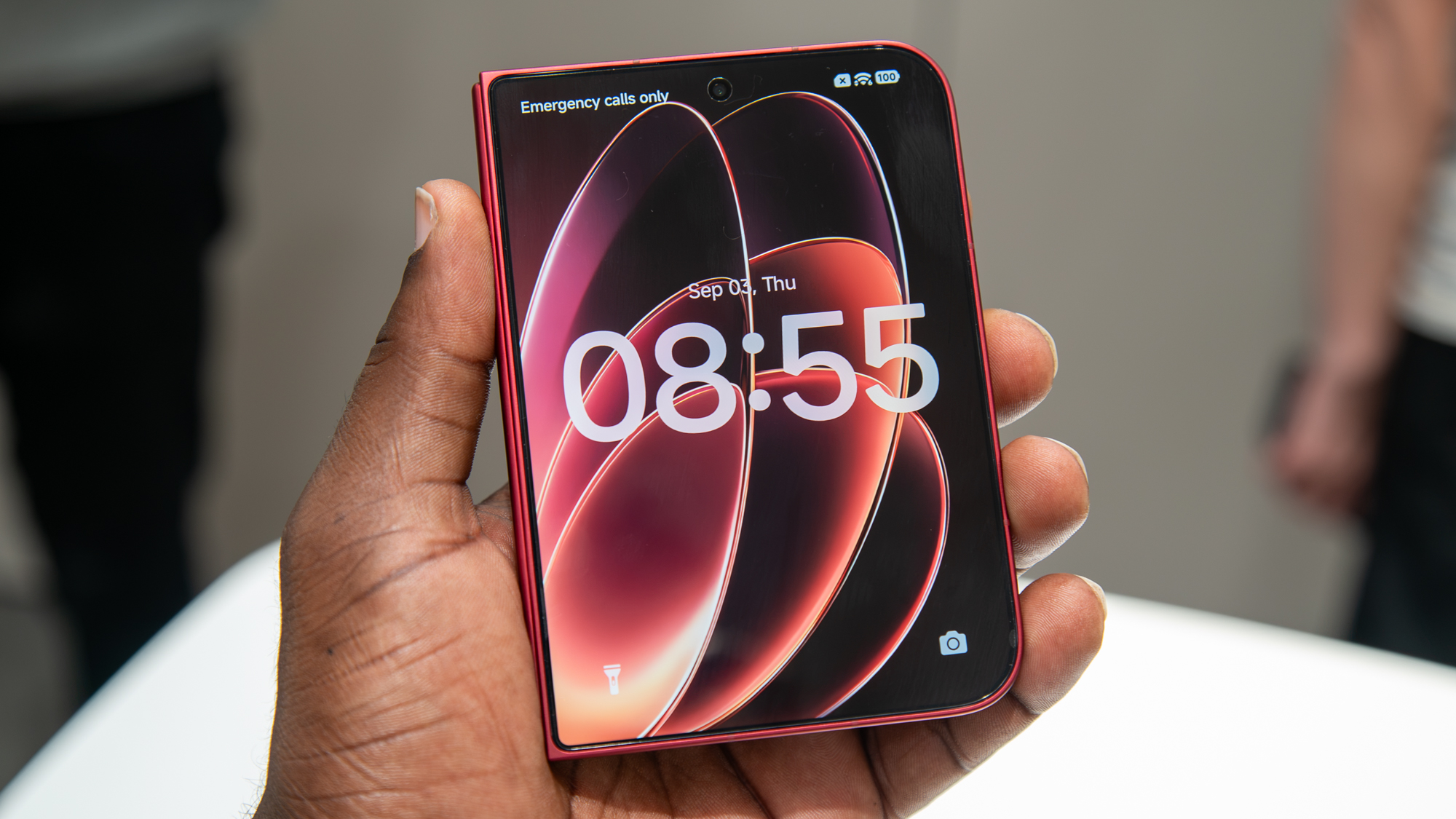
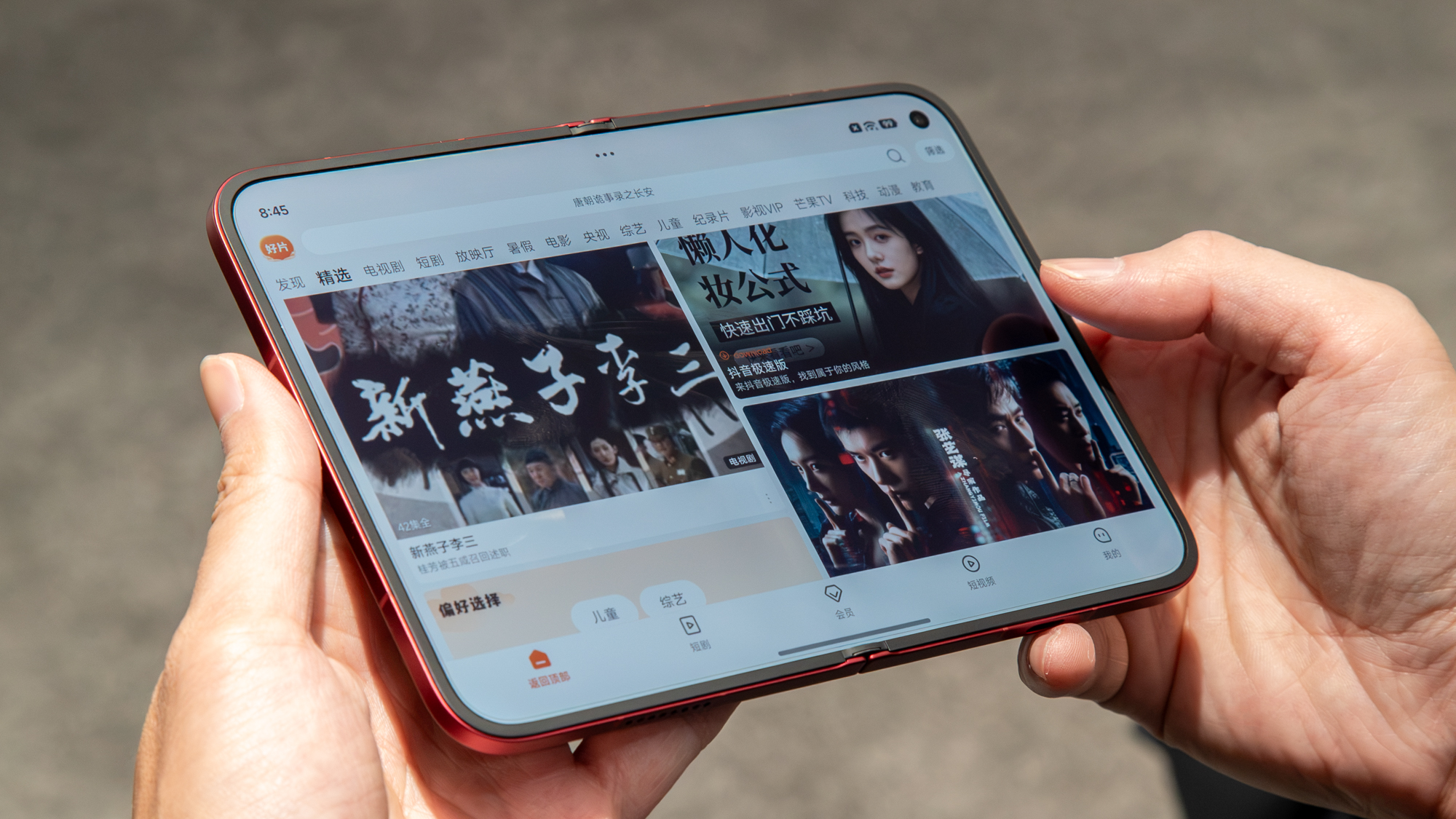
Like the Galaxy Z Fold 8 and iPhone Duo, the wider passport aspect ratio fundamentally transforms the usability of the 18 Fold when closed. The 5.38-inch cover screen is wide enough to allow for comfortable two-thumb typing without feeling cramped. While it leans slightly wide for optimal single-handed operation, it remains entirely manageable, though the heavily rounded outer corners cut marginally deeper into usable corner display real estate than the squared-off edges of the iPhone Duo.
Unfolding the device reveals a stunning 7.58-inch inner OLED display. With HDR peak brightness levels pushing well past 3,700 nits, outdoor visibility under harsh sunlight presents no noticeable issues.
As for the physical display crease, Xiaomi relies on a mechanical hinge design rather than deploying optical illusion tricks like Apple. Consequently, the crease virtually disappears when viewed straight-on, though it remains visible at sharper viewing angles. Additionally, users with sensitive eyes may notice low-brightness PWM flicker during late-night reading sessions.
Performance and Battery Life
The Xiaomi 18 Fold breaks new ground as the first smartphone powered by Xiaomi’s proprietary, in-house 3nm XRing O3 flagship processor, paired with 16GB of LPDDR6 RAM. In everyday usage, the device is blisteringly fast, smoothly navigating rapid camera processing routines and split-screen multitasking workflows without stuttering. However, pushing the hardware hard with sustained 3D gaming sessions or prolonged video recording causes the upper half of the thin chassis to warm up noticeably.
Whatever minor thermal compromises the XRing O3 processor introduces, the massive 6,000mAh silicon-carbon battery easily renders them irrelevant. Battery endurance is class-leading, effortlessly clearing a full day of heavy testing. The relatively compact exterior display dimensions help moderate overall power draw, resulting in the most impressive battery longevity seen on a passport-style foldable to date.
When a recharge is required, the included 67W wired charging brick replenishes the battery to 50 percent in just 19 minutes, achieving a full charge in roughly 50 minutes. Additionally, 50W wireless charging support enables rapid power replenishment without the need for cables.
Cameras
Xiaomi’s hardware-focused research and development strategy shines most brightly on the rear camera island. While Apple and Samsung both chose to omit an optical telephoto lens on their passport foldables, Xiaomi successfully packed a 200-megapixel main sensor, a 50-megapixel ultrawide lens, and a dedicated 50-megapixel 3.5x optical periscope telephoto lens into the 18 Fold.
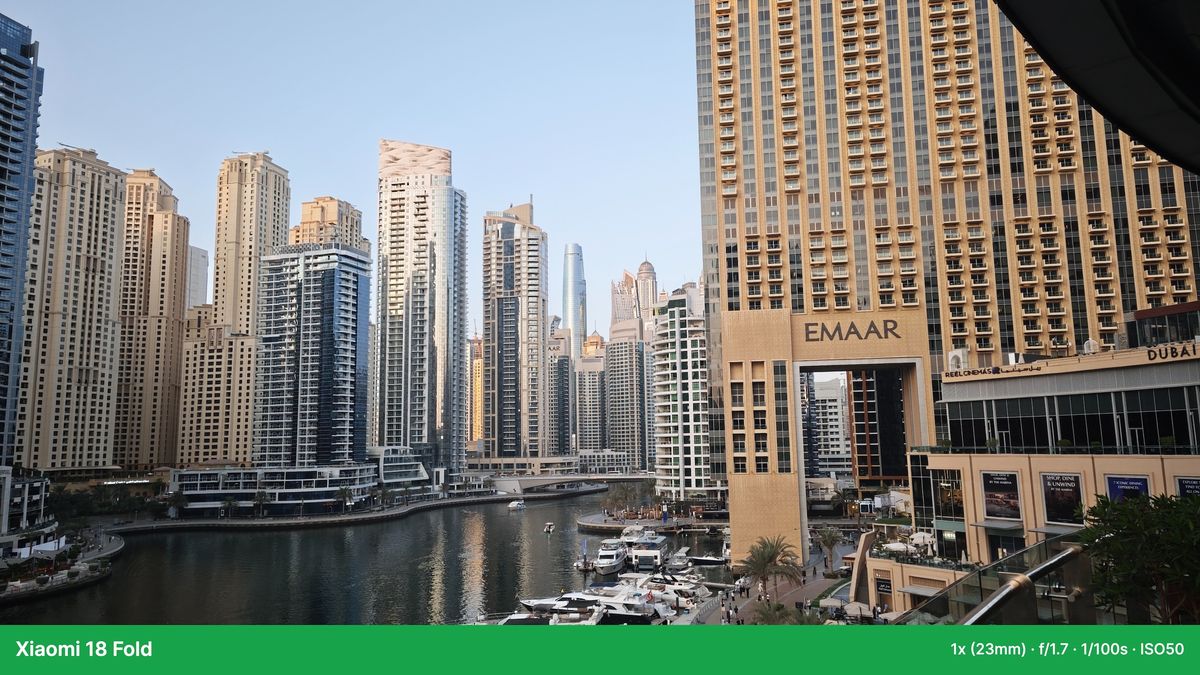
In direct photographic comparisons, that periscope lens proves to be a decisive differentiator. Across zoom levels ranging from 3x all the way past 30x, the 18 Fold resolves genuine optical detail in scenarios where competing devices smear images into digital noise. Combined with Leica Vibrant color tuning and disciplined low-light metering, it stands out as the most consistent photographic tool among the current generation of passport-style foldables.
The only minor camera compromises involve a slightly narrower 17mm ultrawide lens that crops images tighter than its rivals and a cover selfie lens that occasionally suffers from lens flare when shooting in harsh backlighting. Otherwise, this is the closest a folding device has come to delivering a true, uncompromised flagship camera system.
Software: Held Back by Borders
Living with HyperOS 4, built upon Android 17, is ultimately an exercise in contradictions. Stripped of import context, the software is genuinely pleasant to use on a daily basis; animations are fluid, and the user interface feels snappy and responsive.
Xiaomi’s six-app horizontal multitasking strip allows users to line up three full-height window panes simultaneously while swiping across a half-dozen open background applications. It is a technically impressive implementation that rivals Oppo’s software ecosystem for the best multitasking experience available on a foldable device.
HyperOS 4 also makes installing Google services straightforward, as the underlying frameworks are included out of the box, allowing applications like the Google Play Store and Gemini to run smoothly. However, because the device is built exclusively for the mainland Chinese market, several deeply integrated Android features fail during everyday usage. Users cannot swap the default system assistant to launch Gemini, nor can they change the system-wide default web browser to Google Chrome.
Furthermore, Google services exhibit intermittent regional quirks. The Find Hub tracking service recognizes the device exists but consistently fails to pinpoint its geographical location, even after every background permission is granted. Similarly, Google’s two-factor authentication prompts—which typically ask users to verify a login by tapping an existing Android device—fail to trigger on the 18 Fold.
Additional long-standing issues typical of China-only devices persist. Android Auto is entirely unsupported, and like many regional models, there is no hardware or software provision for eSIM connectivity, a limitation largely enforced by domestic telecommunications regulations. Despite supporting wired video output over USB-C, Xiaomi continues to omit a native desktop mode, and third-party application scaling occasionally leaves awkward pillarbox borders on the unconventional display aspect ratio.
Should You Buy the Xiaomi 18 Fold?
For consumers who prioritize absolute hardware excellence in a folding phone of this size and who are fully prepared to navigate software compromises and regional compatibility issues, the Xiaomi 18 Fold represents a remarkable engineering achievement. By pairing a pocketable 219-gram passport chassis with a 6,000mAh battery and a Leica periscope camera system, Xiaomi has demonstrated that form-factor compromises are not mandatory for wide foldables.
Ultimately, buyers face a definitive choice. For those residing in mainland China, or for dedicated enthusiasts willing to import a device and live without Android Auto, eSIM functionality, and Find Hub tracking, this stands as one of the finest pieces of folding hardware available on the global market.
For everyone else, alternative options remain the safer, far better-integrated daily drivers, even if their physical hardware is considerably less ambitious—at least until Xiaomi eventually extends its flagship foldable hardware to a fully supported global software release.