Tech giant Apple is facing a high-stakes legal battle in India, where a U.S.-based startup has filed a massive lawsuit alleging that the iPhone maker’s popular NameDrop feature infringes upon its patented technology. GG Technologies, the California-headquartered startup behind the contact-sharing application StayTouch, has asked the Bombay High Court to award ₹15 billion, equivalent to roughly $161.86 million, in damages. In addition to the substantial financial penalty, the startup is seeking a judicial injunction that would heavily restrict Apple from distributing devices equipped with the disputed functionality across the South Asian nation.
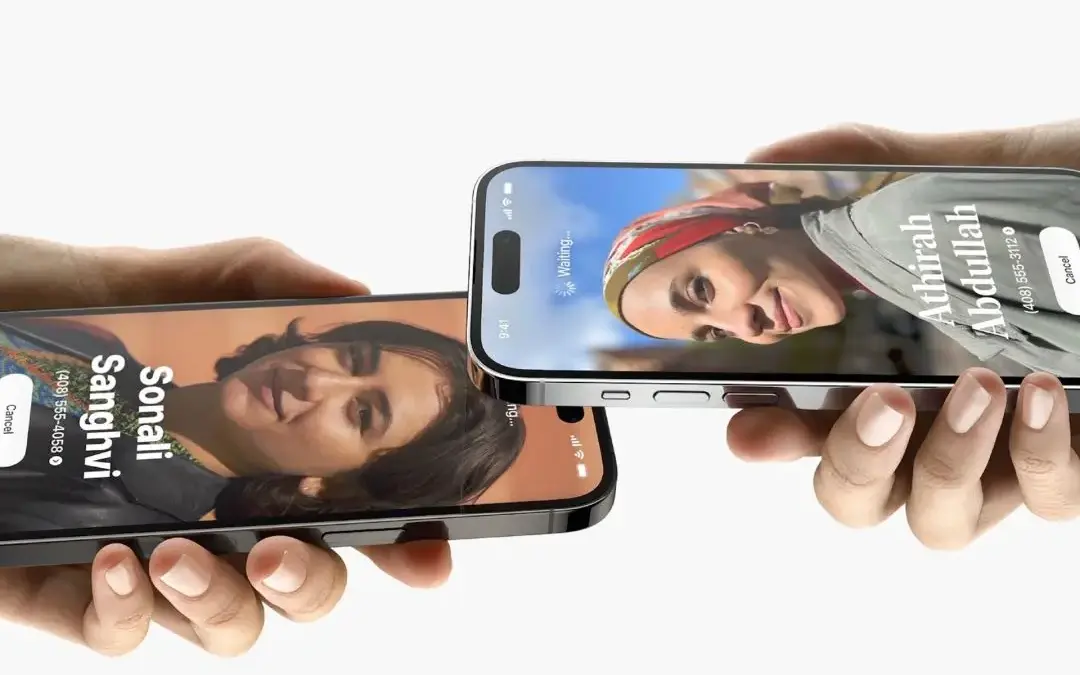
The core of the dispute centers around NameDrop, a capability that Apple introduced to the global market as part of its iOS 17 software update in June 2023. The feature officially rolled out to consumer devices later that year, allowing users to effortlessly exchange contact details simply by bringing two compatible iPhones—or an iPhone and a supported Apple Watch running watchOS 10.1—into close physical proximity. According to court documents reviewed by industry publications, GG Technologies argues that this seamless proximity-based transfer mechanism directly copies the core invention protected by its intellectual property portfolio.
Santa Monica-based GG Technologies formally initiated the legal action in India in October, following the breakdown of mandatory pre-institution mediation proceedings. Under Indian commercial litigation rules, parties are generally required to attempt mediation before filing formal lawsuits. According to the startup, those preliminary talks began in April but ultimately collapsed in September, paving the way for the substantial court filing. This legal maneuver in India does not stand alone; it follows a similar patent infringement lawsuit filed by GG Technologies against Apple in the United States earlier in April, signaling a coordinated international strategy by the smaller firm to protect its proprietary software.
The extensive legal challenge is detailed in a sprawling 781-page filing submitted to the Bombay High Court. In the documents, GG Technologies contends that Apple’s native iOS NameDrop feature infringes upon an Indian patent held by the startup. This specific patent covers advanced technology designed to facilitate the exchange of contact information between nearby electronic devices without forcing users to go through tedious manual pairing procedures.
The timeline of the startup’s technological development forms a crucial component of its legal argument. GG Technologies originally launched the StayTouch application back in 2019, positioning it as a modern, digital alternative to traditional paper business cards. The application, which remains available for download on both Apple’s iOS App Store and Google’s Android Play Store, relies on proximity detection to connect users. Crucially, the year 2019 was also when the company first sought formal patent protection for the underlying technology within the United States. Following that initial push, the startup pursued international protections, filing its Indian patent application in 2021 and successfully securing the patent in July 2024.
With the patent now firmly established in India, GG Technologies is pressing for aggressive legal remedies. Representatives for the startup stated that they are actively seeking an injunction to restrict the usage of the NameDrop feature, which is deeply integrated as a native element of the iOS operating system. In its court filings, the company has specifically urged the judicial system to prevent Apple from selling, distributing, or importing any iPhones and Apple Watches preloaded with NameDrop into the Indian market. As the legal process moves forward, the high-profile case has yet to be formally listed for its initial court hearing.
The international pressure on Apple extends far beyond the borders of India. In the United States, the International Trade Commission officially opened a formal investigation into Apple’s alleged patent infringement in August, acting upon a formal complaint lodged by GG Technologies. In that U.S. proceeding, the startup is pursuing a permanent exclusion order that could effectively block the importation of infringing Apple hardware into the American market, alongside supplementary restrictions on domestic sales.
GG Technologies was founded in 2018 by Gaurav Goel, an alumnus of the prestigious Indian Institute of Technology (IIT) Delhi who previously worked as an investment banker at Goldman Sachs. Goel and his team conceived StayTouch to streamline networking by replacing physical business cards with digital proximity transfers. Despite competing against massive ecosystem players, the startup has continued to push its intellectual property rights through the legal system. Apple, for its part, has thus far declined to issue a public statement or respond to formal requests for comment regarding the ongoing litigation in India.
The unfolding legal battle takes place against the backdrop of India’s rapidly growing importance to Apple’s global business strategy. Over recent years, the Cupertino-based technology corporation has transformed India from a purely consumer-facing market into a vital manufacturing powerhouse, reducing its reliance on production lines in China and assembling a significant portion of its global iPhone supply locally. At the same time, Apple has aggressively expanded its official retail presence across the South Asian nation, opening flagship brick-and-mortar stores to capture a larger share of the local consumer base. Although iPhones currently account for less than ten percent of overall smartphone shipments in India, industry analysts note that the vast potential for future expansion makes the market exceptionally critical to Apple’s long-term growth trajectory, raising the stakes for any potential sales restrictions or judicial injunctions that could disrupt the company’s momentum in the region.