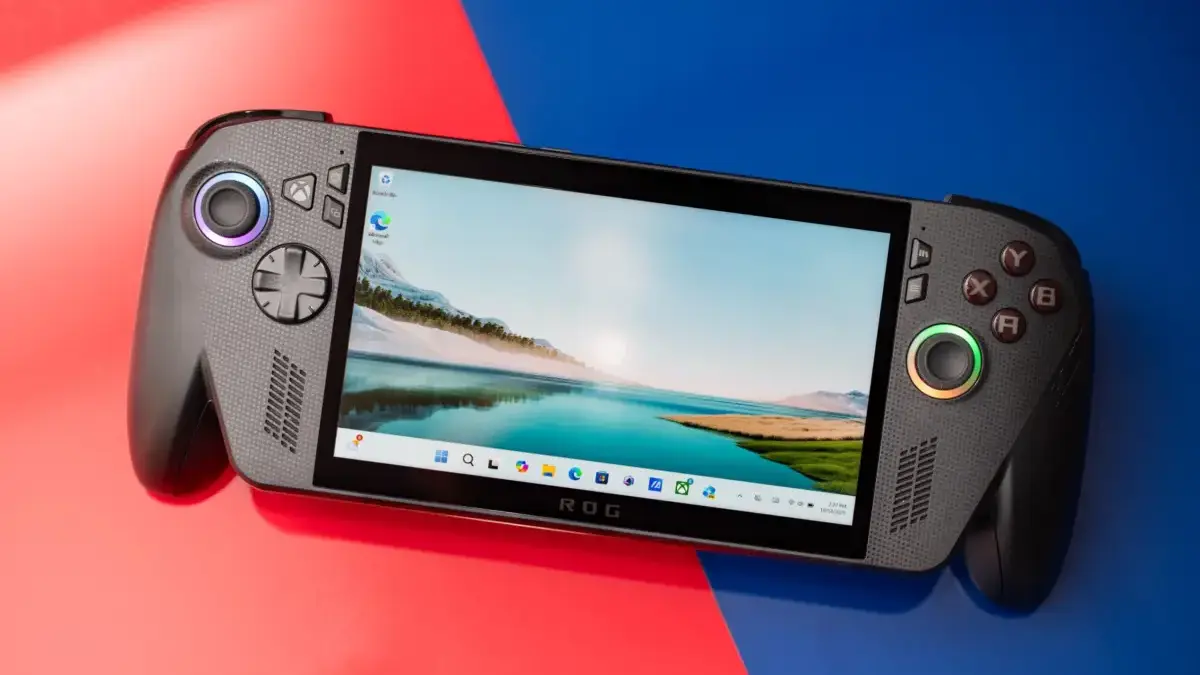
Microsoft is officially broadening the reach of its AI-driven upscaling technology, rolling out Automatic Super Resolution (Auto SR) to the Xbox Ally X, the Xbox Ally X20, and a selected lineup of Windows Copilot Plus PCs. The announcement, shared today by the tech giant, marks a major step forward for Windows-based gaming hardware, bringing a direct competitor to Nvidia’s Deep Learning Super Sampling (DLSS) and AMD’s FidelityFX Super Resolution (FSR) to more form factors and use cases. Alongside this broader hardware rollout, Microsoft is introducing a suite of new features designed to improve frame rates, visual fidelity, and flexibility for players on the go.
The rollout builds upon testing phases that began earlier this year. Back in April, Microsoft initially brought Auto SR to the Xbox Ally X, though that early preview came with notable limitations. At the time, users could only leverage the upscaling technology while their devices were docked to an external power source and display. With today’s full release, those restrictions have been lifted. Auto SR now functions seamlessly while players are using their devices in handheld mode and running entirely on battery power.
Additionally, the updated technology expands compatibility to games running at a 1080p resolution. While Microsoft notes in its technical documentation that running Auto SR in handheld mode at 1080p might not yield performance levels as optimal as other hardware configurations, the company emphasizes that users will still notice significant visual enhancements, particularly when playing older titles. By intelligently upscaling lower-resolution graphics using machine learning algorithms, the feature aims to breathe new life into classic libraries without demanding excessive power draw from portable hardware.

Performance and visual fidelity are receiving further boosts through additional modes introduced in the new Windows update. Previously, Auto SR was constrained to frame rates hovering around 60 to 75 frames per second. However, the introduction of a new Auto SR Performance mode changes that dynamic entirely, allowing supported systems to achieve fluid frame rates of up to 120fps. This capability is expected to be a game-changer for fast-paced titles where high refresh rates and minimal input latency are critical for a competitive and responsive experience.
In tandem with the higher frame rate capabilities, the latest update introduces compatibility with Auto HDR. This pairing allows the system to not only sharpen and upscale the resolution of games using machine learning but also dynamically expand the color and brightness range for titles that natively lack High Dynamic Range support. By combining AI-powered upscaling with enhanced lighting and contrast, Microsoft is aiming to deliver a more modern visual presentation across a wider spectrum of games, all handled directly at the operating system level through standard Windows updates.
The inclusion of Auto SR on Copilot Plus PCs highlights Microsoft’s broader strategy to integrate specialized artificial intelligence capabilities directly into the Windows ecosystem. Utilizing the neural processing units (NPUs) found within modern Copilot Plus hardware, Auto SR aims to handle the heavy computational lifting of image upscaling efficiently, minimizing the performance tax typically associated with real-time rendering enhancements. As hardware manufacturers continue to refine portable gaming PCs and AI-capable laptops, technologies like Auto SR are poised to play an increasingly vital role in bridging the gap between high-end visual fidelity and the strict thermal and battery constraints of mobile computing.