
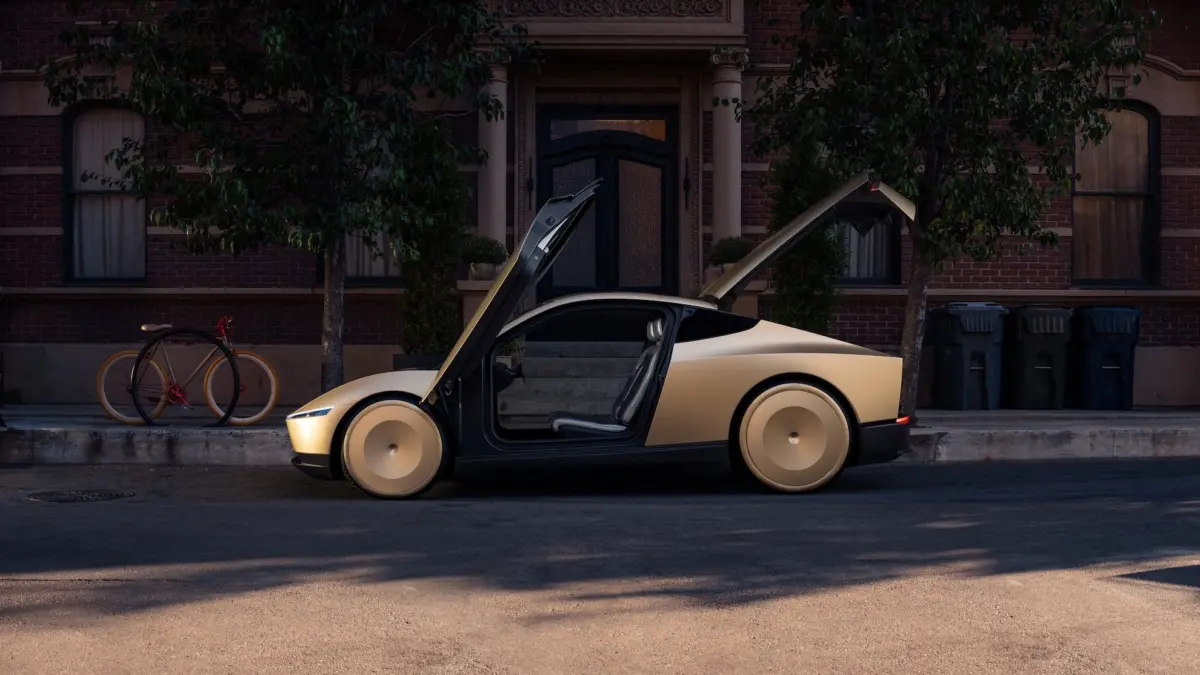
Tesla has announced that it will begin selling its futuristic Cybercab to third-party customers by the end of the year, a move that comes even as federal safety regulators actively investigate whether the unusual vehicle complies with established federal vehicle safety standards. The gold-hued, fully autonomous two-seater is notably distinct from traditional automobiles, lacking a steering wheel, brake pedals, and other conventional manual controls that drivers have relied on for generations.
During the company’s recent third-quarter earnings call, Lars Moravy, Tesla’s vice president of engineering, provided clarity on the initial production and rollout trajectory for the vehicle. Moravy explained that the Cybercabs currently rolling off the production lines are all earmarked for the company’s own proprietary robotaxi fleet. However, as that internal fleet gradually expands and operations mature, Tesla intends to shift its strategy.
"Mainly deliver fully designed autonomous vehicles to our customers," Moravy said during the call, emphasizing that the commercialization process will begin on a small scale. He added that the company plans to scale up its delivery model progressively as executives and engineers gain practical experience regarding the delivery, ownership dynamics, and fleet management requirements associated with autonomous vehicles.
The notion of selling the autonomous vehicle to third parties was first floated by Tesla just last month around the time of its high-profile Cybercab launch event in Austin, Texas. At that time, the company even posted an online expression-of-interest form for individuals and businesses interested in purchasing and operating their own robotaxi fleets. Despite the public signup sheets, industry analysts and observers remained uncertain at the time about whether Tesla would genuinely follow through on the concept, or what the operational framework of such sales would actually look like.
For years, Tesla CEO Elon Musk has talked extensively about building a massive, sprawling fleet of low-cost robotaxis that could generate passive income for their owners. Until recently, however, those grand ambitions centered almost entirely on a software-driven transformation. The core premise was that existing, privately owned Tesla vehicles already in customer hands would eventually be upgraded via a simple over-the-air software update to become fully self-driving taxis when their owners weren’t using them.
That ambitious vision has yet to materialize in the real world, and Musk’s recent commentary during the earnings call highlights a significant shift in his strategic perspective.
Currently, Tesla vehicle owners can subscribe to "Full Self-Driving (Supervised)," an advanced driver-assistance system designed to automate many complex driving tasks. Despite its moniker, the system still legally requires the person in the driver’s seat to remain fully attentive and ready to take over control at a moment’s notice. Tesla continues to deploy regular software updates to enhance the capabilities of this supervised system. Nonetheless, the strict requirement for a fully engaged human supervisor remains in place, even though numerous viral videos and test drives have shown users pushing the boundaries and limitations of that safety rule on public roads.
During Wednesday’s call, Musk offered a new timeline for the next phase of autonomy, stating that an unsupervised version of FSD—the long-awaited fully self-driving iteration—would finally be rolled out to everyday customers sometime in the second quarter of next year. For many Tesla owners who originally purchased or subscribed to the software years ago under the impression that true autonomy was just around the corner, this latest update represents yet another delay in a long series of pushed timelines.
If both current timelines manage to hold true, it would create a striking paradox in the automotive landscape: third-party fleet business customers would be permitted to purchase the dedicated, steering-wheel-free Cybercab and operate it as a commercial robotaxi service before everyday Tesla owners are granted access to the exact same autonomous capability in their own personal passenger cars.
Elaborating on the philosophy behind the vehicle, Musk explicitly stated that the Cybercab is engineered strictly to serve as a dedicated ride-hailing transport mechanism rather than a traditional automobile meant for private ownership and personal garage parking.
"Cybercab is primarily going to be something that is offered as like transport as a service, whereas our other cars would be more, you know, the cars that you’d want to own, like the 3 and the Y and whatnot, and the Roadster, obviously," Musk told participants on the Wednesday call. "But, you know, the vast majority of the Cybercab stuff will be essentially Tesla-owned and transported as a service."
Despite the bold timelines and production targets laid out by leadership, there remains a formidable regulatory obstacle that threatens to throw off Tesla’s carefully laid Cybercab fleet plans. Just last month, mere hours after the futuristic vehicles officially began operating on public streets in Austin, the National Highway Traffic Safety Administration (NHTSA)—the top federal auto safety regulator—announced that it had officially opened an investigation into the Cybercab.
The core of the regulatory friction lies within the Federal Motor Vehicle Safety Standards (FMVSS). These longstanding federal regulations legally require the inclusion of physical manual controls, such as traditional foot-operated brake pedals, alongside other obligatory vehicle features like physical rearview and side mirrors. Under the traditional American automotive regulatory framework, automakers self-certify whether their newly manufactured vehicles fully comply with FMVSS rules prior to public deployment, a path that Tesla followed with the Cybercab.
Current federal regulations do not easily accommodate vehicles completely devoid of manual driving controls. However, the regulatory environment is actively shifting; the Department of Transportation recently proposed removing those traditional brake pedal and manual control requirements specifically for vehicles that are engineered and built from the ground up to be exclusively autonomously driven.
In the interim, while regulatory frameworks catch up with technological innovation, NHTSA officials have clarified that their newly launched investigation is designed to thoroughly examine the underlying process and technical data upon which Tesla relied when it self-certified the Cybercab, alongside several related safety and compliance issues.
As the end of the year approaches and Tesla pushes forward with its commercialization timeline, the final outcome of the federal safety investigation could ultimately dictate whether Tesla—or any prospective third-party business partner—can legally operate the steering-wheel-free Cybercab on public roads across the United States.
Leave a Reply