
A federal magistrate judge has ordered Meta to disclose the identities of the employees and managers who authorized or participated in decisions to use BitTorrent to download copyrighted books from shadow libraries for AI training. The ruling marks a major development in ongoing copyright litigation against the tech giant, cutting through corporate arguments that the downloading activity was merely a collective or technical choice without individual responsibility.
The dispute stems from a broader series of legal battles over Meta’s acquisition and use of unauthorized datasets to train its Llama artificial intelligence models. While a court previously ruled that training AI models on copyrighted books constituted fair use under certain circumstances, copyright holders’ claims regarding BitTorrent distribution and seeding remain active. Publishers and authors argue that by utilizing peer-to-peer networks to acquire materials from unauthorized repositories like Library Genesis (LibGen) and Anna’s Archive, Meta unlawfully shared and distributed copyrighted works to third parties.
The Search for Corporate Accountability
The latest legal clash centers on an interrogatory filed by publisher Entrepreneur Media, which publishes Entrepreneur magazine. Entrepreneur is one of several plaintiffs pursuing legal action against Meta over contributory copyright infringement. The publisher asked Meta to identify every person who "made, authorized, or approved" the decisions to acquire shadow library datasets using BitTorrent technology.
In response, Meta identified several individuals associated with data-related decisions generally. However, the company maintained that it could not pinpoint anyone who "formally" made or approved the decision to acquire or use books for its first two Llama models. According to Meta, those acquisition choices were the product of organic team consensus rather than top-down executive mandates.

When pressed about the mechanics of the BitTorrent downloads themselves, Meta categorized the actions as technical choices executed by engineers running the downloads. The tech giant also noted that data acquisitions from Anna’s Archive underwent an internal legal review by in-house attorneys in early 2024. Despite these disclosures, Meta did not name any high-ranking corporate officers who explicitly authorized the use of BitTorrent networks.
This defense drew sharp criticism from the plaintiffs. "On that construction no one at Meta decided to torrent anything, yet Meta torrented shadow libraries repeatedly from 2022-2024," Entrepreneur Media argued in court filings.
Internal Logs Reveal Awareness of Legal Risks
The question of who bears responsibility for the torrenting activity is closely tied to what Meta employees knew about the legal implications of peer-to-peer file sharing. During earlier phases of discovery, testimony from an engineer who downloaded LibGen data revealed that the risks of seeding—automatically uploading fragments of files to other users on the network—were discussed internally, prompting some efforts to limit upload activity.
Further light was shed by internal Meta logbooks cited in court documents. One employee, reviewing documentation before initiating a download from Anna’s Archive, explicitly noted a decision to bypass torrents due to potential copyright violations.
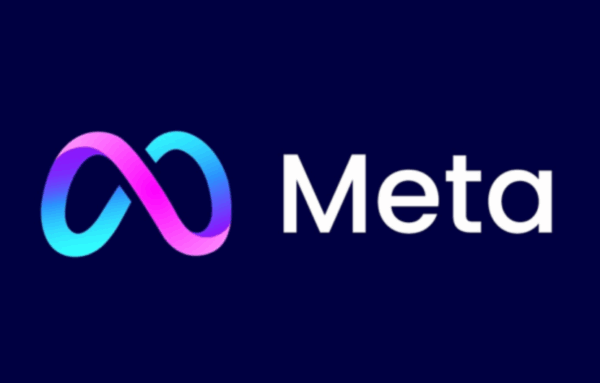
"Decided to go with direct file uploads without using torrents for the following reasons: Using torrents would entail seeding the file such as sharing content outside. This would be legally not okay," the logbook stated, as quoted by Entrepreneur Media.
Meta does not dispute that it utilized BitTorrent to download LibGen’s Scimag collection and data from Anna’s Archive. However, the company maintains that it is unaware of any specific individual who "made, authorized, or approved" a directive to upload or distribute the data to third parties, reiterating that safeguards were deployed to mitigate seeding.
The exact volume of material shared remains a subject of debate. Last year, an expert retained by Meta estimated that uploads from the company’s Amazon Web Services (AWS) servers accounted for roughly 30 percent of the total data downloaded during peer-to-peer sessions between April and July 2024.
Court Rejects Meta’s Collective Decision Defense
Magistrate Judge Thomas Hixson rejected Meta’s evasive responses regarding corporate responsibility. Two weeks prior to the ruling, Meta informed the court that it possessed no additional information to provide concerning the torrenting decisions. Judge Hixson found this position unconvincing, emphasizing that discovery requests regarding decision-makers are not limited to formal, top-down executive decrees.
Furthermore, the judge dismissed Meta’s argument that collaborative team discussions absolve the company from naming specific participants. Judge Hixson noted that because the interrogatory explicitly seeks to identify all decision-makers, if a choice was reached by a group, every individual involved in that consensus must be identified.
Under the terms of the new order, Meta must name the individuals who participated in discussions preceding the 2023 LibGen torrent download, those who approved the pivot to BitTorrent, and the person or persons who greenlit the April 2024 download from Anna’s Archive. The ruling also mandates the disclosure of everyone who decided "whether or how to seed, or to mitigate seeding," during the acquisition of the pirated collections.
For plaintiffs like Entrepreneur Media, uncovering these identities is vital for establishing willfulness, which can significantly impact statutory damages under copyright law, alongside bolstering their distribution and contributory infringement claims.
While the discovery dispute focuses heavily on corporate transparency and individual accountability, the core questions regarding whether Meta’s torrenting practices constitute fair use and whether the company illegally distributed copyrighted books to the public remain pending before the court.


Leave a Reply