
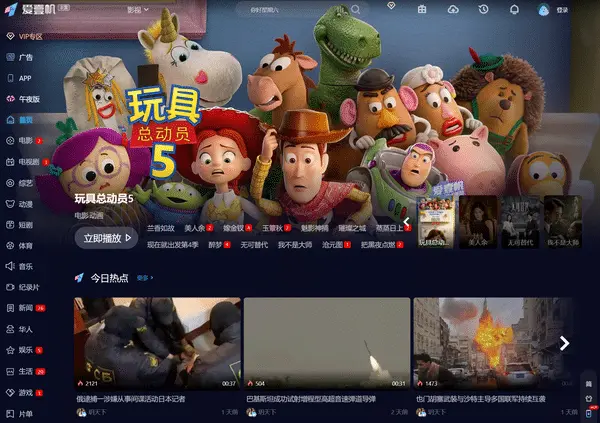
Chinese streaming giant iQIYI has secured a $1.96 million default judgment in a Florida federal court against Aiyifan, a popular pirate streaming platform catering to Chinese-speaking audiences residing outside of China. The ruling marks a significant development in an ongoing international crackdown on illicit streaming operations, running parallel to severe criminal penalties handed down against the platform’s operators in mainland China.
The legal battle in the United States mirrors a broader offensive by major Chinese entertainment companies protecting their intellectual property across global jurisdictions. Last month, fellow Chinese streaming titan Tencent successfully cleared the first procedural hurdle in its own U.S. legal battle against the pirate site Olevod, establishing that foreign copyright holders can effectively pursue overseas streaming operations in American courts. iQIYI utilized the same Florida court and legal team to target Aiyifan, which operates across multiple domains—including aiyifan.tv, yfsp.tv, and iyf.tv—alongside alternative identifiers such as YFSP and IYF. According to web analytics data from Similarweb, the primary domain yfsp.tv alone pulled in approximately 14 million visits during the month prior to the court’s final decision.
Unlike the defendants in some comparable multi-jurisdictional lawsuits, Aiyifan chose not to appear in the U.S. proceedings, and none of the platform’s operators were formally named as individual defendants in the Florida civil complaint. Despite this lack of representation, the site’s invisible presence did not shield its key organizers from mounting legal consequences, most notably within China, where criminal enforcement has already yielded prison sentences for individuals linked to the technical infrastructure of the platform.
Operator Jailed in China

While civil proceedings ground forward in the United States, criminal authorities in China moved swiftly against the individuals responsible for maintaining Aiyifan’s technical backbone. In August, legal representatives for iQIYI formally updated the Florida federal court regarding a critical milestone in China: the Shanghai Third Intermediate People’s Court had officially upheld the criminal conviction of Wang Jianyang, whom prosecutors identified as a principal operator behind the pirate network.
According to the official Shanghai court ruling submitted to the U.S. docket, Wang oversaw a corporate entity based in Chongqing that was specifically established to provide technical support, maintenance, and app development for Aiyifan. In addition to managing the underlying infrastructure of the website, Wang actively directed advertising and promotional campaigns for the illicit platform, sustaining operations since the site’s inception in 2022.
Chinese law enforcement agencies originally detained Wang in March 2024, more than a year before iQIYI initiated its civil lawsuit in the United States District Court for the Southern District of Florida. Wang’s entanglement with copyright enforcement predated Aiyifan; in 2021, a judicial body in Jiangsu province convicted him of establishing a separate unauthorized streaming site, handing down a three-year suspended prison sentence alongside a substantial fine of 6 million yuan.
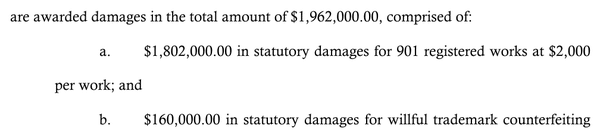
Aiyifan was launched while Wang remained on probation for his previous offenses. Consequently, in March of this year, a district court in Shanghai revoked the suspension of his earlier sentence, appending an additional three-and-a-half-year prison term and a 1 million yuan fine. Combined, Wang faces an effective aggregate sentence of four and a half years behind bars and a severe financial penalty totaling 7 million yuan.
Wang subsequently appealed the verdict, arguing before the higher court that the evidence presented by prosecutors was legally insufficient and that his role was strictly limited to providing neutral technical support. The appeals court soundly rejected these arguments, concluding that the evidence demonstrated his central role in coordinating and sustaining the pirate operation. That appellate decision represents a final and binding criminal judgment under Chinese law.

Florida: $1.96 Million Instead of $196 Million
In the United States, iQIYI’s civil litigation was initially designed to secure a permanent shutdown of the pirate domains and claim substantial financial restitution. Because Aiyifan’s operators completely failed to respond to the formal complaint filed in the U.S. federal court, the clerk entered a formal default against the defendants in July 2025, paving the way for a default judgment.
Capitalizing on the default, iQIYI’s legal team initially petitioned the court for an extraordinary damages award totaling $196.55 million. The bulk of that colossal figure was calculated by applying the maximum statutory damages rate of $150,000 per work across 776 formally registered titles owned by the platform. Furthermore, the streaming company sought an additional $78.55 million in proposed damages tied to thousands of unregistered works distributed on the pirate network.
In January, U.S. District Judge Melissa Damian ruled that Aiyifan was indeed liable for copyright infringement. However, the court flatly rejected the initial damages request due to a lack of evidentiary support and overextended calculations. Although iQIYI returned with a revised request totaling $54.4 million, the presiding judge determined that even this adjusted figure remained excessive and unsupported by the statutory framework governing copyright awards.
In a final order issued last week, Judge Damian calculated a much more conservative financial penalty, awarding $1,000 per registered work, which was subsequently doubled to account for the willful nature of the infringement. This brought the baseline award to $1.8 million, covering an expanded total of 901 works as iQIYI successfully processed additional copyright registrations while the lawsuit was actively moving through the court system.
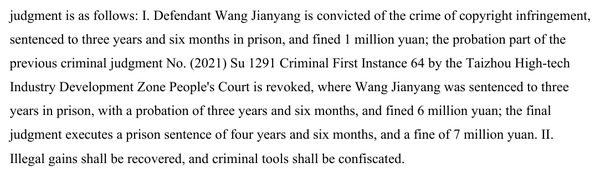
Additional trademark infringement claims added $160,000 to the total tally. However, the court declined to award any statutory damages for the roughly 5,000 unregistered works flagged by the plaintiff. The final judgment was consequently capped at $1.96 million—representing roughly one percent of the streaming giant’s original financial demand.
Judge Won’t Transfer Domains
The reduced monetary recovery was not the only setback encountered by the Chinese streaming platform. iQIYI’s aggressive strategy also sought sweeping injunctive relief, specifically requesting that the court order the total forfeiture and transfer of Aiyifan’s web domains directly to iQIYI, redirecting all incoming traffic to its own official platform. Additionally, the streaming company asked the court to compel internet service providers, web hosting companies, content delivery networks, payment processors, and messaging platforms such as WeChat to cut off all services to the pirate network.
Although iQIYI’s amended motion for a default judgment eventually pared back demands directed at third-party service providers, it continued to push hard for a complete domain takeover to force the pirate network permanently offline.
Judge Damian remained unconvinced that a total domain seizure was legally appropriate under the circumstances. The court noted that iQIYI candidly admitted it could not definitively prove what precise percentage of the massive content library hosted on Aiyifan’s network was actively infringing, nor could it rule out whether certain hosted materials might be properly licensed through other channels.
Because Aiyifan streams a considerable volume of miscellaneous media content not exclusively owned by iQIYI, the court concluded that seizing the domains outright would constitute an overbroad remedy. The final judicial order explicitly acknowledged that while some judges within the same judicial district have adopted a more expansive and liberal approach to issuing broad injunctive relief, Judge Damian was bound to follow Eleventh Circuit precedent requiring that copyright injunctions be strictly and narrowly tailored to the specific violations proven.
Partial Domain Registrar Suspensions?
Rather than granting a wholesale transfer of the domain ownership, the final judgment orders domain registrars to cancel specific web pages and subdomains featuring iQIYI’s copyrighted shows or protected trademarks, provided that the streaming company supplies a precise, itemized list to the registrars.
Furthermore, the order stipulates that if an individual registrar fails or refuses to comply with these targeted cancellations, the underlying domain registry must forcibly transfer the domain management to a registrar selected directly by iQIYI. This mechanism alters the administrative registrar handling the account without transferring actual legal ownership of the domain names to the plaintiff.
Whether domain registrars possess the technical capability to comply with such granular mandates remains a significant point of operational contention. A standard domain registrar typically exercises administrative control over the overarching registration of a domain rather than the dynamic individual pages housed within a website. Consequently, the primary technical tools available to a registrar are generally limited to suspending or entirely redirecting a domain as an integrated unit—an outcome the court expressly sought to avoid because of its overbreadth.
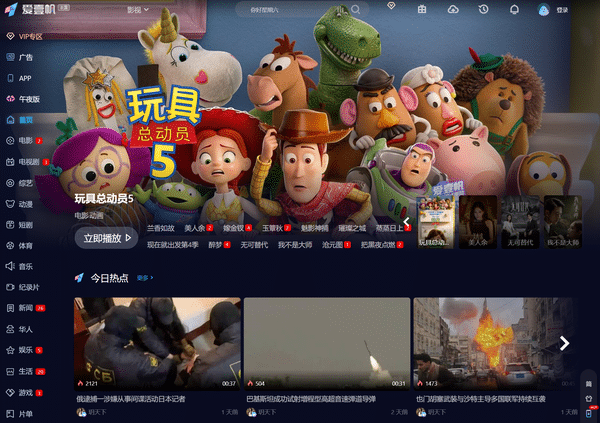
Even the targeted handling of subdomains presents substantial technical hurdles. For instance, specific properties listed in the legal action, such as m.yfsp.tv and www.yfsp.tv, share a single primary domain, and a typical registrar can selectively disable one distinct subdomain only if it maintains direct administrative control over the domain’s underlying Domain Name System infrastructure.
As the legal fallout continues to unfold across international borders, the various Aiyifan web properties remain operational online. Given the complete absence of a legal defense or appearance from the site’s operators throughout the U.S. proceedings, it remains uncertain whether iQIYI will ultimately be able to successfully recover any portion of the nearly $2 million in awarded damages.


Leave a Reply